
The United States has created a formal pathway for Ukrainian combat drones to enter Pentagon testing. This offers Washington an opportunity to understand how Kyiv develops and replaces weapons at the rapid pace required in modern conflicts.
The Ukrainian Ambassador to the U.S., Olha Stefanishyna, confirmed that both nations signed a bilateral statement of intent last week. This could lead to future export deals and joint production of systems designed by Ukraine, manufactured in the U.S.
The skirmishes involving Iran have shown the limitations of the U.S. military arsenal, which is costly and difficult to replace. In contrast, years of conflict have made Ukraine a leading innovator in scalable military technology.
Economical Warfare Tactics
The U.S. has significantly damaged Iranian missile bases and key infrastructure since its campaign began in February. However, Washington’s stock of key munitions is now running low.
The military has depleted more than two-thirds of its Patriot air defense missiles and nearly half of its THAAD interceptors since February. The Center for Strategic and International Studies (CSIS) estimates these figures, indicating the need for more selective use of resources.
While Patriot and THAAD interceptors serve essential roles, using them against cheap drones is not sustainable. A single Patriot missile costs about $4 million and takes two years to produce. Ukraine quickly recognized that it could not afford to respond to every Russian weapon with equally pricey Western counterparts.
Instead, Ukrainian forces developed affordable systems. These include attack drones, long-range aircraft, maritime drones, and interceptors to defeat Russian unmanned aircraft. Their engineers also quickly iterate new versions as Russian forces develop countermeasures.
Despite being engaged in a full-scale war, Ukraine spent just $84.1 billion on national defense last year—less than a tenth of the U.S. expenditure.
Pentagon’s Drone Strategy
The Pentagon acknowledges a challenge in its approach, prompting the Drone Dominance program to earmark over $1 billion for procuring effective, affordable attack drones by 2027. Other programs aim to enhance U.S. production of unmanned systems, comparing them to Ukrainian innovations.
Ukraine’s technology is the result of years of refinement with direct input from front-line units. They adjust designs to evolve with Russian countermeasures, allowing for rapid deployment and testing.
This experience could benefit U.S. companies by streamlining development, trimming excess specifications, and producing weapons suitable for intense conflicts rather than peacetime cycles.
With the ongoing Middle East conflict, Ukraine’s value is increasingly significant. After years of negotiating with U.S. administrations, Ukrainian President Volodymyr Zelensky might have found a deal appealing to the current American leadership.
Strategic Partnerships and Concerns
The bilateral statement of intent is a positive development, but Kyiv must remain cautious. Ukraine has established more substantial agreements with the U.K., Germany, Norway, the Netherlands, and Canada. These allies fund Ukrainian drone production domestically and through offshore ventures, offering battle-tested technology and financial support for expanding Ukraine’s defense sector.
Washington has yet to present similar commitments. The statement of intent appears as an initial agreement with no binding procurement or joint manufacturing deals.
Ukrainian firms have developed software, designs, and production methods tailored for modern warfare. There is concern that the U.S. and its defense contractors might leverage Ukraine’s intellectual property for their advantage.
Both nations stand to benefit from a fair deal; the Pentagon needs Ukraine’s experience, and Ukraine benefits from American resources. Any unfair bargain could lead to Washington exploiting Kyiv’s innovations at the expense of its creators.
 Sen. Thom Tillis Criticizes Trump’s Administration in New Book
  Controversy Surrounds Steve Hilton’s Campaign Ad Amid Gubernatorial Race
  Trump Calls for Probe into Alleged ‘Paid Protesters’
  Donald Trump Criticizes Fox News for Rally Coverage
 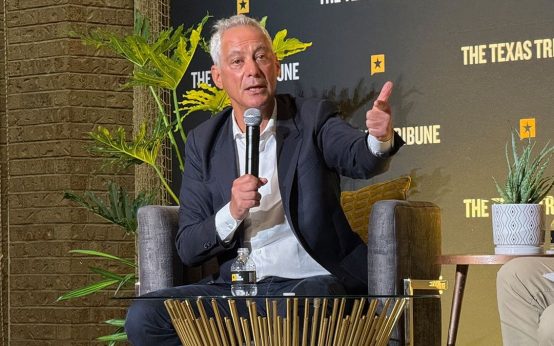 Rahm Emanuel Advises Against Impeaching Trump and Calls for Ethics Reforms
  Rahm Emanuel Discusses Potential Presidential Run and Jewish Identity