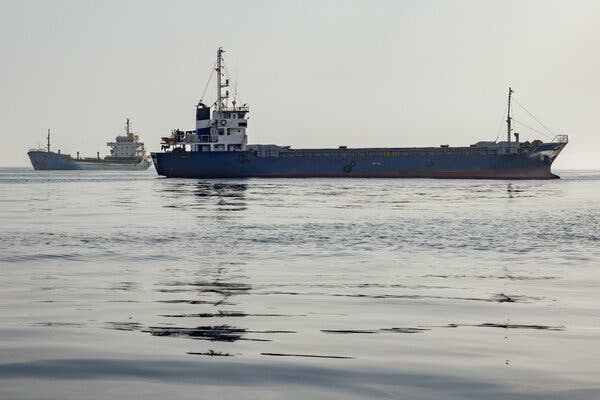
On Saturday, U.S. military reports indicated that 55 ships had passed through the Strait of Hormuz. However, Iran’s military announced it was closing the waterway once more. This development comes amid rising shipping numbers following a preliminary agreement between the United States and Iran to end the ongoing conflict and reopen this crucial passage.
The U.S. Central Command had emphasized a significant milestone with the transit of 55 commercial ships. This figure is the highest seen in a single day since Iran first closed the strait at the outset of the conflict. Yet, it remains well below the prewar daily average of 130 transits.
The situation grew more complicated when Iran and the United States presented contradictory statements. Iran’s Islamic Revolutionary Guards Corps asserted that the security of ships approaching the strait would be jeopardized. In contrast, Captain Tim Hawkins, a representative for U.S. Central Command, disputed this. He stated in a text message that the strait remains open and the U.S. blockade on Iran had ended. He assured that traffic continues to move, with American forces overseeing the passage to maintain this flow.
Throughout the conflict, Iran wielded control over the strait as a significant point of leverage, exploiting its importance for global oil and gas transport. Even the prospect of renewed hostilities has sufficed to disrupt shipping. This volatility persists, with traffic maintaining erratic patterns and staying well below levels before the war.
Despite the tentative agreement between Iran and the United States to reopen the strait, shipping firms approach its passage with caution. Logistical challenges also remain, as many vessels have been stationary in the Persian Gulf for extended periods.
 Dutch Review Board’s Euthanasia Ruling and International Debate
  Israeli PM Commends Heroic Actions in Flight Emergency
  Rabbi and Jewish Leaders Criticize Adam Brody for ‘Genocide’ Comment
  Flydubai’s Emergency Landing Highlights Cockpit Security
  Former Israeli PM Naftali Bennett Commends Passengers and Crew for In-Flight Heroism
  Diplomatic Complexities Unfold at U.S. National Archives Visit