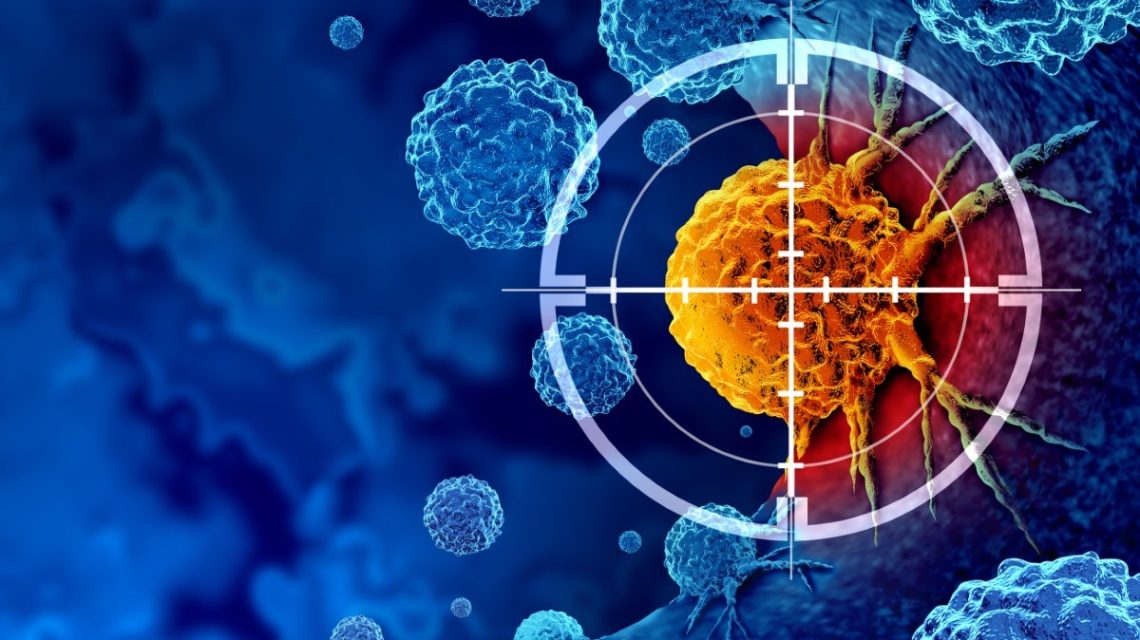
Recent research reveals that tightly confined cancer cells initiate a self-destructive process under chronic stress. The study, conducted by experts from Fudan University, Sun Yat-sen University, and the Chinese Academy of Sciences in Shanghai, utilized three-dimensional models to examine the mechanistic response of cancer cells under prolonged confinement.
Study Insights
The focus was on cancer cells undergoing the mesenchymal-to-amoeboid transition (MAT). This stage is crucial as it allows cells to adapt and navigate through confined spaces without undergoing genetic transcription.
The challenge faced by cancer cells during metastasis involves squeezing through narrow passages as they leave the primary tumor and invade nearby tissues.
Researchers designed a model simulating this physical challenge by gently compressing the cells into thin spaces, preventing them from attaching to surfaces. This confinement, lasting several hours, enabled tracking of the cells’ transformation from a fast-moving amoeboid state to eventual cessation of movement and activation of the cell death program.
Cells subjected to increasing pressure identified this environmental change as dangerous, releasing signals triggering cell death. The ongoing confinement exerted stress that activated MLKL, a protein responsible for inducing cell death.
Before cell death, the cells lost their polarized shape and movement, stopping their invasive activities. However, the process also removed cells with high MLKL expression, leading tumors to enrich in MLKL-low, necroptosis-resistant, and more aggressive clones.
Testing this mechanism across various cancer cell types showed similar responses, suggesting a broader principle regarding tumor cells’ response to prolonged stress, though variations are attributed to genetic differences among cancers.
Implications of Findings
The study indicates that mechanical stress within tumors can naturally hinder cancer cell spread, eliminating highly invasive cells and promoting immune recognition. MLKL expression may be used as a biomarker of tumor progression, as cells with higher expression are more susceptible to confinement.
This selective pressure could favor escape clones with greater invasive potential. Measuring MLKL levels might assist in evaluating tumor evolution during disease progression.
These discoveries hold potential for new therapeutic strategies. Pharmacological activation of MLKL could boost the elimination of cancer cells under mechanical stress. It highlights the importance of targeting not only biochemical pathways but also exploiting the mechanical environment of tumors.
Combining approaches that activate MLKL with standard cancer treatments might strengthen the body’s defenses against metastasis.
 FDA Alerts Public to High-Risk Recall of Graziers Raw Milk Cheese
 Christina Applegate Discusses Misdiagnosis and Ongoing Health Challenges
 Key Changes in Medicare Open Enrollment for 2027
 Green Spaces and Dementia Risk in Older Adults
 Dr. Oz Leads Crackdown on Suspected Medicaid Fraud in NYC
 Nigeria Confirms Ebola Case Amid Regional Outbreak