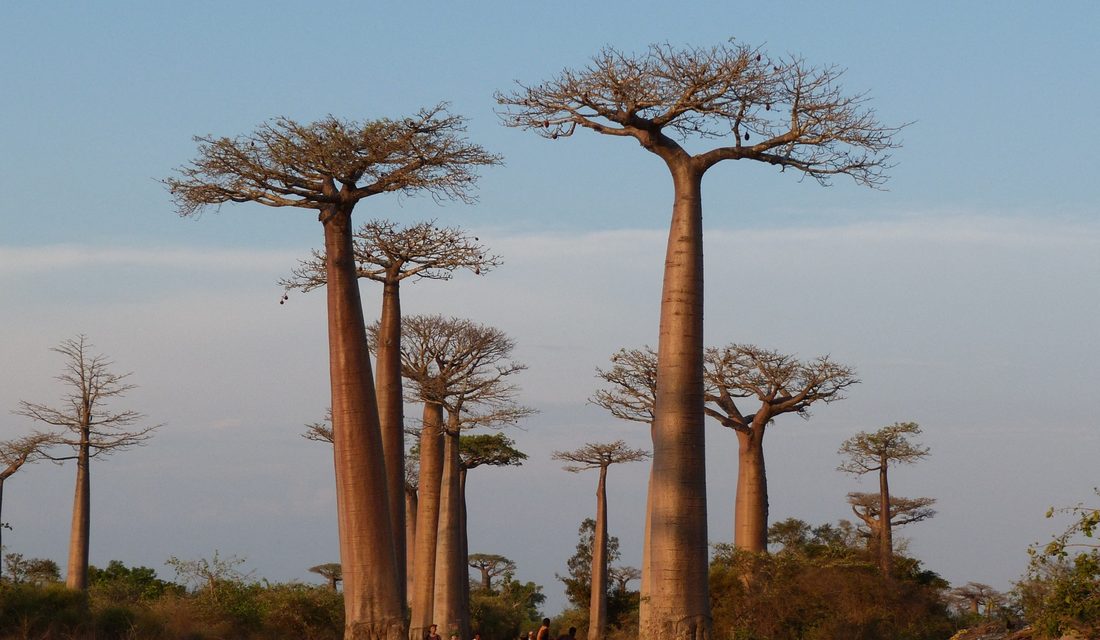
Baobabs, often termed the “tree of life,” are renowned for their thick trunks, broad crowns, and twilight-blooming flowers. These succulents inspired Rafiki’s home in ‘The Lion King’ and are crucial in dry environments, offering sustenance and shelter.
There are eight distinct baobab species, each adaptable to arid conditions. They are integral to ecosystems and local cultures, providing food and figuring prominently in regional folklore.
The origin of baobabs sparked debate. Scientists suspected three regions: sub-Saharan African savannas, western Australia’s Kimberley, and Madagascar’s dry forests. To clarify, a global team led by researchers at China’s Wuhan Botanical Garden analyzed genomic data from all eight species.
Thanks to advancements in genetic analysis, the team pinpointed Madagascar as the likely origin. They believe oceanic currents later carried baobab fruit to Africa and Australia, where it evolved into new species.
This research, published in Nature, highlighted concerns for the future. Three Malagasy baobab species face extinction threats. Deforestation and rising sea levels worsen their plight, alongside threats to pollinators like fruit bats and hawks.
First author Wan Jun-Nan, inspired by “The Little Prince,” hopes the genetic insights guide conservation efforts. “When I touched the bark of the baobab in Madagascar, I committed to understanding their history,” Wan shared.
Wan advocates for ecologists to integrate genetic findings into conservation strategies. The study aims to protect these unique trees and their ecosystems.
 Climate-Resistant Rock Glaciers: Hidden Water Resources
  California Voters to Decide on $7.5 Billion State Research Fund
  Ancient Pottery Unearthed During Roadworks in Tbilisi
  U.S. Space Academy Announcement
  The Need for New Strategies in Oregon’s Wildfire Management
  Plastic Pollution in the Great Lakes: A Growing Concern