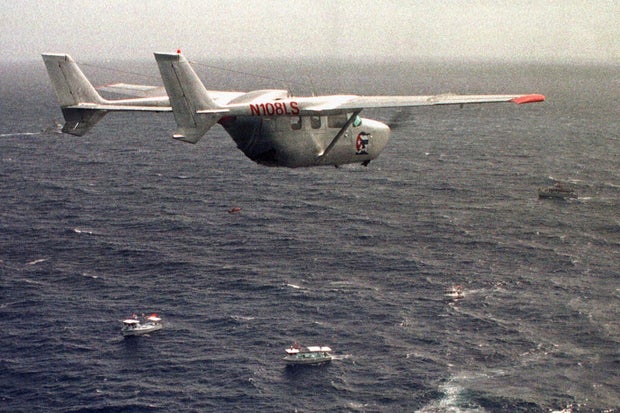
In February 1996, three civilian planes departed from a Miami-area airport. These planes were operated by a Cuban exile group called Brothers to the Rescue, which aimed to locate and assist people leaving Cuba in rafts. Tragically, two of the planes were shot down by a Cuban fighter jet, resulting in four fatalities.
Now, 30 years later, this incident is at the center of a federal criminal case against a significant figure in Cuban politics. The U.S. has indicted Raúl Castro, aged 94, along with five others for their alleged roles in the event. The charges include murder and conspiracy to kill U.S. nationals, marking a significant escalation in tensions between the U.S. and Cuba.
Brothers to the Rescue
Brothers to the Rescue, founded in the early 1990s by Cuban American José Basulto, aimed to carry out search-and-rescue missions over waters separating Florida and Cuba. The group helped thousands attempting to flee Cuba on makeshift vessels. Basulto, who had connections to the Bay of Pigs invasion, stated that the group also supported Castro’s opponents. However, in the mid-1990s, changes in U.S. immigration policy led to a reduction in people trying to escape via rafts.
The Cuban government accused the organization of violating its airspace and distributing anti-Castro leaflets. Further allegations included plans to sabotage infrastructure, reportedly stemming from a former member who returned to Cuba in 1996.
Warnings and Incidents
Federal officials reportedly expressed concerns about unauthorized flights over Cuba, cautioning Basulto. Declassified records revealed one official’s worst-case scenario anticipation of a shootdown. Basulto, however, maintained his right to enter his homeland freely.
Three planes, with eight people on board, left Opa Locka Airport on February 24, 1996, toward Cuba. Before 3 p.m., Basulto informed Havana air traffic controllers of their approach to Cuba’s defense identification zone. Despite warnings, he remained resolute in his actions as a “free Cuban.” Shortly afterward, a Cuban MiG-29 fighter jet destroyed two planes, killing one U.S. citizen and other green card holders. Basulto’s plane and its crew managed to return safely to Florida.
Investigation and Legal Implications
An ICAO investigation concluded the shootdown occurred over international waters, countering Cuba’s assertion of the planes being within their airspace. The ICAO noted that international law forbids firing at civilian aircraft, stressing interception as a last resort.
The U.S. responded to the incident with tighter sanctions and halted Cuba-bound charter flights. Former President Bill Clinton emphasized the planes posed no threat, noting no legal justification for the attack under international law.
Ongoing Tensions
Years after the incident, one person faced conviction in the conspiracy, serving over a decade in prison before a prisoner swap facilitated their return to Cuba. Meanwhile, federal courts charged others, though trials never ensued.
Recently, renewed interest in the case has sparked calls for action against Raúl Castro. The indictment comes amid strained U.S.-Cuba relations, further complicated by the Trump administration’s economic pressures and demands for reform. Basulto indicated anticipation for accountability, asserting it was “time for them to pay.”
 Dutch Review Board’s Euthanasia Ruling and International Debate
  Israeli PM Commends Heroic Actions in Flight Emergency
  Rabbi and Jewish Leaders Criticize Adam Brody for ‘Genocide’ Comment
  Flydubai’s Emergency Landing Highlights Cockpit Security
  Former Israeli PM Naftali Bennett Commends Passengers and Crew for In-Flight Heroism
  Diplomatic Complexities Unfold at U.S. National Archives Visit