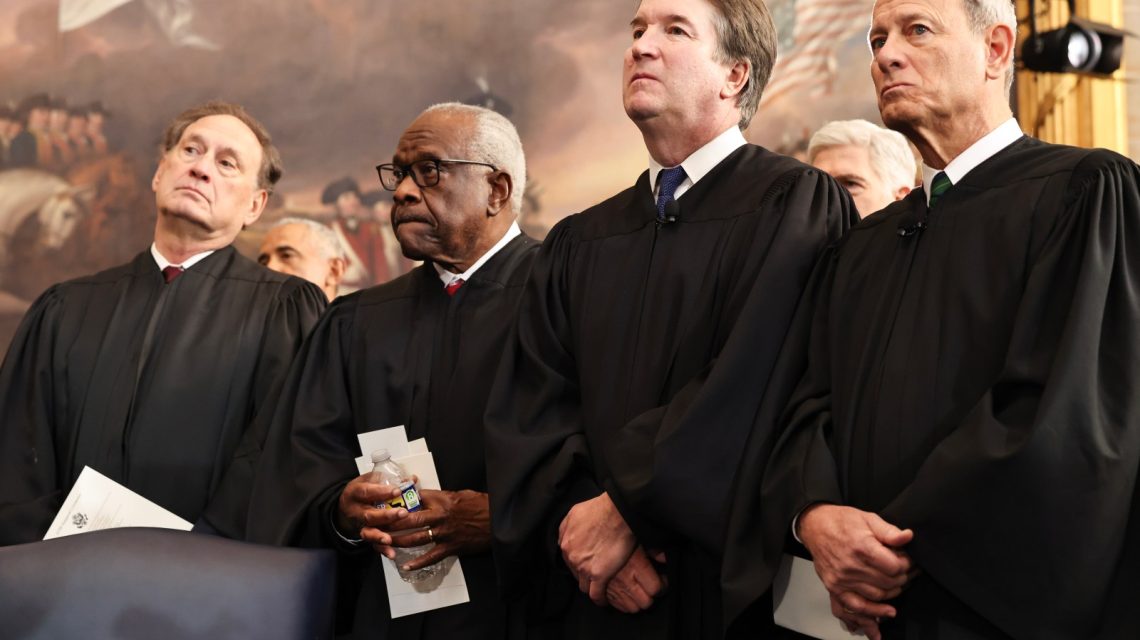
Efforts to Reform the Supreme Court Gain Momentum Amidst Low Public Confidence
Public confidence in the Supreme Court is at a historic low, prompting Democratic lawmakers to push for significant reforms. Although success appears unlikely, proposals include a constitutional amendment and legislation to replace lifetime appointments with 18-year terms.
Supporters argue these changes would modernize the court and restore trust, while critics warn they might compromise judicial independence. Despite hurdles, momentum for reform grows among Democrats in Congress.
Democratic Proposals and Challenges
Multiple proposals have been circulated. Notably, California Democratic Representative Ro Khanna highlights a 2024 Fox News poll showing 78 percent support for term limits, referring to his introduced bill as a solution to lost moral authority.
The push for reforms arose as the court tilted significantly rightward under President Trump’s appointments, influencing decisions on abortion, guns, and federal power. Public disapproval has intensified amidst ethics controversies and divisive rulings.
Bipartisan Support vs. Congressional Divisions
The idea of term limits resonates with the public across party lines, yet Congress remains divided. Additionally, amendments require substantial legislative backing, including a two-thirds majority in both chambers and ratification from three-fourths of the states.
Despite these hurdles, Democratic lawmakers like Representative John Olszewski emphasize bipartisan polling support to advocate for constitutional amendments, alongside legislative measures.
Legislative Efforts
Hank Johnson, a Democrat from Georgia, reintroduced legislation for 18-year terms, allowing justices to serve as senior federal judges post-tenure. His proposal has gained 74 cosponsors.
Johnson’s plan includes immediate application to sitting justices, while Khanna’s proposal exempts current justices. Both bills address public dissatisfaction by proposing regular appointment intervals.
The Decline in Public Confidence
The court’s current conservative majority has drawn criticism for perceived partisanship, intensified by significant rulings on abortion and presidential powers. Recent exposure of ethics issues further strains public trust.
Polls reflect shifting public sentiment, with 61 percent believing the court favors Trump’s positions. An NBC survey shows confidence at a record low of 22 percent.
Polls and Public Opinion
Support for term limits remains strong: a Fox News poll cited 78 percent backing, Marquette Law recorded 61 percent perceiving court bias towards Trump, and 22 percent express trust according to NBC.
Strong bipartisan backing exists, with 73 percent of Republicans, 71 percent of independents, and 87 percent of Democrats favoring term limits, based on recent polling.
Future Prospects for Reform
The path to reform heavily depends on political changes. A Democrat-driven movement faces Republican opposition in the current Republican-controlled Congress. Even hypothetical Democratic control may not guarantee success due to constitutional difficulties.
Reform remains a distant prospect, yet supporters see potential in sustained debate fueled by public backing and waning court confidence. Term limits are moving from academic to mainstream political discourse, appealing to a broader public.
 State Department Simplifies Passport Process with Online Applications
 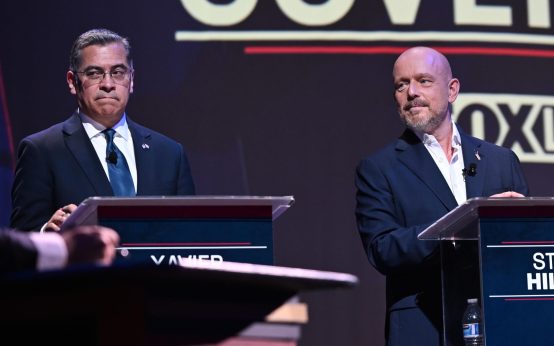 Becerra and Hilton Clash in California Gubernatorial Debate
  California Voters to Decide on $7.5 Billion State Research Fund
  Highlights from the California Gubernatorial Debate: Becerra vs. Hilton
  Becerra vs. Hilton: The Debate and Key Issues in the California Governor Race
  Senate Confirms New Labor Secretary