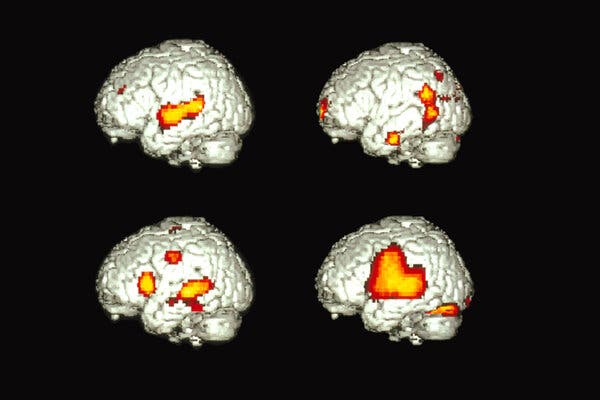
A recent study suggests that bilingual speakers use a single ‘grammatical engine’ in the brain to manage multiple languages simultaneously. This challenges long-standing beliefs about language processing in bilingual individuals.
A prominent finding indicates that brain activity patterns in bilingual speakers are more similar than previously thought. For instance, when making a word singular or plural, their brain activity remains consistent, regardless of whether they speak in their first or second language. This emphasizes a shared processing mechanism for different languages.
“It wasn’t obvious that it was going to be so shared,” remarked Esti Blanco-Elorrieta, a psychologist and neuroscientist at New York University, and an author of the study. She described these findings as very revealing about how deeply integrated two languages can be in the brain.
Historically, bilingualism was seen as an addition or even a disruption to processing native language. However, researchers like Judith Kroll from the University of California, Irvine, acknowledge that bilingual brains show physical differences. These include more efficient white matter and alterations in gray matter, which have been associated with improved memory and concentration tasks.
 The Threat of Melting Glaciers: A Call to Action
  Climate-Resistant Rock Glaciers: Hidden Water Resources
  California Voters to Decide on $7.5 Billion State Research Fund
  Ancient Pottery Unearthed During Roadworks in Tbilisi
  U.S. Space Academy Announcement
  The Need for New Strategies in Oregon’s Wildfire Management