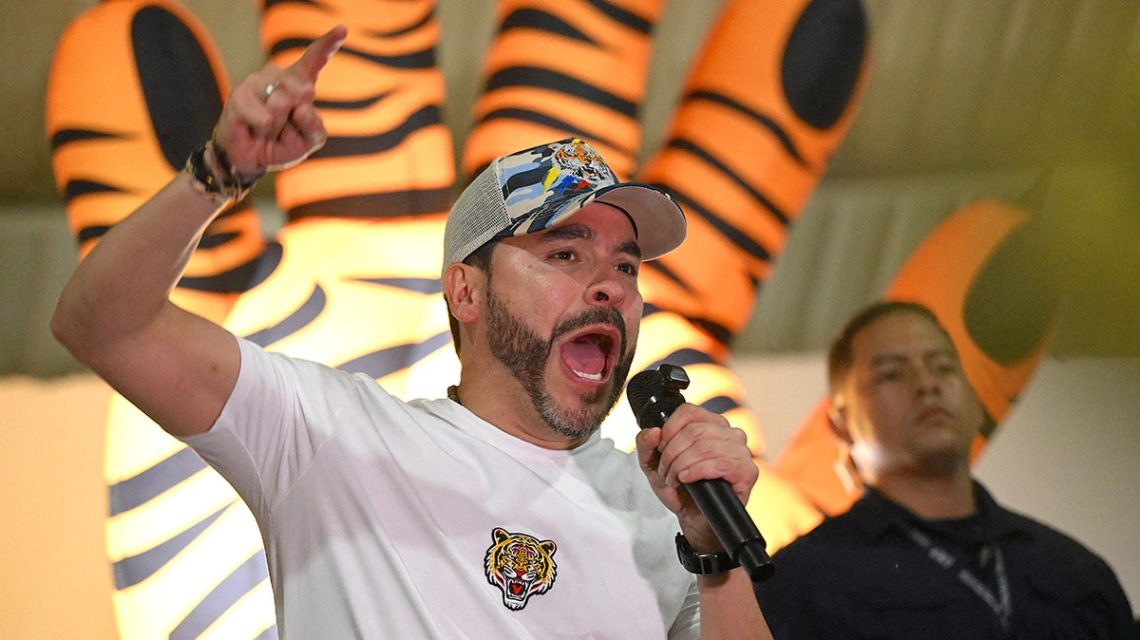
President Donald Trump extended congratulations to Abelardo De La Espriella, known as ‘El Tigre,’ after an initial count of ballots in Colombia hinted at his potential victory. Though the results are yet to be officially confirmed, De La Espriella leads against left-wing Senator Ivan Cepeda. With 99.9% of votes counted, De La Espriella has 49.7%, while Cepeda holds 48.7%.
De La Espriella found strong support in the mountainous central areas and the populous Antioquia region. Cepeda performed well in Bogotá and coastal regions, reflecting recent electoral trends.
Cepeda has raised concerns about irregularities in numerous polling stations, but overturning election results is historically rare in Colombia. If De La Espriella’s lead holds, it may symbolize a continent-wide shift to the right, as seen in other countries like Chile, Ecuador, Bolivia, and Peru.
During a White House event, Trump spoke with De La Espriella, expressing optimism for U.S.-Colombia relations. Trump mentioned, “He thanked me for the endorsement and said he won the election. Relations will improve. He’ll be a great president.”
The election pitted two opposing political figures. De La Espriella, supported by Trump, has promised a return to the law-and-order policies of former President Alvaro Uribe, advocating for stringent actions against guerrillas and criminals. Meanwhile, Cepeda pledged to continue peace negotiations, reflecting a more diplomatic approach.
Cepeda, a longstanding figure on the Colombian left, has served as senator for twelve years. He follows in the footsteps of his father, Manuel Cepeda, a prominent Colombian Communist Party leader assassinated in 1994.
In the first electoral round, De La Espriella secured 43.7% of the vote, ahead of Cepeda’s 40.9%. Right-wing Senator Paloma Valencia came third with 6.9%. U.S. Secretary of State Marco Rubio also congratulated De La Espriella, indicating a cooperative future on regional security and immigration.
De La Espriella’s campaign drew parallels to Trump’s, as both leaders had no prior government roles. The election centered on security, with De La Espriella critiquing the Petro administration’s peace negotiations with armed groups.
Many believe Petro’s approach allowed groups like ELN and FARC dissidents to regain strength. De La Espriella vowed to launch aggressive military actions, constructing “mega-prisons” similar to El Salvador’s model to dismantle criminal networks.
If elected, De La Espriella plans to foster free-market economics, limiting government interference, and reducing taxes. Strengthened U.S.-Colombia relations are also anticipated, reversing tensions seen under Petro.
Analysts will observe Colombia’s interactions with Venezuela, especially as De La Espriella is likely to demand democratic processes from Delcy Rodriguez’s Venezuelan administration. There is also pressure to address the ELN guerrilla presence on the Venezuela-Colombia border.
The Associated Press and David Unsworth contributed to this report.
 British Police Arrest Man Suspected of Terror Plot
  Activists Push for Nationwide Ban on Child Marriage in the U.S.
  Investigation into Alleged Incident at Cornell University
  Rising Drone Threats Highlight Vulnerabilities in Moldova’s Airspace Defense
  Bolivia Faces Security Test Amid Unrest
  Incident on FlyDubai Flight Raises Security Concerns