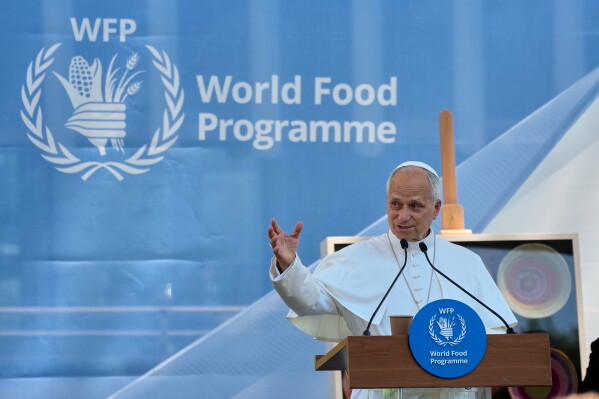
Vatican City is facing a potential schism as a group known as the Society of St. Pius X (SSPX) prepares to consecrate four bishops without the approval of Pope Leo XIV. The SSPX, committed to the traditional Latin Mass and opposed to the modernizing reforms of the Catholic Church, is organizing a significant event for the consecrations at their seminary in Switzerland.
The event, scheduled for July 1, will be a four-day affair, complete with livestreaming and souvenir offerings for attendees. Nearly four decades after its initial break from the Vatican, the SSPX is doubling down on its schismatic stance, appealing to Catholics who prefer the traditional Mass and are indifferent to being out of communion with Rome.
“To me, they look like Traditionalism 2.0,” remarked Massimo Faggioli, a theology professor at Villanova University.
Despite its anti-modern agenda, the SSPX has embraced technology and digital branding to strengthen its identity. According to Faggioli, their focus is on dominating the ultra-traditionalist identity rather than seeking reconciliation with Rome.
An Initial Break with Rome
Founded in 1970 in Écône, Switzerland, the SSPX arose in response to the reforms of the Second Vatican Council, specifically the allowance of Mass in the vernacular language. Their first significant departure from Vatican authority was in 1988, when Archbishop Marcel Lefebvre consecrated four bishops without papal approval. This act incurred excommunication from the Vatican for Lefebvre and others involved.
Despite lacking legal status in the church, the SSPX has expanded globally, establishing schools, seminaries, and parishes dedicated to the Latin Mass. Presently, the SSPX comprises two bishops, 733 priests, and various religious members, representing 50 nationalities. Upcoming ordinations will further increase these numbers, challenging the Vatican’s authority.
The Vatican has warned that the planned consecrations are a “schismatic act” that incurs automatic excommunication for the involved parties. However, SSPX superior Rev. Davide Pagliarani argues there’s a “state of necessity” to save souls, as the existing bishops are aging and unable to serve the global community adequately.
A Planned Consecration to Save Souls
The SSPX considers the modern church rife with heresies, deviating from essential Catholic teachings. Despite invitations from the Vatican for dialogue, theological differences have made reconciliation impossible.
Announcing the upcoming bishops, the SSPX insists it does not seek to undermine Leo’s authority but aims to ensure the faithful receive sacraments according to traditional rites. Participants can book accommodations, request carpooling, and prepurchase meals with festival-style wristbands. They can also buy a limited edition wine set, each bottle representing the bishops involved.
“They never had any idea of walking back the plans,” noted Faggioli on the event’s thorough organization.
The Pope’s Response
The consecrations directly challenge church unity and Leo’s authority, with papal approval being crucial for apostolic succession. While the American pope has contemplated appealing to the SSPX for reconciliation, he acknowledges their choice and its consequences for the church. Despite division among believers, the papal stance remains firm on adhering to Second Vatican Council principles.
Some traditionalists sympathize with SSPX arguments but oppose unlawful consecrations. Joseph Shaw, from the Latin Mass Society of England and Wales, emphasized the need for valid sacraments, commenting, “They have the resources to do it nicely.”
Criticism isn’t limited to SSPX actions. Luigi Casalini from the Messa in Latino blog accused the Vatican of favoritism, negotiating with German bishops on progressive reforms contrary to doctrine while threatening SSPX with excommunication.
The Vatican recently reaffirmed that only priests and deacons may preach homilies, rejecting a German request for laypeople.
AP’s religion coverage is supported through collaboration with The Conversation US, funded by Lilly Endowment Inc.
 British Police Arrest Man Suspected of Terror Plot
  Activists Push for Nationwide Ban on Child Marriage in the U.S.
  Investigation into Alleged Incident at Cornell University
  Rising Drone Threats Highlight Vulnerabilities in Moldova’s Airspace Defense
  Bolivia Faces Security Test Amid Unrest
  Incident on FlyDubai Flight Raises Security Concerns