Inside the U.S. Capitol, statues honor notable Americans such as Will Rogers, who once humorously remarked on Congress, “Every time they make a joke, it’s a law, and every time they make a law, it’s a joke.” This humor resonates with nearly 90% of Americans who express dissatisfaction with Congress.
According to Carl Hulse, chief Washington correspondent for The New York Times, it is common for Americans to feel frustrated with Congress. Having covered Capitol Hill since the Reagan administration, Hulse describes the institution as broken due to minimal cooperation between parties. Despite some members wanting to do right, they face significant challenges.
Under the Constitution, Congress holds substantial power. Hulse points out that Republicans have mistakenly ceded power to the administration, affecting areas like tariffs and war powers. This shift in power proves difficult to reverse.
Legislative Gridlock
Currently, Republicans control the Senate and the House, leading to gridlock in passing legislation. The 119th Congress has enacted fewer bills compared to previous ones, although impactful bills have passed, such as a tax-cutting bill and a bipartisan housing bill. However, disagreements led to a partial government shutdown over homeland security funds.
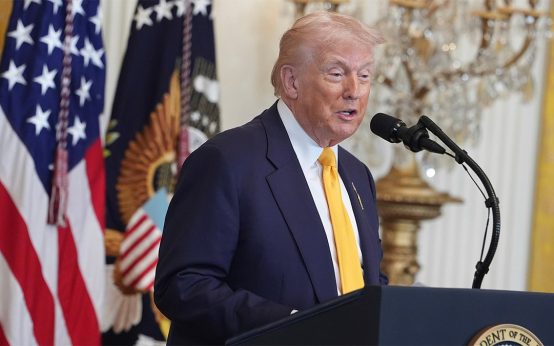
Critics demand more action, whether increasing or decreasing federal spending. Meanwhile, President Trump often bypasses Congress on issues like trade and the conflict with Iran. These actions, coupled with urging for changes in voting rules, add to the current uncertainties in the Senate.
Political Environment
For Hulse, the current political climate is grimmer than in the past. He recalls the 1985 Congress, where World War II veterans sought to do right, which contrasts with today’s alignment with the President and gerrymandered districts.
Both parties blame each other for the chaos. Rep. Peter Welch (D-Vt.) criticizes Republicans’ control of the House, while Sen. Katie Britt (R-Ala.) accuses Democrats of playing politics over people’s interests. Sen. Chris Coons (D-Del.) notes President Trump’s opposition against his own Congress.
Expert Evaluations
Sarah Binder from the Brookings Institution and Philip Wallach from the American Enterprise Institute share their views on Congress’s struggles and diminished authority. Binder highlights Congress’s enormous constitutional authority, such as the power over finances and war declarations. Over the decades, Congress has increasingly ceded authority to the President.
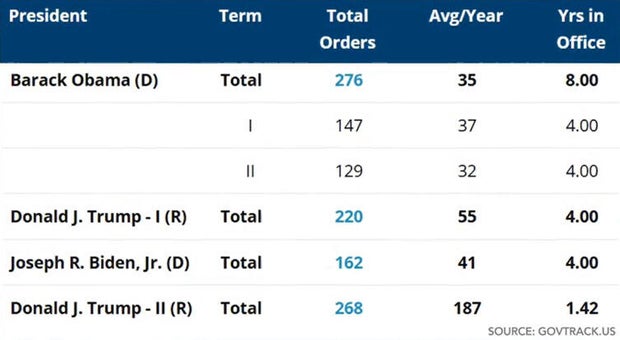
Wallach believes members of Congress no longer prioritize solving the nation’s problems but focus on supporting or opposing the President. With past presidents issuing numerous executive orders, citizens question Congressional actions.
“Congress doesn’t need to be popular to be effective,”Wallach states.
Binder argues that people should be critical of Congress given the substantial public debt and other pressing issues. The public, however, maintains unrealistic expectations due to the requirement for broad bipartisan support in a polarized nation.
Hope for Change
Despite acknowledging Congress’s persistent challenges, Binder remains optimistic but realistic about the difficulties ahead. She expects Congress to continue deferring problems to the future. Wallach believes that taking a long-term perspective may offer hope, as Congress has evolved over the centuries and might eventually return to a central role in governance.
 Rahm Emanuel Discusses Potential Presidential Run and Jewish Identity
  JD Vance’s Influence Grows as 2028 Speculations Arise
  Laura Ingraham Criticizes Democratic Policies on ICE and Immigration
  Jay Clayton Appointed as White House AI Czar
  Debate Over Democratic Socialism Intensifies Within Democratic Party
  Latino Voters Show Less Support for Trump and GOP