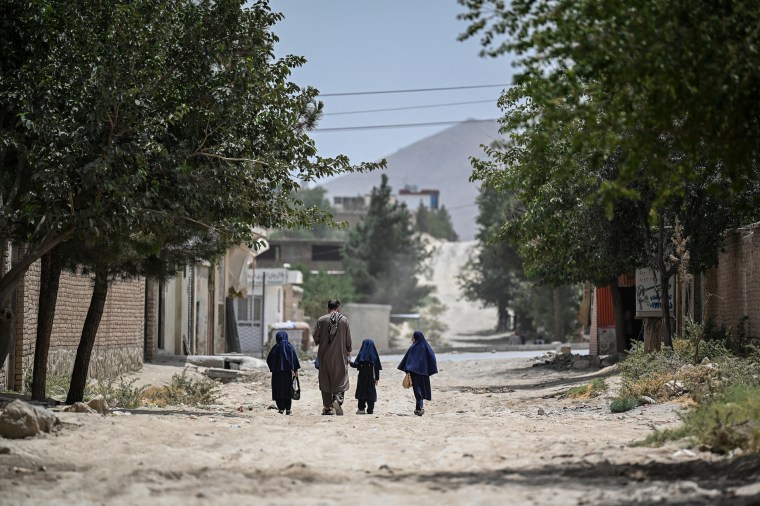
An estimated 2.4 million Afghan girls are currently denied access to secondary education. This situation persists five years after the Taliban’s takeover, as reported by a U.N. agency on Tuesday. The U.N. Educational, Scientific and Cultural Organization (UNESCO) based in Paris has reiterated its call for the rights of these girls to be restored immediately.
UNESCO describes the exclusion of women and girls from education as a severe violation of their fundamental rights. “Afghanistan remains the only nation globally where girls and women are formally barred from secondary and higher education,” stated Hoda Jaberian, UNESCO’s program coordinator for education in emergencies, during a recent video news conference. According to Jaberian, “Five years is not a simple interruption in a child’s education; it almost equates to a complete secondary school cycle.”
UNESCO continues to advocate for the immediate and unconditional reinstatement of girls’ and women’s rights to secondary and higher education. Jaberian emphasized that this is a non-negotiable basic human right and asserted that nothing can substitute this educational access.
The Taliban assumed control of Afghanistan on August 15, 2021, as U.S. and NATO troops withdrew following two decades of conflict. Soon after, girls were prohibited from attending secondary schools, and restrictions were later applied to higher education, employment, and other public domains, effectively excluding women and girls from public life.
Despite repeated appeals from the United Nations, humanitarian organizations, human rights defenders, and several Islamic nations, the Taliban continues to enforce these bans, asserting that this issue is a domestic one.
Jaberian pointed out that these restrictions are undoing the significant educational advancements achieved in Afghanistan over the past two decades. In 2001, girls had extremely limited educational access, but by 2021, nearly 1 million girls were enrolled in secondary education. Jaberian lamented that “Afghanistan had made significant progress in expanding girls’ access to education,” but much of this progress has been completely reversed.
UNESCO remains committed to supporting education in Afghanistan through its community-based programs in education, literacy, and skills development. The agency conducts skills development and literacy classes within community areas, often within the facilitators’ homes, with the authorities’ awareness. Over 1,000 literacy facilitators, mostly trained by UNESCO and its partners, are involved in these efforts.
“While the restriction persists, we cannot desert Afghan learners,” Jaberian assured. UNESCO collaborates with communities and partners to maintain every possible educational pathway for learning.
 The Threat of Melting Glaciers: A Call to Action
 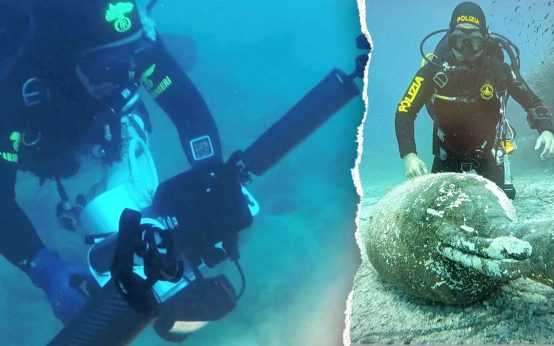 Police Discover Ancient Roman Artifacts Off Sardinian Coast
 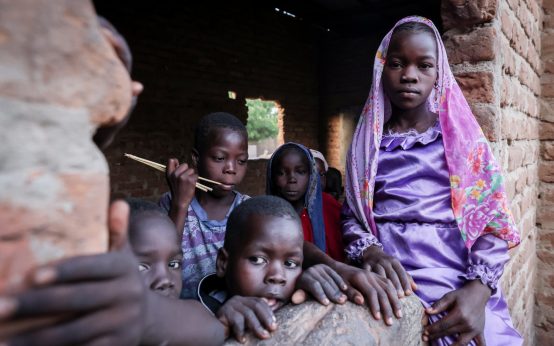 Urgent Need for Action in East Africa’s Food Crisis
  Suspected Plague Death in Siberia Sparks Health Measures
  G7 Nations Agree to Release 100 Million Barrels of Oil Amid Fuel Price Surge
  Co-Pilot Attempts Hijack on Flight to Tel Aviv