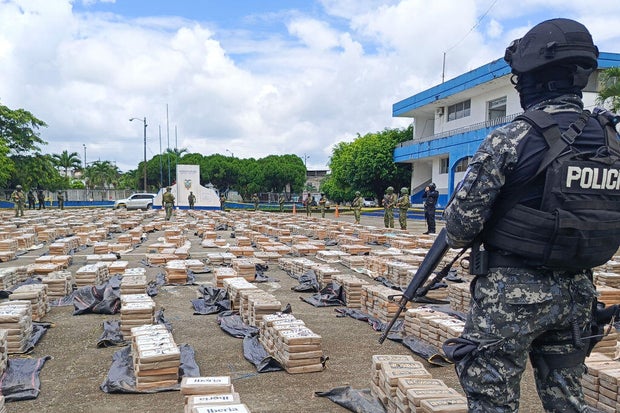
Fresh Sanctions Target Ecuadorian Drug Trafficking Network
The United States announced new sanctions against 15 individuals and entities based in Ecuador, as well as 10 vessels, due to their involvement in an alleged maritime cocaine trafficking operation. The U.S. Treasury Department stated that these sanctions are linked to groups Los Choneros and Los Lobos, which have been identified as foreign terrorist organizations.
Details of the Trafficking Operation
According to the Treasury Department, the Ecuadorian network operated a fleet of fishing vessels from Manta, Ecuador, to smuggle thousands of kilograms of cocaine each month. This cocaine is said to supply Mexican cartels, eventually being sold in the United States. The vessels were accused of refueling and resupplying smaller boats, known as “go-fast” boats, to transport the drugs north via the eastern Pacific Ocean towards Mexico. Mexican cartels like the Sinaloa cartel and Cartel de Jalisco Nueva Generación then assumed control of distribution to American markets.
Sanctions Details and Rationale
Treasury Secretary Scott Bessent emphasized ongoing efforts to disrupt cartel activities and secure borders. Among those sanctioned are members of the Mero family, recognized for running Arcasdenoe S.A., a fishing company allegedly supporting cocaine shipments. Other Ecuadorian nationals accused of managing extensive cocaine operations and multiple front companies were also sanctioned.
Ten vessels were singled out for providing logistical cover and direct transport for cocaine. These sanctions expand upon the State Department’s September 2025 terrorist designations of Los Choneros and Los Lobos and previous actions against these groups and CJNG.
Impact of Operation Pacific Viper
The sanctions announcement ties closely to Operation Pacific Viper, a campaign led by the U.S. Coast Guard that commenced in August 2025. It successfully seized over 225,000 pounds of cocaine in the eastern Pacific by mid-2026.
Legal Implications of Sanctions
The sanctions freeze any U.S.-based assets of the designated individuals and entities, barring U.S. persons from business interactions with them. Violations incur civil or criminal penalties, and foreign financial institutions facilitating transactions with those sanctioned may face secondary sanctions.
This coordinated action involves several U.S. entities, including Homeland Security, the DEA, U.S. Southern Command, Naval Intelligence, and the Coast Guard. It is part of nearly 30 similar actions since early 2025, targeting cartel networks.
Commitment to Combat Drug Trafficking
The State Department remarked that these trafficking networks generate billions for cartels responsible for deadly drugs affecting U.S. communities. The U.S. government remains committed to dismantling cartels profiting at the expense of American lives.
Earlier in the year, U.S. commandos engaged with Ecuadorian troops in a joint mission to dismantle a criminal hub linked to Los Choneros. In 2024, Los Lobos was deemed Ecuador’s largest drug trafficking ring, significantly contributing to the violence in the region.
 Rescue of Woman Overboard from Royal Caribbean Cruise
  Cartel Drone Use Increases Along the US-Mexico Border
  Climate Change Linked to Rising Child Marriages in Developing Countries
  Urgent Ukrainian Request to SpaceX Over Starshield Restrictions
  Pope Leo XIV’s Post-Surgery Recovery Progresses as Planned
  Justice Department Declines to Prosecute Former CIA Analyst