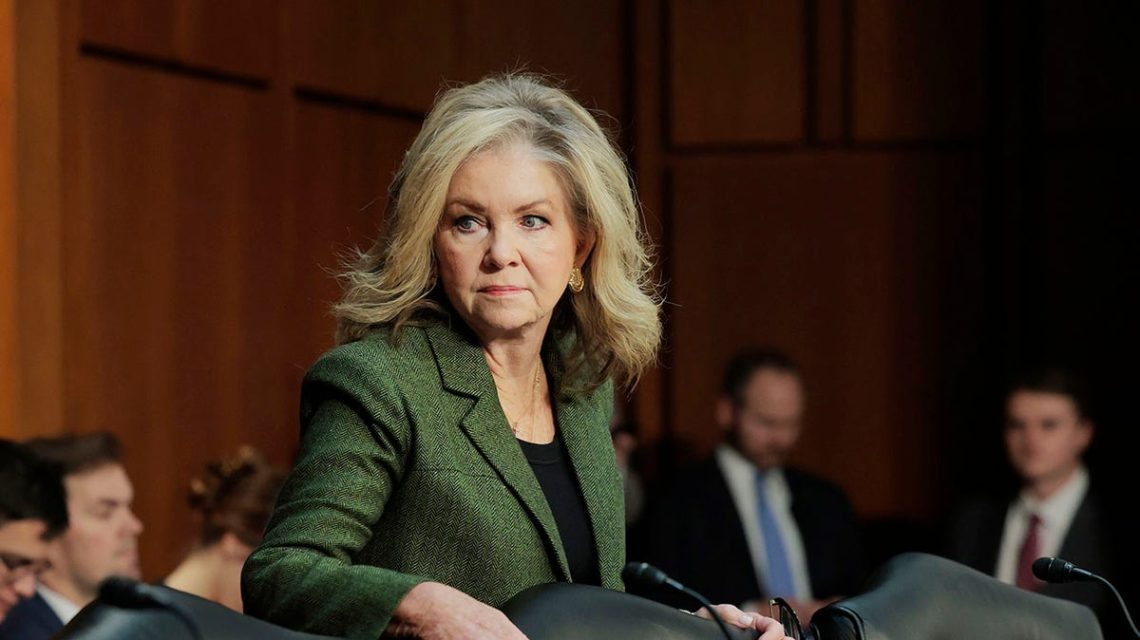
Senator Marsha Blackburn emphasized the ongoing congressional scrutiny of the rapid expansion of sports betting and prediction markets. Following a recent hearing, Blackburn highlighted the need for Congress to establish where federal regulation should complement state control. Her focus lies on preserving the integrity of American sports from potential harm.
During the hearing titled “No Sure Bets: Protecting Sports Integrity in America,” discussions revolved around legal sports betting, prediction markets, gambling addiction, social media advertising, and recent scandals in professional and college sports. Blackburn noted the necessity to differentiate between federal regulators’ roles and those of state gaming officials.
Sports betting primarily falls under state regulation, whereas prediction markets claim they operate under federal commodities law. The Commodity Futures Trading Commission handles this distinction, especially as some markets introduce sports-related contracts. Critics see these as akin to sports betting.
“You do have to ask what part of this prediction market participation is going to fall into that betting? And what part is called by just another name, betting?”
Bill Miller, President of the American Gaming Association, criticized prediction markets, claiming they act as “backdoor sports betting operations.” He argued they circumvent the constraints established at state levels since the 2018 Supreme Court decision that nullified the federal ban on sports betting.
Conversely, former Rep. Patrick McHenry defended prediction markets as distinct from sportsbooks. He explained that unlike sportsbooks, where the house profits when customers lose, prediction markets facilitate user-to-user trades with transaction fees.
“In a prediction market exchange, participants trade with one another, while the platform earns transaction fees for facilitating the market.”
However, some senators remained unconvinced. Sen. John Curtis from Utah expressed difficulty in distinguishing prediction markets from gambling. Sen. Jacky Rosen of Nevada remarked on their similarity to gambling, likening it to the adage about a duck.
Beyond prediction markets, Blackburn addressed concerns about youth exposure to gambling through online platforms. She criticized gambling content reaching minors via social media algorithms and emphasized the adverse influence on young Americans, particularly young men.
“Advertising to minors is disgusting.”
Dr. Harry Levant delivered striking testimony highlighting the dangers of microbetting, calling it addictive due to frequent in-game wagers. He criticized the transformation of sports into continuous betting opportunities.
Integrity of bets remains a concern. Scott Sadin highlighted vulnerabilities of bets on individual players or in-game events. Scandals in major sports leagues, including the indictment of MLB players, have sparked debates on trust and integrity.
Mary Beth Thomas, representing Tennessee’s regulatory efforts, discussed measures taken to block vulnerable bets and investigate suspicious activity. Blackburn acknowledged state efforts but stated federal standards might be necessary.
Blackburn concluded by stressing the potential risks of unregulated betting moving offshore. She urged Congress to ensure proper regulations apply both physically and virtually.
 Debate Over Democratic Socialism Intensifies Within Democratic Party
  Latino Voters Show Less Support for Trump and GOP
  Rep. Emmer Criticizes Far-Left Democrats, Rallying Support for GOP
  Latino Men Shift Away from Trump Ahead of Midterms
  Jonathan Turley: Left Demonizes Supreme Court
  Michael Lewis Sheds Light on the Realities of Government Work in New Book