
Yair Lapid, Israel’s opposition leader, voiced concerns over a proposed deal between the U.S. and Iran, stating it does not meet Israel’s objectives for the ongoing conflict. Lapid accused Prime Minister Benjamin Netanyahu of failing to secure a favorable agreement. As part of an alliance seeking to replace Netanyahu in upcoming elections, Lapid described the deal’s terms as troubling.
In talks with reporters in Jerusalem, Lapid stated, “The deal is bad for Israel, bad for the region, bad for the citizens of Iran.” The U.S. and Israel began the conflict on February 28, aiming to dismantle Iran’s ballistic missile program, eliminate its support for regional militant groups, and halt its nuclear ambitions. Netanyahu and U.S. President Donald Trump also aimed to weaken Iran’s government. Under the current discussions, Iran would relinquish its highly enriched uranium stockpile and reopen the Strait of Hormuz in return for lifting a U.S. blockade and easing sanctions. Detailed negotiations on Iran’s nuclear program would follow over a 60-day period, with uncertainty around whether missiles or militant support would be addressed.
Lapid thanked Trump for starting the conflict with Israel but criticized Netanyahu for not coordinating more with Washington. “The Israeli government is at an all-time low in its ability to influence decisions in Washington,” Lapid remarked, referencing Trump’s assertion that Netanyahu would comply with his demands.
A source close to Netanyahu who wished to remain anonymous noted that Netanyahu has stressed Israel’s autonomy in dealing with threats. “Israel is a sovereign state, not a vassal state,” Lapid emphasized.
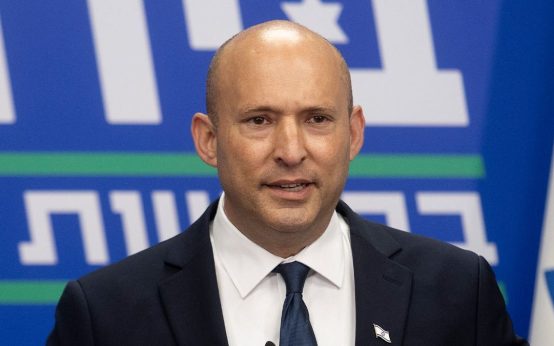
Lapid’s brief tenure as Prime Minister in 2022 under a rotation agreement with Naftali Bennett, leader of a smaller conservative party, interrupted Netanyahu’s 12-year rule. Their parties have again merged, with Bennett leading the revived faction, to challenge Netanyahu in October elections. Lapid currently serves as the opposition leader while Bennett is on a political hiatus. Their coalition seeks to unify a fragmented opposition against Netanyahu.
Lapid, among a dwindling number of Israeli politicians backing Palestinian independence, does not foresee it on the next government’s agenda. Due to recent conflicts and attacks, he believes a two-state solution is unfeasible. He reassured that unilateral actions preventing a future Palestinian state would be opposed and noted Bennett’s commitment not to annex occupied territories.
Lapid ruled out forming a coalition with Arab parties to oust Netanyahu. Public opinion suggests Lapid and Bennett might struggle to secure a majority without some Arab lawmakers’ support, as seen in their prior coalition with Mansour Abbas in 2021. Lapid acknowledged that cooperation with Abbas had been appropriate then, but expressed that Israel’s circumstances have changed, and they will not seek coalition with Abbas’ party in future elections.
 Dutch Review Board’s Euthanasia Ruling and International Debate
  Israeli PM Commends Heroic Actions in Flight Emergency
  Rabbi and Jewish Leaders Criticize Adam Brody for ‘Genocide’ Comment
  Flydubai’s Emergency Landing Highlights Cockpit Security
  Former Israeli PM Naftali Bennett Commends Passengers and Crew for In-Flight Heroism
  Diplomatic Complexities Unfold at U.S. National Archives Visit