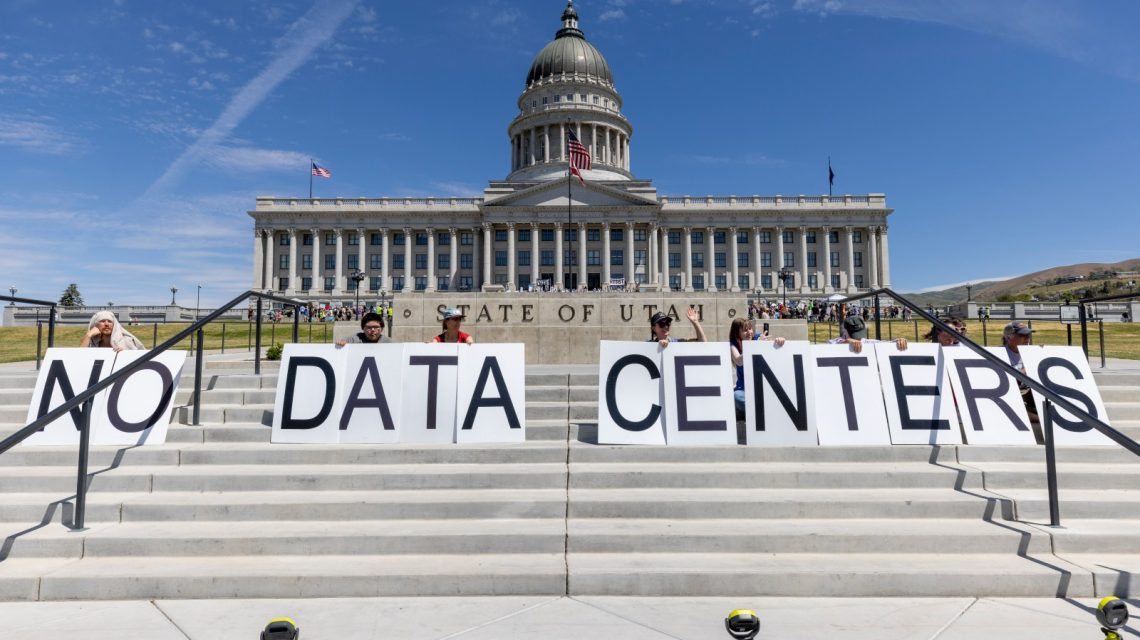
The initially scattered local opposition to data centers is now gaining traction as a national political issue. Policy responses are shifting in tandem with public sentiment. According to a recent Gallup Poll, 70% of Americans are opposed to the construction of artificial intelligence data centers in their neighborhoods.
Data Center Map reveals there are over 4,300 data centers across the U.S., developed for AI training, deployment, and service delivery. This includes more than 600 in Virginia, over 460 in Texas, and more than 130 in New York. These advancements coincide with environmental activist Erin Brockovich launching a website to monitor concerns related to these facilities. The rapid expansion of AI-driven centers increasingly clashes with local communities.
Policymakers Begin to Respond
New Jersey Governor Mikie Sherrill recently announced plans to ensure data centers support the required grid infrastructure for their growth. These facilities will also need to report their energy and water usage. Simultaneously, Pennsylvania Governor Josh Shapiro shared details on the standards that data center developers must meet to receive state backing. These standards include demonstrating how projects will benefit local communities, mitigating impacts, and ensuring responsible development.
New York Businesses Push for Statewide Moratorium
Pressure also stems from the business sector. Nearly 500 New York businesses are urging Governor Kathy Hochul and state lawmakers to support legislation enacting a temporary moratorium on the construction of new data centers. They argue the rapid expansion significantly increases fossil fuel pollution, strains water resources, consumes land, and raises electricity prices. This growth, they say, could harm small firms by increasing operational costs while exhausting valuable natural resources.
The businesses emphasize that officials have not had adequate time to establish necessary regulations. They also warn that the proposed facilities could lead to increased electricity consumption that rivals the entire state’s household use, demanding more gas infrastructure, and could leave communities with pollution but few permanent jobs. Newsweek reached out to Hochul’s office for comments on the matter.
Concerns in Texas
In Texas, Agriculture Commissioner Sid Miller has called for a temporary hold on new hyperscale data center developments. The state needs to assess the long-term impacts on its infrastructure, agricultural economy, and communities. Miller highlighted how the rapid growth is depleting land, water, and power across rural Texas, with some facilities using enough electricity to power towns and pulling vast water volumes during droughts.
He believes there should be a pause to establish responsible regulations before the industry grows beyond management capability.
Local Governments Move to Block Projects
Several New Jersey towns have decided to eliminate data centers altogether. WHYY reported that East Greenwich Township approved a ban on data centers while an application by American Tower for a 17,000-square-foot facility remained under review. Similarly, Millville city commissioners unanimously prohibited data centers during a recent meeting.
In Monroe Township, officials banned all data centers related to AI, cloud computing, and cryptocurrency, and also restricted similar land uses following resident opposition to a proposed large-scale project. Other municipalities such as Andover Township and Logan Township have enacted similar bans.
Impact Concerns in Arizona and Georgia
In Arizona, neighborhood opposition often focuses on potential quality-of-life issues. Axios noted that resistance is fueled by concerns about continuous noise, the burden on water resources, and an overall decline in living conditions. The power components of some sites might aid the broader grid, with locations apt for industrial use placed at least a mile from the nearest neighborhood.
Developer efforts such as open houses and public meetings aim to tackle concerns, such as water use, though these centers meet the growing digital demand and generate tax revenue. In Georgia, the New York Post reported that Georgia Power is exercising eminent domain to build a high-voltage transmission corridor, potentially displacing homes, to support AI-linked data centers. This has led to disputes over appraisal and compensation claims, with residents feeling pressured.
Billions Stalled in Proposed Projects
The resistance already impacts development significantly. As per Miquel Vila from 10a Labs, the opposition is consolidating and becoming more prevalent. Last year, reports indicated that 17 proposed projects were delayed while 31 were canceled, totaling a value of at least $156 billion. Currently, 11 states are considering temporary halts on new data centers.
 Trump Unveils AI-Powered America.gov Platform
  Trump’s 2024 Campaign Targets Young Men Through Cryptocurrency
  How Modern Windows Improve Home Insulation
  State Department Simplifies Passport Process with Online Applications
  Senate Democrats Block Data Center Bill Over Efficiency Concerns
  Future Cities: Ambitious Projects Aiming for Innovation and Sustainability