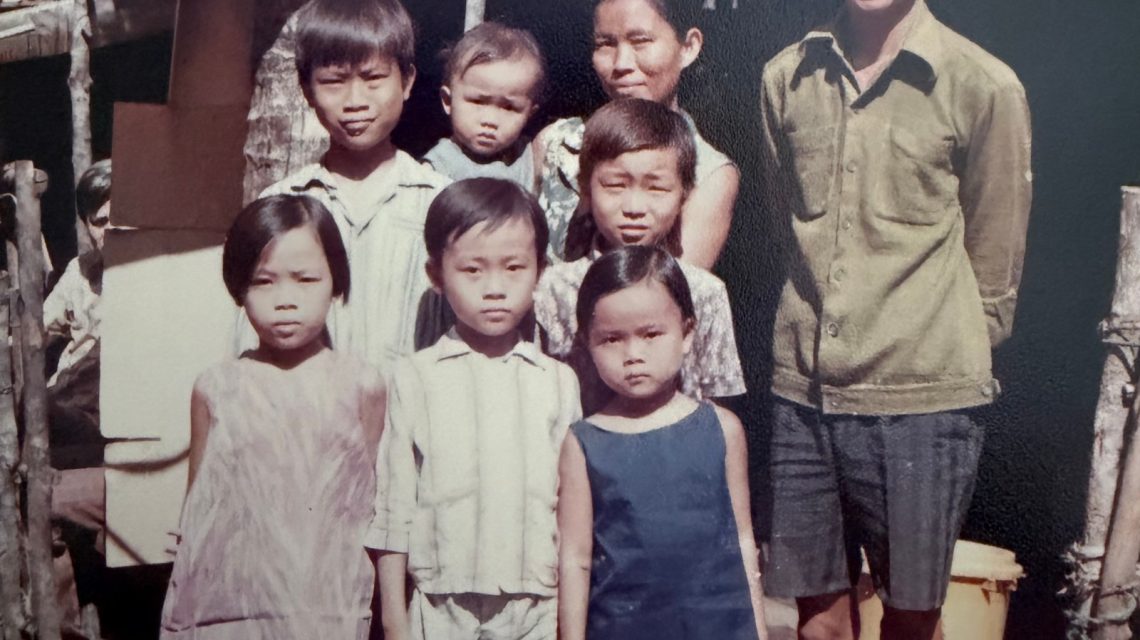
In 1979, at the age of 11, I faced a drastic change in my life. My father instructed our family, which included seven children and our parents, to pack a small bag. That night, we left our home in Saigon, Vietnam, for a coastal village in Song Be. We boarded a small fishing boat under the cover of darkness, joining about 300 others. We drifted into open water with no reassurance of reaching safety. At the time, I could not grasp the full extent of what was happening. As a father now, I better understand my father’s decision. It was a choice no parent should face: risk everything, even lives, or forfeit a future for his family.
More than four decades later, in March, I returned to Vietnam as chief financial officer of UNICEF USA. Walking through the streets, I saw a country transformed from the war-torn nation of my childhood. Vietnam was thriving, dynamic, and full of opportunity. This change led me to a new question: Would my parents have embarked on that perilous journey, risking the loss of their youngest child, if they knew Vietnam would become what it is today? I believe the answer is yes. My father was driven by hope. His decision stemmed from a belief that we deserved more than fear and uncertainty. This belief links our story to millions of families today.
In June, we commemorate World Refugee Day and Father’s Day. These two observances are closely intertwined for me and many fathers globally. I encourage people to remember that every refugee statistic involves decisions like my parents’. Choices made not from recklessness but responsibility. Today, nearly 50 million children are forcibly displaced worldwide, the highest number recorded. Many flee conflicts, climate shocks, and instability they did not create. Like me, their experiences will linger with them throughout their lives.
After three days at sea, we reached Malaysia. We temporarily stayed on a beach before moving to a refugee camp. A year later, we were transferred to the Philippines, waiting over a year for resettlement. Initially, no country accepted us; there were too many children, and my parents lacked English proficiency and suitable jobs. Our future seemed bleak. Yet, during that time, I received vaccinations from humanitarian workers and learned my ABCs from volunteer teachers. The world had not forgotten us.
The UNICEF logo became a comforting sight in my childhood. At that age, you do not comprehend institutions or funding mechanisms, but you understand when someone shows up for you. It means being given a chance. Humanitarian support meets immediate needs and fosters long-term, systemic change.
During my recent visit to Vietnam, I saw this principle in action. The Inclusive Education Resource Center (IERC) at the National College of Education in Hanoi showcased how technology aids children with disabilities. It helps them integrate into mainstream schools and access equal opportunities. This underlines the impact of inclusive education. In Bac Ha, I witnessed UNICEF’s influence on various education initiatives. The mother-tongue–based bilingual education for the Hmong community stood out, ensuring children learn Vietnamese while preserving their cultural identity. This resonated with my own experience of learning English while retaining my cultural roots.
On our last day, we visited a boarding school with living conditions resembling my refugee camp days. The memory of cramped sleeping spaces on barely covered beds evoked memories of the flat wooden boards I slept on at Pulau Bidong Island in Malaysia. This moment stayed with me.
These programs are not abstract efforts. They are lifelines. They separate a child left behind from one discovering their potential. With rising global displacement, support for these systems faces increasing strain. Discussions often focus on refugee policy related to borders, costs, and numbers; less on long-term impact. I am living proof that investing in children has immeasurable returns. A child in a refugee camp today might become a teacher, doctor, or business leader. Like me, they can ensure that every child accesses the same opportunities I had.
This World Refugee Day and Father’s Day, we must honor family resilience and our shared obligation to them. My father was not unique in his courage. Worldwide, parents make difficult decisions daily, crossing borders, boarding unsafe boats, and leaving everything to secure better futures for their children. We must ask ourselves if we will match these parents’ determination. Will we ensure their children access rights like education, healthcare, and opportunities? This is not merely compassion. It is an investment in a stable, prosperous world.
Standing in Vietnam this year, reflecting on this full-circle moment, I felt immense gratitude for my parents, supporting organizations, and the chance to build a life I once could not envision. I also felt a sense of responsibility. Millions of children still await that same chance today. My father took a significant risk to ensure my future. It is now our duty to ensure others receive that opportunity too.
Michael Chen is the chief financial officer of UNICEF USA.
 Ukraine Converts APCs to Explosive Devices in Donetsk Offensive
  The Quest for the Knuckleball Dream
  Navigating Grief After a Sibling’s Overdose
  Dutch Review Board’s Euthanasia Ruling and International Debate
  Israeli PM Commends Heroic Actions in Flight Emergency
  Rabbi and Jewish Leaders Criticize Adam Brody for ‘Genocide’ Comment