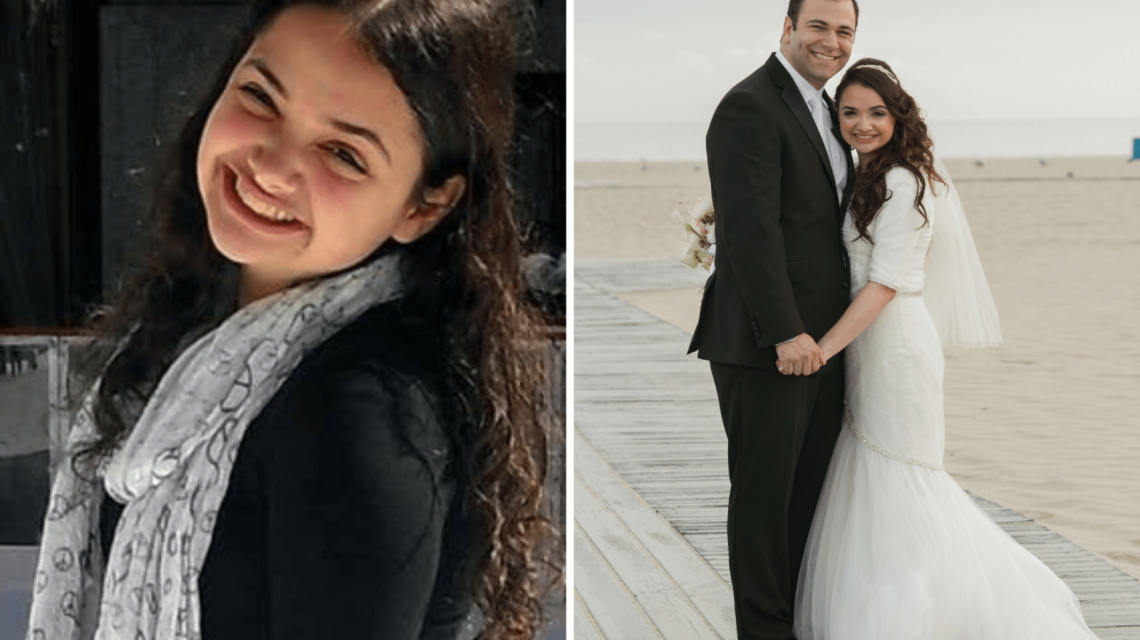
Unexpected Outcome of a Grand Mal Seizure
When Michal Sklar experienced a grand mal seizure at 16, anxiety over her health was only the beginning. Following this episode, she realized she had acquired a unique ability, which she humorously refers to as “the most useless superpower.”
Recollections from a Life-Changing Day
Sklar vividly recalls the day her life changed. On the eve of her seventeenth birthday in October 2010, she was scheduled to speak at her high school assembly in New York. As she stood to introduce the speaker and took her seat, her next memory was waking up in a hospital.
“The seizure was idiopathic, and its cause remains unknown,” Sklar, now 32, explained. She spent nearly a week in the hospital undergoing various tests, including an EEG and MRI. Despite continued medical evaluations, the reason for her seizure was never identified.
A New Skill Emerges
While in the hospital, Sklar discovered she could process words backwards. Initially dismissive, she could not ignore that her brain was transforming every statement from her medical team into reverse format.
This development alarmed her. Having just faced a major health scare, her brain’s reversal of words was unsettling. While Sklar has always appreciated languages, this skill took her interest to an extraordinary level. Songs like Taylor Swift’s “Love Story” played in her mind, but the lyrics appeared backwards: “s’ti a evol yrots, ybab tsuj yas sey.”
Understanding the Impact of Seizures on Language
Studies show that seizure activity can affect language systems, sometimes causing significant changes in language processing. MedlinePlus Genetics notes that in some epilepsy-related disorders, seizures are linked to difficulties in speaking, reading, and writing. The Epilepsy Foundation explains that when seizures occur in the left temporal lobe, they may impair word retrieval and object naming.
Sharing Her Unique Ability
Initially hesitant to share this skill, Sklar eventually confided in a friend, who found it fascinating. Her family humorously remarked that this skill seemed fitting for her.
“I did not mention the skill to doctors at first, as the priority was understanding my seizure’s cause,” Sklar stated. She later demonstrated her skill to a neurologist, yet the doctor showed little interest.
Sklar’s ability allows her to reverse individual words in a sentence, such as transforming “hi, I’m Michal, and it’s an honor to be featured in Newsweek” into “iH, m’I lahciM, dna s’ti na ronoh ot eb derutaef ni keewsweN.” She coined this language “sdrawkcab.” While everyday words are easy, longer ones require more effort, and she admits she cannot reverse especially long words.
Embracing the Uncommon Skill
Sklar enjoys her party trick, which always serves as an engaging icebreaker. Her 7-year-old son proudly shares his mom’s unusual talent with friends.
“My husband and I use sdrawkcab words in our relationship, where ‘spoons’ become ‘snoops’ and ‘stop’ turns into ‘pots,’” Sklar revealed. “Doog thgin” is their goodnight exchange.
Encouraging Individuality
Despite considering her ability a “useless superpower,” Sklar and her family find it immensely entertaining. She encourages others to embrace their unique traits rather than hide them. By sharing her experiences as a backwards speaker on social media, she delights her audience.
“I am still amazed and sometimes spooked by how my brain adapted to a new way of processing language,” Sklar admitted.
Concerned about a health issue? Contact [email protected] for expert advice, and you might be featured in Newsweek.
 Early Detection of Atherosclerosis and Heart Disease Prevention
  Church Attendance Linked to Increased Sexual Satisfaction for Married Couples
  Dining with Loved Ones May Benefit Blood Sugar Levels
  Urgent Need for Action in East Africa’s Food Crisis
  Facing Terminal Illness: Embracing Life’s Moments
  Eating with Partners May Impact Blood Sugar Regulation