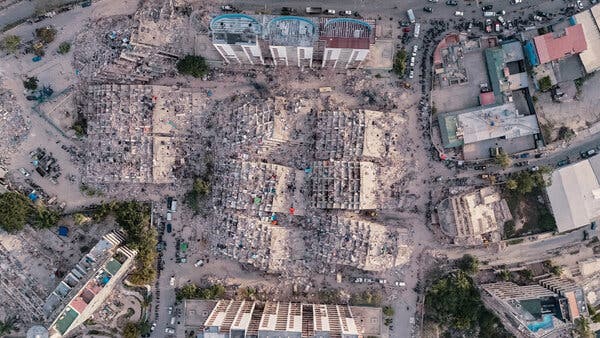
The port town of La Guaira was devastated by recent back-to-back earthquakes in Venezuela. Upon arriving to assess the destruction, one could only see a massive heap of debris where once stood residential complexes.
“No,” remarked a volunteer rescuer. “This is merely the first mountain. More awaits.”
The scene was flattened to such an extent that gaining a comprehensive view was nearly impossible. Only with drone images did a partial understanding emerge.
OPPE 26, a public housing complex developed during Hugo Chávez’s regime, suffered substantially. Many residents had relocated there after the 1999 mudslides.
Reports suggest La Guaira bore the brunt of the quakes. The density of residents in OPPE 26 fuels concerns about significant loss of life there.
Initially, an eerie silence enveloped the area. With limited support from external rescuers and without heavy machinery, locals relied on basic tools to sift through the ruins. Bodies were extracted and respectfully covered with blankets.
One local, Oswaldo Tovar, aged 45, had used a small hammer to reach the bodies of his wife and daughter. He sat with them, unable to free their remains, waiting for assistance. His wife Ivonne Ladera was 46; his daughter was 8. When asked her name, he found himself unable to respond.
The information for this report was gathered by Eric Nagourney, with drone piloting by Andres Conde.
 The Threat of Melting Glaciers: A Call to Action
 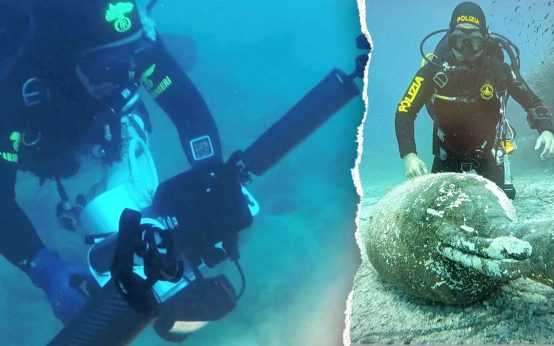 Police Discover Ancient Roman Artifacts Off Sardinian Coast
  Urgent Need for Action in East Africa’s Food Crisis
  Suspected Plague Death in Siberia Sparks Health Measures
  G7 Nations Agree to Release 100 Million Barrels of Oil Amid Fuel Price Surge
  Co-Pilot Attempts Hijack on Flight to Tel Aviv