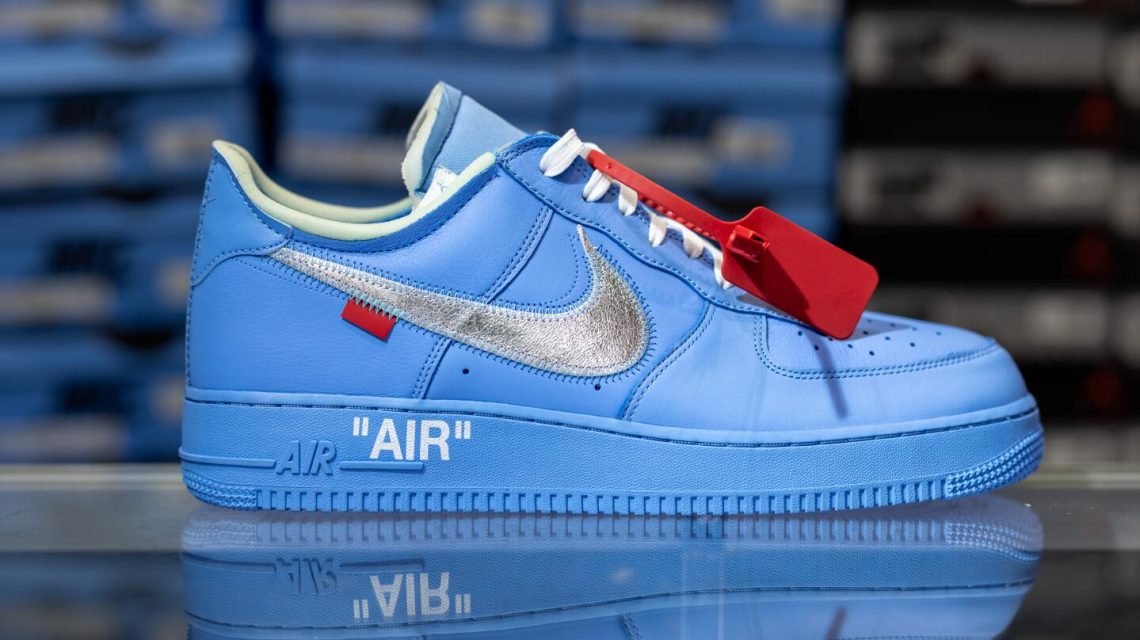
Last fall, Roy Lee Harvey took a Lyft ride across Phoenix, discussing his business with the driver. Harvey claimed he bought high-end Nike sneakers and resold them for profit. The driver, intrigued, exchanged contact details with Harvey and later visited an apartment in Scottsdale. There, he saw numerous Nike shoe models, sparking suspicion.
Reselling sneakers is a multibillion-dollar global industry. Scarce models can sell for multiple times their retail price. Influencers contribute to the hype through unboxing videos, while sneaker enthusiasts, known for their fashion sense, trade the latest styles. Some view these sneakers as investments, keeping them in pristine condition as values may grow over time.
Among Harvey’s collection were costly models like the Off-White “MCA” Nike Air Force 1 Low and Travis Scott Nike Dunk Low, among others. The Lyft driver, doubting Harvey’s legitimacy, investigated further. Discovering Harvey’s felony charges linked to a sneaker theft ring, the driver alerted authorities.
Federal charges were later filed against Harvey, along with other major resellers, for allegedly bribing Nike employees to steal exclusive styles. Harvey denied wrongdoing, arguing a lack of evidence and Nike’s unaffected sales from resellers.
LAPD Detective Marc Sternin testified about the discovery of falsely labeled packages intended for Harvey’s access in Hollywood. Investigation efforts involved inserting GPS trackers into misdirected packages, leading to retrieval evidence against Harvey and an associate in a Hollywood U-Haul truck. Stolen items, worth an estimated $5 million, were uncovered in a Hawthorne warehouse.
The investigation linked to a notable Memphis distribution facility, where Michael Reno Perkins, an employee, allegedly recruited others to participate in the scheme. They reportedly took instructions from Harvey on which shoes to target for theft.
Perkins, Harvey, and ten others faced federal indictments in Tennessee, including Bereket Abraham, a former CoolKicks co-owner. CoolKicks cleared themselves of allegations despite Abraham’s stock ownership.
Cuellar, also charged, owned Horhead Investments. His business transferred funds to a co-defendant’s food truck company, a move related to the scheme.
The case ties back to broader issues as L.A. is known for cargo theft. Viva authorities tackle these crimes by intercepting shipments from ports and railways, hoping to retrieve stolen goods. They struggle to prove subsequent buyers’ knowledge of items’ illicit origins.
Authorities initiated investigations in early 2024 upon realizing Harvey’s extensive operations. Despite facing police attention, his alleged misconduct continued. In connection, Harvey reportedly threatened a Phoenix Lyft driver, further prompting legal actions.
 Colorado’s Emissions Regulation and Its Broader Implications
  U.S. Supreme Court Tackles Key Issues in New Term
  Tennessee Faces Scrutiny After Failed Execution of Christa Pike
  Demonstrators Sue Media Personality for Defamation
  State’s Repeated Failures in Conducting Lethal Injections
  Kane County Sheriff Ron Hain to Retire for Health Reasons