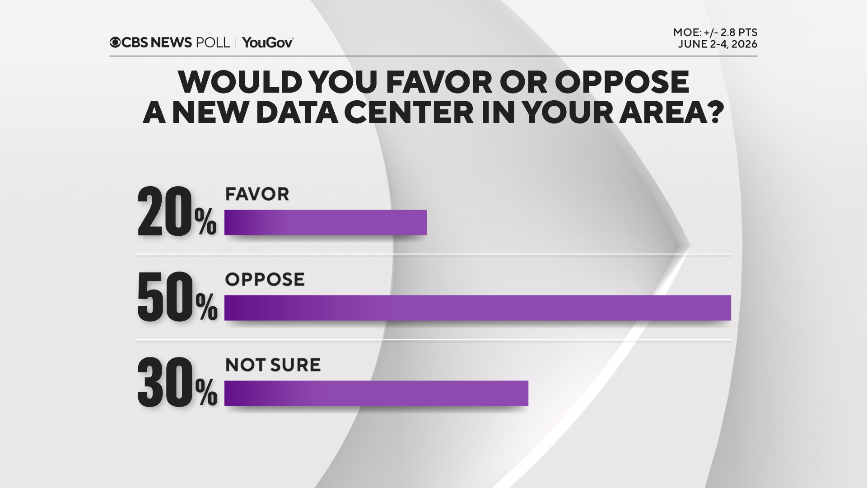
Recent studies reveal that many Americans remain skeptical about the presence of data centers in their communities. The main concerns revolve around potential negative impacts on the environment and resource usage. While the U.S. has seen a rapid increase in data center construction, there is still a general lack of public knowledge about them.
Familiarity with data centers appears to influence opinions significantly. People who report limited knowledge tend to oppose the establishment of data centers more than those who claim to be well-informed. Overall, opposition to new data centers outweighs support by more than two to one, with many individuals still undecided.
Opinions are divided on whether data centers are essential for maintaining U.S. competitiveness in technology and artificial intelligence. Supporters of new data centers believe strongly in their necessity for global competition. More Republicans than Democrats agree with this view, although they also express reluctance to have a data center nearby.
The environmental and resource concerns are prominent. Many Americans believe that data centers adversely affect the environment, water, electricity, and energy costs. However, there are perceived economic benefits as well. More respondents see the establishment of data centers as a positive influence on local economies and tax revenues.
Regarding employment, half of the surveyed individuals expect an increase in job opportunities following the construction of data centers, though optimism dwindles for the long term. Uncertainty remains high, with many unsure about these potential local impacts. This highlights the overarching unfamiliarity with data centers among the American public.
The CBS News/YouGov survey conducted this research with a nationwide representative sample of 2,023 U.S. adults from June 2-4, 2026. The sample was adjusted to reflect national adult demographics, based on the U.S. Census and the 2024 presidential vote. The margin of error for the survey stands at ±2.8 points.
 Trump’s 2024 Campaign Targets Young Men Through Cryptocurrency
  How Modern Windows Improve Home Insulation
  State Department Simplifies Passport Process with Online Applications
  Swiss Glaciers Show Effects of Ice Loss Amid Global Warming
  Climate-Resistant Rock Glaciers: Hidden Water Resources
  Senators Reach Bipartisan Agreement on Permitting Reform