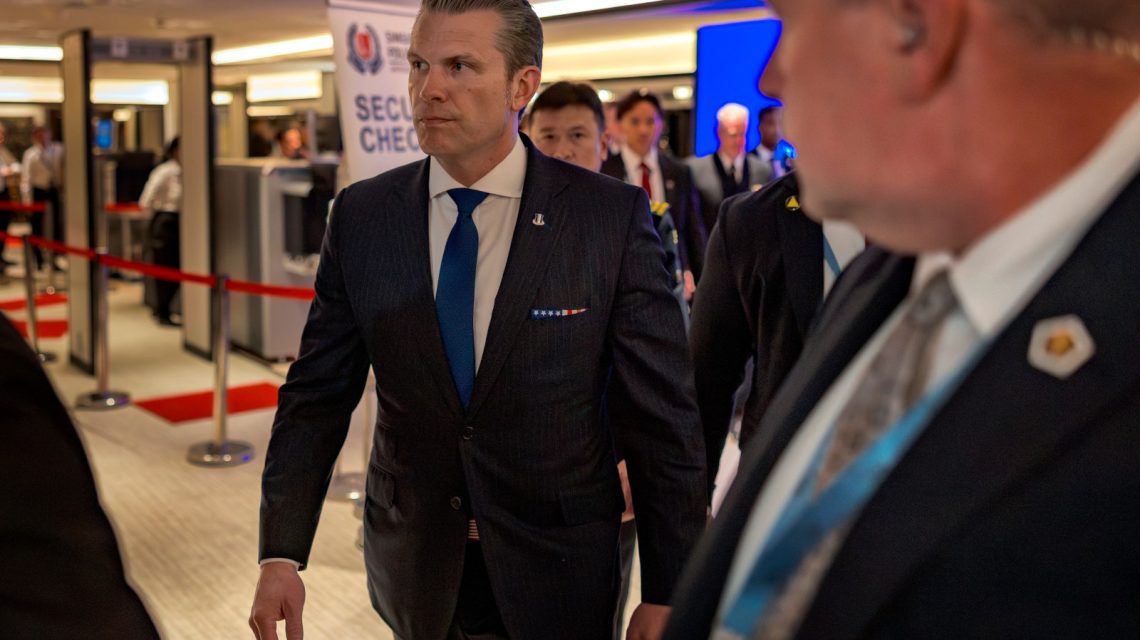
The U.S. Secretary of Defense, Pete Hegseth, aimed to navigate sensitive U.S.-China relations delicately during his speech at a defense summit in Singapore. This comes shortly after he accompanied President Donald Trump on a state visit to China, seeking to mend great-power relations strained by disputes over trade and technology, and the status of Taiwan.
Implications of President Xi Jinping’s Stance
China views Taiwan as a renegade province, asserting it will eventually reunite with the mainland, even if force is necessary. Discussions with President Xi Jinping underscored that mishandling the Taiwan issue might lead to potentially dangerous outcomes. Following these talks, Trump suggested suspending a $14 billion arms deal as a strategic negotiating tool.
Newsweek attempted to contact Taiwan’s foreign ministry for comments regarding these developments.
Hegseth’s Careful Approach on Taiwan
At the summit, Hegseth adopted a more composed demeanor compared to his previous year’s fiery remarks, emphasizing vigilance in the region while praising U.S.-China relations under Trump’s presidency. Without naming Taiwan, he stressed a deterrent-focused national security strategy intended to minimize conflict risks, using the strategic First Island Chain from Japan to Borneo as a barrier against Chinese military expansion.
Arms Sales: A Critical Point
In light of recent peace initiatives, Hegseth recognized the delicate nature of the Taiwan arms issue, particularly given his firsthand experience in Beijing. The decision on the arms deal with Taiwan remains pending, carrying significant diplomatic stakes for both Presidents Trump and Xi.
Da Wei, from Tsinghua University, explained that should Trump proceed with the arms sale, Xi’s ability to visit the U.S. would be compromised due to the political effort invested in the Taiwan issue.
Amid questions about U.S. munitions supply, Hegseth assured that Taiwan arms sales and global stockpiles would not be affected by recent events in Iran.
Persistent Arms Supplier
The U.S. remains Taiwan’s leading arms provider, consistent with the Taiwan Relations Act of 1979. Previous U.S. commitments to reduce arms sales were conditional on the level of threat facing Taiwan. Analysts in Washington have suggested Trump’s conditional approach to arms sales may prompt increased Chinese pressure on Taiwan, though past administrations have strategically timed these sales to mitigate diplomatic tensions with Beijing.
 Maryland First State to Restrict Electronic Pricing in Grocery Stores
  British Police Arrest Man Suspected of Terror Plot
  Activists Push for Nationwide Ban on Child Marriage in the U.S.
  Democratic Hopes and Historical Warnings in 2026 Senate Race
  Republicans Face Challenges Amidst Cost of Living Concerns
  A Different Kind of Fall for Congress This Year