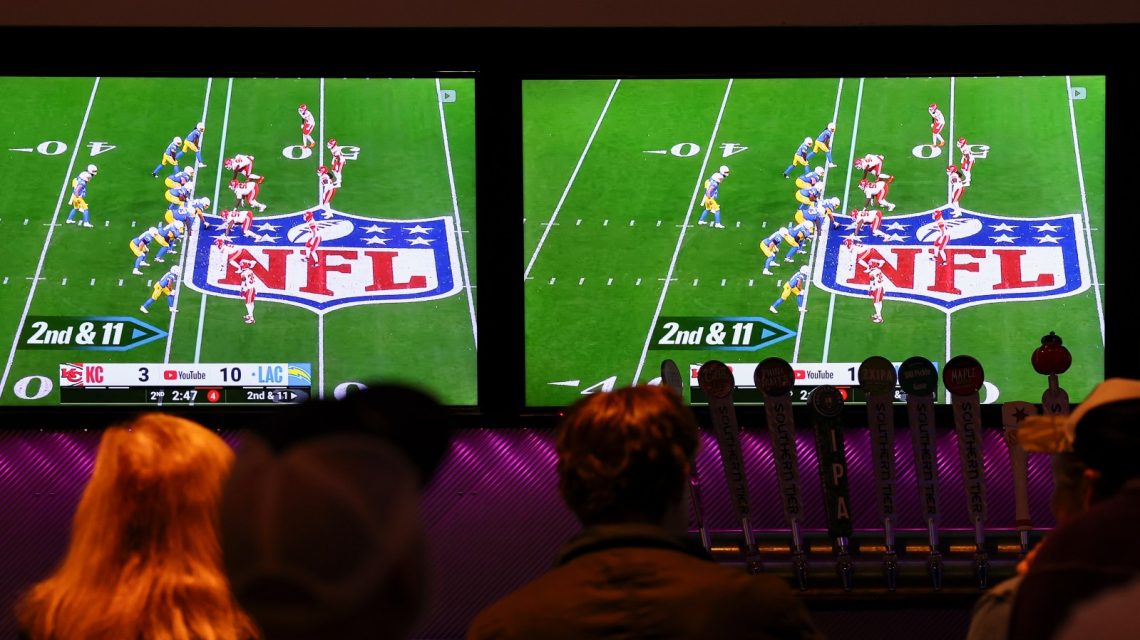
Support for Israel was once a bipartisan beacon on Capitol Hill, uniting opinions across party lines. Now, a less complex yet misunderstood topic is stirring up controversy: the shift in how NFL games are broadcasted. Key figures, such as House Judiciary Committee Chairman Jim Jordan (R-Ohio) and Congressman Jamie Raskin (D-Md), are voicing concerns about rising costs for viewers as games appear on streaming services.
Consumer Costs of NFL Streaming
Both politicians claim that streaming increases costs for fans who want to watch football. Despite varying opinions, the real issue arises from misunderstanding the current dynamics rather than actual financial burden. The Judiciary Committee, alongside the Federal Communications Commission (FCC) and the Justice Department, has shown interest in examining whether the NFL’s practices violate antitrust laws.
Examining the facts reveals a different picture: professional football remains more affordable than other sports programming. The inclusion of streaming services has broadened viewer access and reduced overall costs.
Availability and Cost Structure
Each NFL team’s games are accessible via free broadcast TV in their home market. The NFL’s agreements with major networks—ABC, CBS, FOX, and NBC—extend through 2033, ensuring steady local broadcasting for years.
For decades, cable or satellite subscriptions were necessary for game access. However, streaming services like ESPN Unlimited, Paramount+, Fox One, and Peacock have offered lower-cost alternatives for consumers who have cut the cord.
Rich Greenfield of Lightshed Partners compares typical costs. While critics suggest it costs over $1,000 to access games due to streaming, actual prices are lower. Using an antenna and subscribing to Amazon Prime Video, Netflix, Peacock, and ESPN Unlimited can grant full season access for about $218.
Alternatively, a six-month bundle including Fox One is priced at $387. Using a combination of YouTube TV, DirecTV Stream, and various streaming services totals $428—far less than previous cable bill requirements.
Charter cable, operational under Spectrum, integrates streaming service costs into their bundles. Cable subscriptions could exceed $600, especially when factoring in necessary streaming services for comprehensive access.
Sunday Ticket and Broader Availability
Much of congressional attention targets NFL’s Sunday Ticket package, which provides out-of-market game access not aired locally or nationally. Previously, DirecTV exclusive, now available through YouTube, removes satellite dish requirements, priced annually at $378.
Despite limited household subscriptions, the majority has always found satisfaction in televised game availability. Compared to other leagues, accessing NFL matches is generally less expensive.
The shift has notably complicated game location discovery for consumers. Increasing service numbers demand updated TV user interfaces (UIs) for smooth navigation. Enhanced UIs categorize games by preferred teams, simplifying the search process.
Potential Legislative Changes
The Judiciary Committee’s report hints at future legislation addressing NFL game migration to streaming. Suggested changes may include offering flexible Sunday Ticket subscriptions without the flat rate requirement that applies to all games.
A collaborative bipartisan consensus could address more impactful issues beyond sports broadcasting. NFL access is more economical via streaming than former cable methods, presenting a hopeful outlook for bipartisan achievements.
Tom Rogers is the executive chairman of Fountain 0, Claigrid, Inc., and a CNBC contributor. He founded CNBC, established MSNBC, and serves as a senior adviser to Versant. Formerly, he was TiVo’s CEO.
 Nick Saban’s Comments on ESPN Spark Debate Over College Sports Regulations
  Freddy’s American Adventure: From Soccer to College Football
  Brock Purdy’s Impressive Start in the 2026 NFL Season
  The Value of Retaining Miles McBride for the Knicks
  Penguins Make History with Dominant Season Opener
  Sonny Gray Expresses Frustration After Game Against Yankees