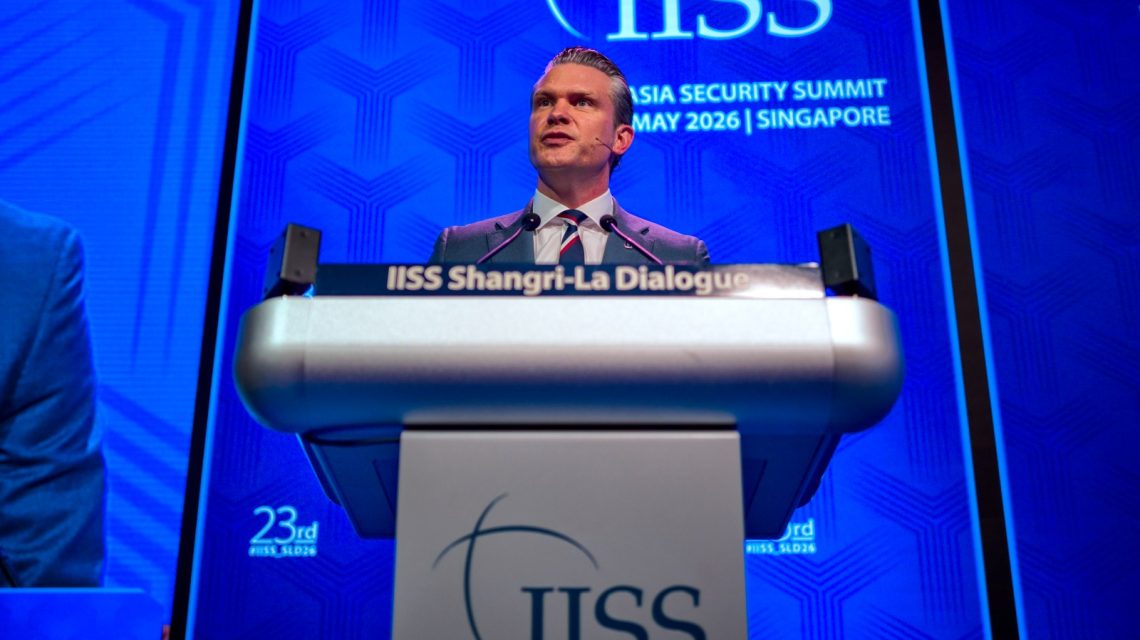
U.S. Secretary of Defense Pete Hegseth delivered a speech at the Shangri-La Dialogue, a key security conference in East Asia, on May 30. His address mentioned the defense of the “First Island Chain” but did not directly reference Taiwan, a central issue in the Indo-Pacific region. This omission came as the U.S. faces scrutiny over its strategy in the area.
Following his speech, Hegseth spoke with reporters, acknowledging respect for China’s ambitions. China’s goals involve annexing territories and closing sea and airspace, raising concerns about regional stability. These comments aligned with President Donald Trump’s earlier remarks branding Taiwan as a “negotiating chip” post his Beijing summit with China’s President Xi Jinping.
After the summit, China heightened military activities near Taiwan and the Scarborough Shoal. These locations are significant for regional security, and China’s actions underscore its territorial claims over the South China Sea, including areas contested by the Philippines.
While American leaders grapple with a response to China’s actions, concerns grow about Beijing’s aggression. Japanese Defense Minister Shinjiro Koizumi questioned the U.S. commitment to regional security during an open session, drawing attention to Japan’s efforts to engage and reassure its allies.
Lance Gatling of Nexial Research highlights this as a potential strategy to involve other Asian security partners. Japan, through moves like the question to Hegseth, signals its position and ability to query the U.S. on behalf of regional neighbors.
Japan remains proactive in its regional partnerships, which include collaborations like the Japan-U.S.-Australia weapons program, the AUKUS submarine initiative, and the Quad alliance with India. Additionally, new groupings like JAROKUS and JAROPUS are forming to enhance strategic cooperation.
The U.S. Department of Defense also recently signed a major defense agreement with Indonesia, highlighting Indonesia’s strategic location along trade routes like the Strait of Malacca. This agreement underscores the importance of keeping shipping lanes open and resisting Chinese maritime ambitions.
Indonesia’s partnership with the U.S. reflects its view of America as a reliable ally that does not pose territorial threats, unlike China. The relationship strengthens efforts to ensure unencumbered maritime passage.
Taiwan, despite its exclusion from formal security arrangements, is recognized as vital to regional security. Last year, Japanese Prime Minister Sanae Takaichi declared a potential Chinese attack on Taiwan as a “survival-threatening situation” for Japan, highlighting possible defensive actions.
China’s reaction to Takaichi’s statement was aggressive, yet she maintained her stance and secured a robust electoral victory, showing smaller nations can confront China’s assertiveness.
While Hegseth assured Japan of U.S. commitment, Asia seeks definitive statements from Trump. Tensions persist as the region watches for clear U.S. leadership.
Article by Gordon G. Chang, author of ‘Plan Red: China’s Project to Destroy America.’ Follow on X @GordonGChang. Opinions in the article are solely the author’s.
 Co-Pilot Attempts Hijack on Flight to Tel Aviv
 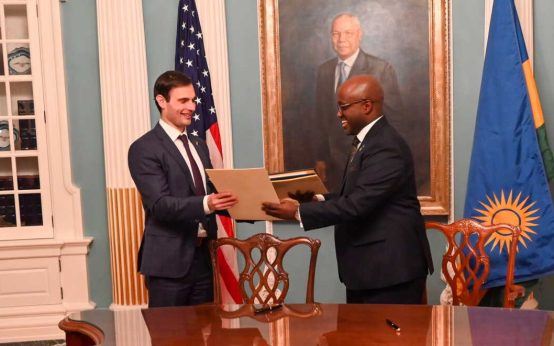 U.S. Revises Global Health Aid with New Strategy
 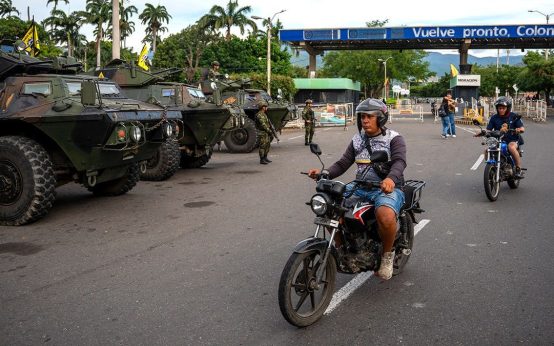 U.S. Warns Against Travel to Colombia’s Norte de Santander Due to Security Threats
  Reflections on 30 Years at Fox News
 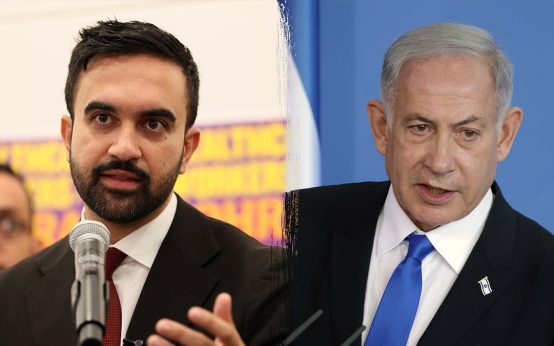 Mayor Mamdani Responds to Netanyahu’s United Nations Speech
  British Prosecutors Charge Man with Terrorism Over Politician’s Murder