Ebola Outbreak Escalates in DRC
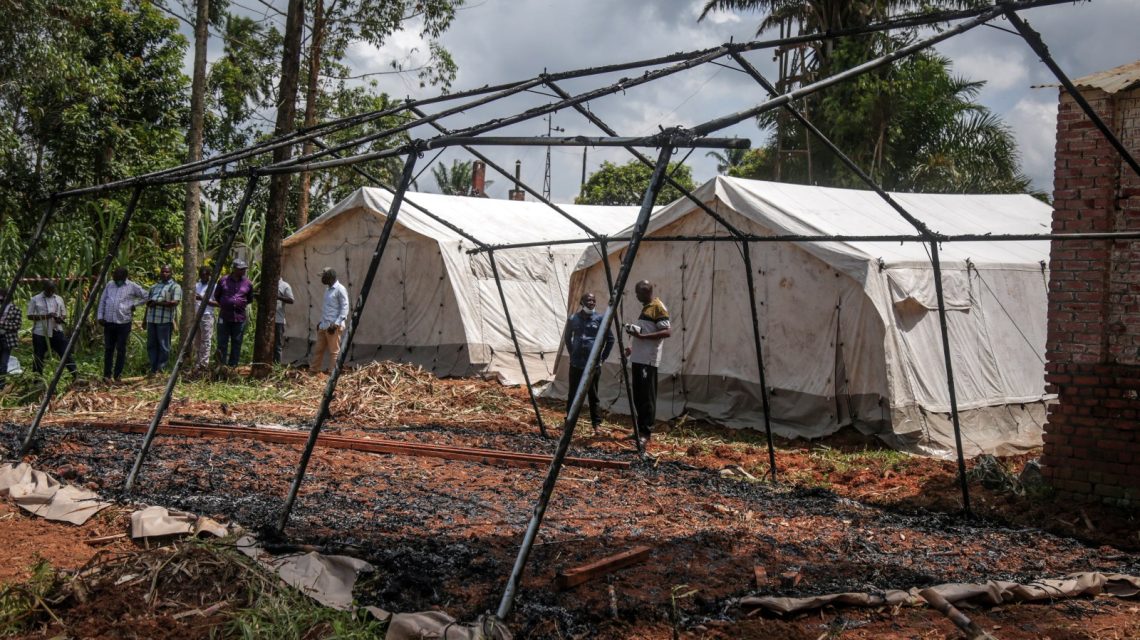
In the eastern Democratic Republic of the Congo (DRC), tensions have escalated due to the ongoing Ebola outbreak. More than a dozen individuals suspected of having Ebola fled a hospital after angry residents set fire to a treatment tent. The incident occurred after authorities denied releasing the body of an Ebola victim, leading to unrest.
“We strongly condemn this act, as it caused panic among the staff and also resulted in the escape of 18 suspected cases into the community,” stated Dr. Richard Lokudi, the director of Mongbwalu hospital, to the Associated Press.
The tent, provided by Médecins Sans Frontières (MSF), was empty at the time, and no injuries were reported. The World Health Organization (WHO) has classified the outbreak’s risk level within the DRC as “very high.” The outbreak involves the Bundibugyo virus, a rare Ebola strain with no approved vaccines or targeted treatments available.
Medical Tents and Community Trust
On Friday evening, residents set fire to a medical tent in Mongbwalu, the epicenter of the outbreak in Ituri province. Although no injuries occurred, 18 individuals with suspected Ebola fled the facility during the incident, remaining unaccounted for.
MSF has initiated activities in Mongbwalu to support the Congolese Ministry of Health and local communities in responding to the outbreak. MSF acknowledges uncertainties and fears within the community and highlights the importance of sustained engagement and trust-building.
Despite the disruption, MSF remains dedicated to establishing a 60-bed Ebola treatment center, continuing patient care, outreach, and essential health services.
Unrest Over Burial Protocols
Similar unrest surfaced in Rwampara when a treatment center was torched. This followed the refusal to release a body suspected of succumbing to the virus. Health officials advise against burials without proper precautions, as Ebola patients can remain contagious post-mortem.
The Red Cross has been overseeing burials, with personnel equipped in protective gear to mitigate transmission risks. Security forces responded to demonstrations in Rwampara by deploying tear gas and firing warning shots, prompting further damage to medical tents.
Scale of the Outbreak
WHO Director-General Tedros Adhanom Ghebreyesus reported 82 confirmed cases and seven deaths within the DRC. He warns the outbreak scope likely exceeds these figures. The AP documented at least 750 suspected cases and 177 suspected fatalities, with numbers expected to rise.
Data from the DRC health ministry shows 160 suspected deaths among 670 suspected cases as surveillance intensifies.
Ebola Outbreak Origins
The outbreak began late last month, with unexplained deaths in Ituri province displaying symptoms of viral hemorrhagic fever. The index case, a nurse in Bunia, died on April 24. Investigations indicate the virus circulated undetected for weeks. The Ministry of Health and WHO declared the outbreak in early May after identifying the Bundibugyo virus.
The rapid spread prompted regional alerts in Uganda and South Sudan and triggered enhanced screening protocols at U.S. airports.
Ebola’s Lethality
Ebola is among the deadliest viral pathogens, with case-fatality rates varying by strain and healthcare infrastructure. Mortality rates typically range from 25 to 90 percent. The Bundibugyo strain historically yields a 30 to 50 percent mortality rate. Current estimates place mortality at 55 to 60 percent.
Ebola overwhelms the immune system, damages blood vessels, and causes organ failure, shock, and internal bleeding. Early supportive care can improve survival, but access to rapid medical intervention remains a challenge in affected areas.
 British Police Arrest Man Suspected of Terror Plot
  Activists Push for Nationwide Ban on Child Marriage in the U.S.
  Investigation into Alleged Incident at Cornell University
  Rising Drone Threats Highlight Vulnerabilities in Moldova’s Airspace Defense
  Bolivia Faces Security Test Amid Unrest
  Incident on FlyDubai Flight Raises Security Concerns