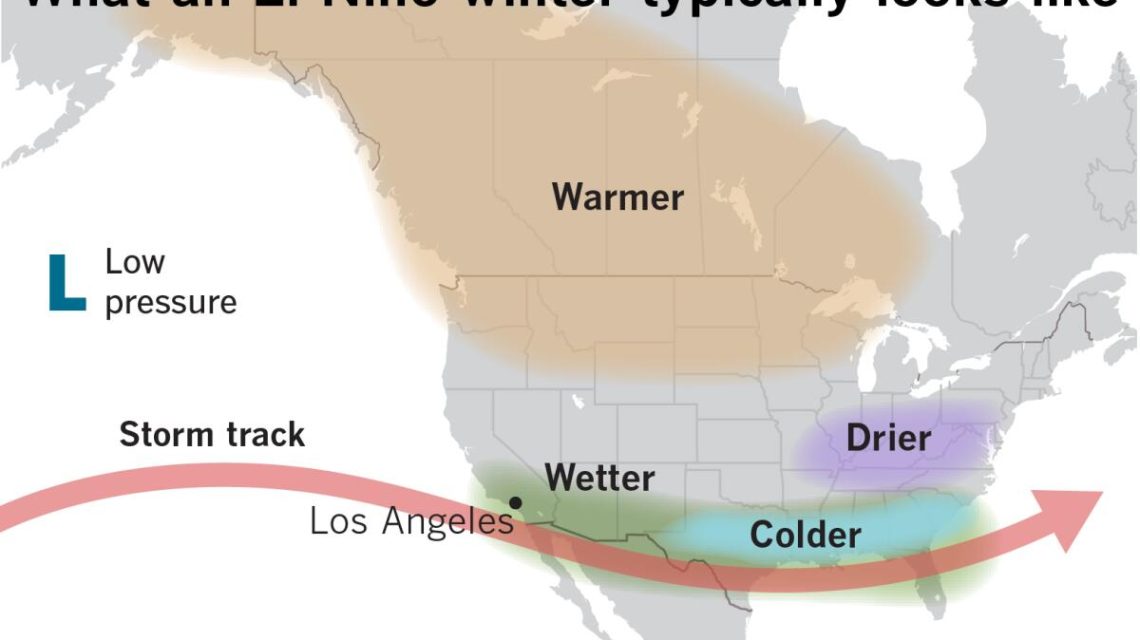
Californians should prepare for potentially severe winter weather due to a strong El Niño that has developed. Oceanic conditions have shifted significantly, causing scientists to predict a strong El Niño with high confidence.
The National Oceanic and Atmospheric Administration’s Climate Prediction Center reports a 97% likelihood of El Niño being strong or very strong until December. Historically, El Niño has been linked to some of California’s harshest winter weather.
During the strong El Niño of 2023-24, Southern California received much more rain than average. Northern California also saw slightly more precipitation than usual. Downtown Los Angeles often experiences significantly higher rainfall during strong El Niño events, such as the ones in 1982-83 and 1997-98.
Understanding El Niño
El Niño patterns emerge every two to seven years, lasting nine to 12 months. These patterns are some of the most influential, capable of altering global weather and impacting rainfall and drought.
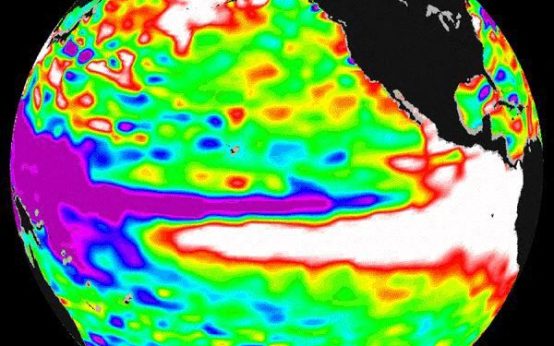
El Niño features warmer waters in the central and eastern tropical Pacific Ocean. This increases the risk of heat waves, both on land and at sea, already worsened by global warming.
Potential Impacts
El Niño leads to various weather effects around the world, depending on the season. In the U.S., it typically causes more storms in the southern states, including Southern California.
For Southern California, El Niño increases the likelihood of above-average rainfall. This raises the risk of landslides and high-tide flooding. The 2015-16 El Niño caused significant coastal erosion in many California beaches.
This year’s El Niño is expected to prolong a marine heat wave affecting Southern California’s waters. Scientists are concerned about the impact of warmer waters on marine life.
Warmer ocean temperatures might increase sightings of tropical or warm subtropical species, such as sharks, near the Southern California coast. Marine mammals and other migratory species may also move closer to shore as they follow their food sources.
Previous El Niño events have seen reduced plankton levels, impacting marine food chains, and increased harmful algal blooms. California sea lions often experience reduced reproductive success during El Niño events.
Other Notable Developments
- A new Sacramento bill might allow insurers to use driving habits to determine premiums, raising privacy concerns.
- Kaiser’s arbitration process for medical disputes faces criticism for alleged biases.
- The 2026 FIFA World Cup was a historic success, with record attendance.
 Atlantic Ends September Without a Hurricane for First Time Since 1994
  Bobcat Sightings and Conservation Efforts in Illinois
  2026 El Niño: A Historical Comparison and Future Projections
  U.S. Records Warmest September in History
  Swiss Glaciers Show Effects of Ice Loss Amid Global Warming
  Climate-Resistant Rock Glaciers: Hidden Water Resources