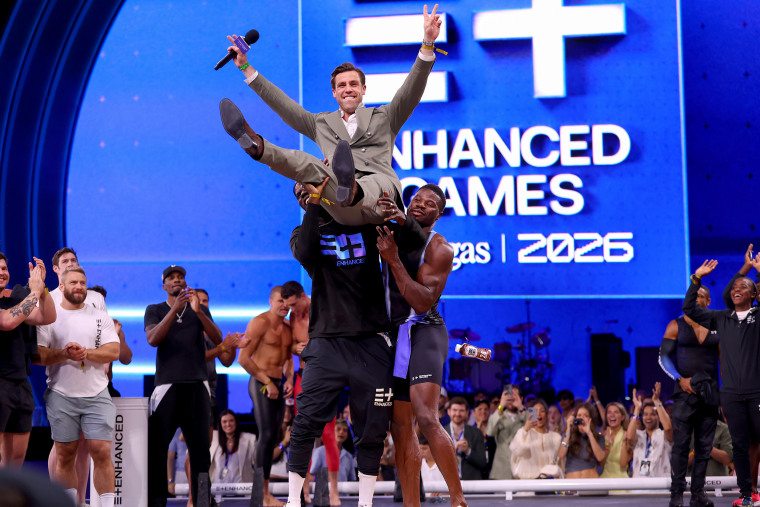
Las Vegas — Shania Collins, a successful sprinter with contracts from Puma and Adidas, faced a significant decision last year. The organizers of the Enhanced Games, a revolutionary sports event, offered her the chance to participate in a competition allowing performance-enhancing drugs. With her career stagnating, she ultimately decided to retire and pursue a career with the Drug Enforcement Administration, like her parents.
When the Enhanced Games approached her, Collins sought advice from her parents, both DEA agents. She considered their concerns about the legality and safety of the drugs. Once assured of their legality and medical supervision, her parents supported her decision. Collins spent two months on a prescribed drug regimen. Despite some side effects, she participated in the competition alongside 41 other athletes.
The Enhanced Games stirred controversy with its approach, allowing athletes and spectators to witness human potential under drug influence. Max Martin, the games’ chief executive, argued that scientific data supports the use of performance-enhancing drugs, asserting that it’s unethical to prohibit them. Christian Angermayer, a German billionaire and co-founder, likened banning PEDs to sending coal miners into danger without helmets.
Controversial Stance
Athletic commissions, including those from the International Olympic Committee and World Anti-Doping Agency (WADA), criticized the games as irresponsible. Concerns arose over selling supplements to impressionable viewers and risking athletes’ health. WADA’s science director compared the event to a Roman circus, questioning its value.
“What’s the value of this?” the director asked.
Transparent Use of PEDs
The Enhanced Games showcased athletes openly using performance-enhancing drugs. Ivan Rojas, a weightlifting coach, highlighted the openness in using enhancements after decades of discreet use in sports. The games initially allowed any drug but later restricted usage to FDA-approved substances. Of the 42 athletes, 38 elected to use drugs. During the training period, a clinical trial monitored their drug intake. Among participating athletes, 91% used testosterone, 79% opted for human growth hormone, and 62% chose stimulants. EPO was employed by 41% to boost endurance. The athletes agreed to a five-year observation period after the trial.
Ben Proud, a British swimmer, expressed concern about transitioning from clean athlete status. His protocol began without significant side effects. In contrast, swimmer James Magnussen struggled with muscle gain affecting performance. Sprinter Mike Bryan described difficulty adjusting to his enhanced body. Colombian swimmer Isabella Arcila worried about fertility impacts, leading to a deal to freeze her eggs.
Financial Incentives
Enhanced offered substantial financial rewards, including $250,000 for first place. U.S. sprinter Marvin Bracy-Williams, caught doping, signed with Enhanced after a ban. Greek swimmer Kristian Gkolomeev, who earned $1 million after breaking a world record, noted Enhanced’s rewards surpassed Olympic bonuses. Despite eligibility risks, four athletes competed without doping, including U.S. swimmer Hunter Armstrong.
Enhanced, publicly funded by figures like Peter Thiel, aims to promote drug sales through events. Products offered include GLP-1s, supplement blends, peptides, and more. The games’ CEO assured consultation requirements for prescriptions, acknowledging potential emulation risks.
Cody Miller, part of a coaches advisory board, would advise young athletes against PEDs, stressing natural recovery ability. While Enhanced’s financial incentive attracted athletes past their prime, Angermayer argued it created relatability for audiences.
Inaugural Event
The first Enhanced Games took place in a $50 million venue in Las Vegas. Invitations were exclusive to sponsors, investors, and family. Content creators interacted freely in a TV-like setup. The games displayed flexibility, granting extra attempts and adjusting rules for peak performances.
Despite doping, non-enhanced runners claimed track victories. Tristan Evelyn’s 100-meter win defied chemistry reliance, maintaining interest in the games. Collins celebrated her payday of $125,000, the highest of her career.
In swimming events, banned polyurethane suits posed challenges in measuring drug benefits. CEO Martin acknowledged hopes for resetting world records but accepted attention gained. Ultimately, Gkolomeev set one record, earning $1.5 million. His coach, Brett Hawke, emphasized the financial success.
 Mystics’ Season Ends with Playoff Defeat to Dream
  AEW Community Pays Tribute to Late Wrestler Pac
  Controversial Call Causes Stir in Rams vs. Broncos Game
  Phillies Triumph Over Braves in Thrilling Extra-Inning Victory
  Intense NXT Championship Battle Puts Spotlights on EK Prosper and Grayson Waller
  White Sox Advance to ALDS with Victory Over Astros