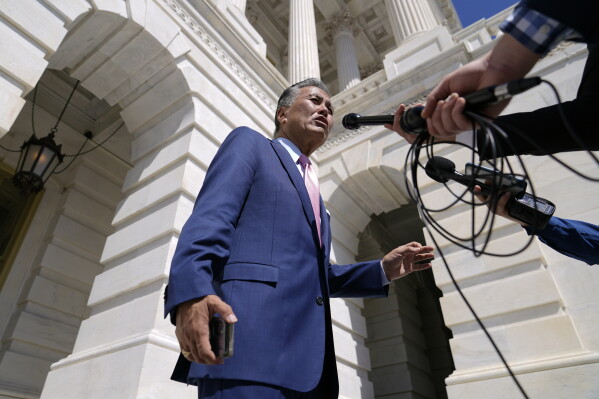
The Fourth of July last year brought unsettling stories from Southern California. Immigration patrols were active, and one local resident shared an unusual step: carrying a passport for proof of U.S. residency. Representative Mark Takano, whose American-born parents faced internment during World War II, recognized historical parallels.
Personal Connections to History
Rep. Takano, whose parents were labeled enemy aliens as children, noted the resemblance to current immigration policies. His family’s experience during WWII reflects similar arguments used today. ‘There’s a similarity to how my young parents were treated and how immigrants are perceived now,’ Takano stated.
During that war, Japanese Americans like Takano’s family were forcibly incarcerated. Now, claims are made that current immigration measures are for national security, echoing past justifications.
Immigration Policy at a Crossroads
Under President Donald Trump’s administration, a large-scale mass deportation effort took shape. The Department of Homeland Security saw leadership changes as the strategy was reshaped. New secretary Markwayne Mullin aimed for less media attention while maintaining efforts to deport a million people annually.
Pressure from conservative groups continued, backed by Congressional funding. Rep. Takano, citing historical injustices to Japanese Americans, challenged these actions as constitutional failures.
Family History as a Lens
Takano grew up learning his family’s history, including their forced relocation. His grandfather, an immigrant from Hiroshima, had settled in Washington, where the family farmed. Yet during WWII, they were among 120,000 relocated.
His father, William, was only two when sent to Tule Lake, California. His mother, Nancy, was a year old during their move to Heart Mountain, Wyoming. Takano reflected on this family history, drawing comparisons to current detentions.
‘Generations from now, people might question current policies,’ Takano said, referencing Trump’s immigrant detentions in speeches. ‘They’ll look to see what Congress did to address them.’
Redress and Reflection
Takano’s father later showed him their former land and taught him about relatives in the Army’s 442nd Regiment. The family engaged in redress efforts, leading to the 1988 Civil Liberties Act apology and compensation. President Reagan signed the act, acknowledging past mistakes.
Rep. Takano mentions discussions in Congress about recognizing harm from recent immigration enforcement, drawing parallels to past redress efforts. ‘The country recognized errors before,’ he said. ‘I hope this period strengthens us.’
 The Surveillance Threat to U.S. Federal Agents
  Trump Administration Distributes ACA Refund Checks
  Trump Administration’s Approach to Illegal Alien Deportations
  New Jersey Voter Fraud Prompts Renewed Push for SAVE Act
  Concerns Over Changes to Voter-Registration Form for Americans Abroad
  Trump’s 2024 Campaign Targets Young Men Through Cryptocurrency