Iran’s control over the Strait of Hormuz is loosening, and its oil-related issues are growing. The strait, located at the entrance of the Persian Gulf, has been crucial as it once facilitated the passage of one-fifth of the world’s oil and natural gas. However, its closure due to Iran’s early war attacks led to heightened reluctance from shippers and insurers. Although much of Iran’s navy is inactive, the mere threat of an attack caused hesitation among shipping stakeholders.
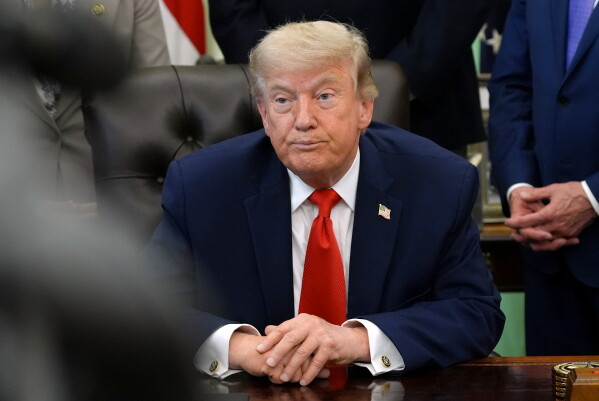
This situation has triggered a global energy crunch, contributing to worldwide inflation, including in the U.S. Now, the dynamics are shifting with more Gulf Arab oil reaching markets, aided by the U.S. military. President Donald Trump has claimed a ‘secret mission’ successfully enabled over 100 million barrels of crude oil to be transported. Meanwhile, U.S. forces enforcing a blockade have intercepted ships linked to Iran’s sanctioned oil trade, impacting the country’s access to crucial foreign currency.
Oil flow through the strait remains below the previous 15 million barrels per day, insufficient to stabilize global energy needs. Nations are still drawing from reserves to alleviate the supply impact. However, if oil flow increases, it could alter the crisis dynamics. Iran’s economic leverage lies in its control of the strait, granting it confidence to withstand U.S. pressure amid its economic strains.
Iranian President Masoud Pezeshkian acknowledged the severe challenges during a state broadcast, citing sanctions and blockades. Despite uncertainties, the conflict remains volatile. This week saw significant engagement between Iran, Israel, and the U.S., with Trump fluctuating between aggressive military actions and claims of negotiation breakthroughs.
A ‘Secret Mission’ Exposed
Reopening the strait and restoring oil flow has been a priority for Trump, marked by fluctuating strategies. Initially dismissive, he later threatened drastic measures to ensure tanker passage. Recent U.S. military support, paired with rising demand, has encouraged shippers to attempt passage, often by turning off their tracking systems. TankerTrackers.com reported ship-to-ship transfers by Gulf Arab states to mask their crude oil origins, likely supported by U.S. forces.
According to Kpler analyst Amena Bakr, about 96 million non-Iranian crude barrels have exited the region since May, potentially exceeding 100 million, aligning with Trump’s claims. In his online posts, Trump stated that 200-plus vessels navigated the strait due to a ‘secret mission’ aiding oil and ship movement, asserting U.S. control over the strait.
According to Richard Meade from Lloyd’s List Intelligence, U.S. forces employ autonomous vehicles, drones, and aircraft to aid tanker passage near Oman. An incident involving a U.S. Army helicopter attributed to Iranian action highlights operational risks.
Iran maintains the strait is now closed following recent confrontations, including U.S. airstrikes and Iranian counter-attacks on U.S. allies. Iranian Foreign Minister Abbas Araghchi reiterated their stance against recognizing the strait as an international waterway.
U.S. Blockade Pressures Iran’s Oil Industry
While aiding Gulf Arab tankers, the U.S. continues obstructing Iranian vessels. This includes halting ships, seen in an attack killing three Indian sailors. Iran’s difficulties in exporting oil have led to maximum onshore storage and reliance on tankers around Kharg Island. Oil production slowdowns at aging wells risk permanent output reduction, with Wood Mackenzie estimating an 800,000-barrel drop since the blockade.
With onshore storage reaching highs unseen since Trump’s 2020 campaign, pressures mount on Tehran for a diplomatic solution. Wood Mackenzie’s Alexandre Araman suggests that even temporary breakthroughs could ease Iran’s economic strain.
Oil prices remain under $100 a barrel, partly due to promises of deals and strategic reserves usage. However, significant drops in China’s crude imports highlight growing urgency to resolve the crisis. A timely diplomatic resolution is crucial to prevent escalated energy shortages.
Associated Press contributors Chan Ho-him from Hong Kong and Amir Vahdat from Tehran, Iran, contributed to this report.
Editor’s note — Jon Gambrell, AP Gulf and Iran news director, has extensive experience reporting throughout the Mideast. David McHugh, AP business writer, is based in Frankfurt, Germany.
 British Police Arrest Man Suspected of Terror Plot
  Activists Push for Nationwide Ban on Child Marriage in the U.S.
  Investigation into Alleged Incident at Cornell University
  Rising Drone Threats Highlight Vulnerabilities in Moldova’s Airspace Defense
  Bolivia Faces Security Test Amid Unrest
  Incident on FlyDubai Flight Raises Security Concerns