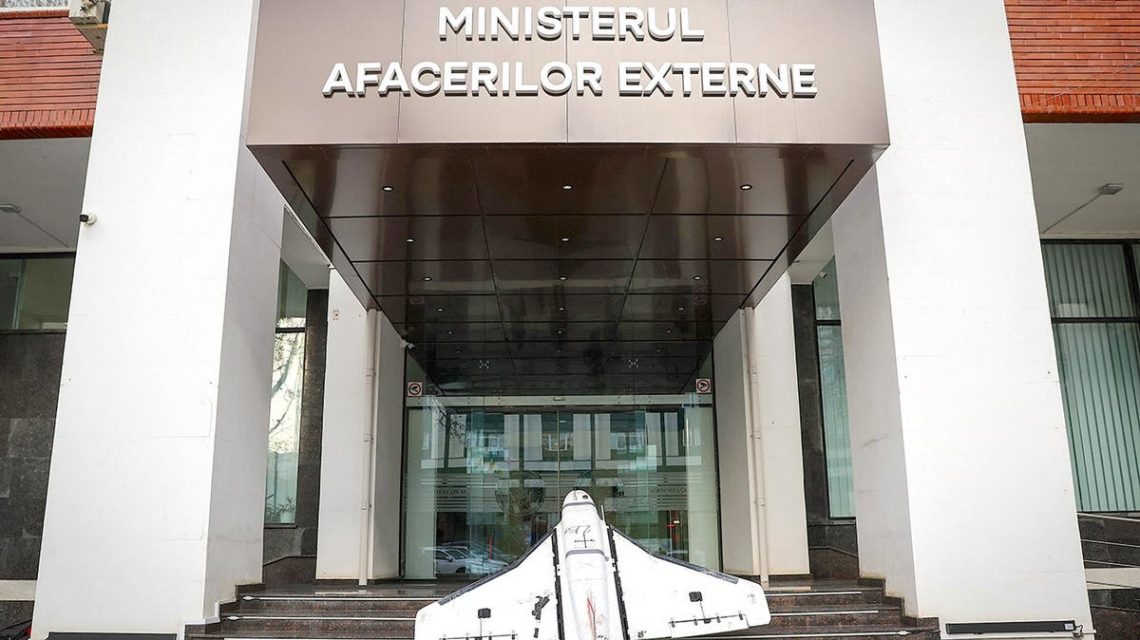
The conflict in Ukraine is drawing closer to Moldova’s borders, placing increasing strain on the former Soviet republic. Moldova, celebrating 35 years of independence, confronts escalating pressure from Russia.
In comments to Fox News Digital, Stanislav Secrieru, national security advisor to Moldova’s President Maia Sandu, highlighted recent Russian attacks on Ukrainian-Moldovan border infrastructure. These strikes pose significant threats to Ukraine’s economy and its connection to European markets. Russia began targeting Ukrainian border facilities in August, along the Moldovan frontier. With Black Sea ports under attack, Moldova now serves as a crucial transit route for Ukrainian grain headed towards Romanian ports. Moldova slashed rail transit tariffs by half to maintain the flow of grain exports.
Secrieru remarked, “These routes are vital for Ukraine’s economy. Russia wants to cut them off. They have also intensified airspace violations to intimidate us and force us to reduce our support. Nevertheless, Moldova remains committed. We will continue to assist Ukraine and keep these essential corridors open.”
President Maia Sandu noted Russian drones breached Moldovan airspace hours before independence celebrations, calling the actions an attempt at intimidation. The foreign ministry issued warnings about the risks posed by Russia’s actions against Ukraine, citing further violations of Moldova’s airspace. Since February 2022, when conflict erupted, dozens of Russian missiles and drones have crashed within Moldovan territory.
In August, Russia infringed Moldovan airspace 17 times, marking the highest monthly count since its full-scale invasion of Ukraine. In a show of solidarity, Ukrainian President Volodymyr Zelenskyy joined Moldova’s independence celebrations, underlining shared challenges faced by both countries due to the Russian threat.
Zelenskyy stated to the gathering, “Russia is working to disrupt life in Ukraine, impact Moldova, and complicate matters for Romania. This is the ‘Russian world’ — damaging and destructive. However, victory will be ours.”
Both Ukraine and Moldova applied for EU membership shortly after Russia’s invasion in 2022. Their applications face hurdles due to Russia’s destabilizing efforts. Moscow’s strategy to hinder former Soviet republics from embracing the West and joining EU institutions poses challenges.
Russia’s latest threats coincide with CIA Director John Ratcliffe’s surprising Moscow visit, sparking concerns about a potential escalation involving NATO members, particularly the Baltic states of Estonia, Latvia, and Lithuania.
Moscow’s influence operations are in play across former Soviet spaces, aiming to support pro-Russian figures and promote pro-Russian narratives. Over 30 years after independence, Moldova remains a target for Russian influence, evidenced by about 1,500 Russian troops stationed in the breakaway region of Transnistria.
Ivana Stradner, of the Foundation for Defense of Democracies, noted Russia’s long-standing interference in Moldova. She highlighted Russia’s use of hybrid warfare to gauge Europe’s response limits.
Stradner emphasized, “Moldova represents a test case. Russia expects hesitancy from the West if a nation isn’t under NATO protection. This situation also foreshadows potential issues for the Baltics.”
The Baltic nations are alert to Moldova’s predicament, aware of potential escalation beyond Ukraine. Estonian Foreign Minister Margus Tsahkna warned on social media against underestimating Russia’s threats and provocations towards NATO. Baltic leaders express concern about Russian actions, though the risk of invasion remains low.
Moldova has consistently aspired to align more closely with the West. Elections and a referendum concerning EU membership have garnered strong support, indicating Moldova’s pursuit of Western integration.
 Suspected Plague Death in Siberia Sparks Health Measures
  G7 Nations Agree to Release 100 Million Barrels of Oil Amid Fuel Price Surge
  Co-Pilot Attempts Hijack on Flight to Tel Aviv
  U.S. Revises Global Health Aid with New Strategy
  U.S. Warns Against Travel to Colombia’s Norte de Santander Due to Security Threats
  Reflections on 30 Years at Fox News