
Mubin Shaikh, a former jihadist once influenced by the Taliban, now serves as a counter-terrorism expert for both the United States and Canada. His story offers vital insights into the radicalization process and the signs that could indicate someone is on a dangerous path.
Recognizing the Signs of Radicalization
Shaikh emphasizes the significance of recognizing behaviors that indicate a move toward violence. This may include performing reconnaissance on potential targets like local synagogues or mosques. Being aware of these signs can help parents, educators, and others prevent possible terror attacks.
Shaikh’s Path to Radicalization
His journey toward extremism began unexpectedly. After a party, Shaikh’s uncle made him feel guilty, suggesting he had dishonored the family. This incident launched his quest for religious direction, leading to his radicalization.
He traveled through India, Syria, and Pakistan, where the Taliban influenced him. In Quetta, a known stronghold, Shaikh met Taliban members who convinced him that jihad was the true path to success both in this life and the next.
A Turning Point: Personal Life and World Events
Marriage brought a shift in Shaikh’s perspective. The responsibilities of family life began to clear his extremist views, highlighting personal relationships over abstract theological debates.
The September 11 attacks further spurred his re-evaluation. This tragic event prompted him to delve deeper into Islamic studies in Syria for two years, leading to his de-radicalization.
From Radicalization to Counterterrorism
Returning to Canada, Shaikh learned about the arrest of a childhood classmate, Momin Khawaja, on terrorism charges under new post-9-11 laws. Contact with the Canadian Security Intelligence Service (CSIS) led to his recruitment as an undercover operative.
Between 2012 and 2020, the US government enlisted his help against the rising threat of ISIS. His efforts spanned various anti-ISIS activities and operations, contributing significantly to the coalition against the extremist group.
Current Work and Impact
Shaikh now works with Parents for Peace, a nonprofit aimed at preventing radicalization. Most individuals they assist are under 18, highlighting the importance of early intervention.
Witnessing individuals turn away from extremist ideologies gives Shaikh hope. The transformation in their lives, as they return to their families and regain a sense of normalcy, underlines the success in countering extremism.
 Concerns Over Russia’s Biological Weapons Program
  Russian Strikes in Ukraine Amid U.S.-Russia Diesel Deal
 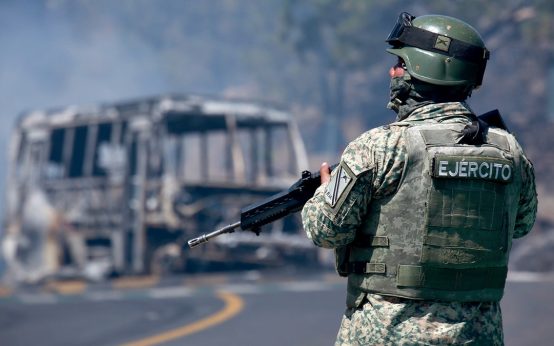 Cartels Face New Challenges as Political Alliances Shift
  Global Networks Influence France’s Student Protests
  The Complexities of the Situation in the Strait of Hormuz
  Nobel Peace Prize Awarded to Navi Pillay