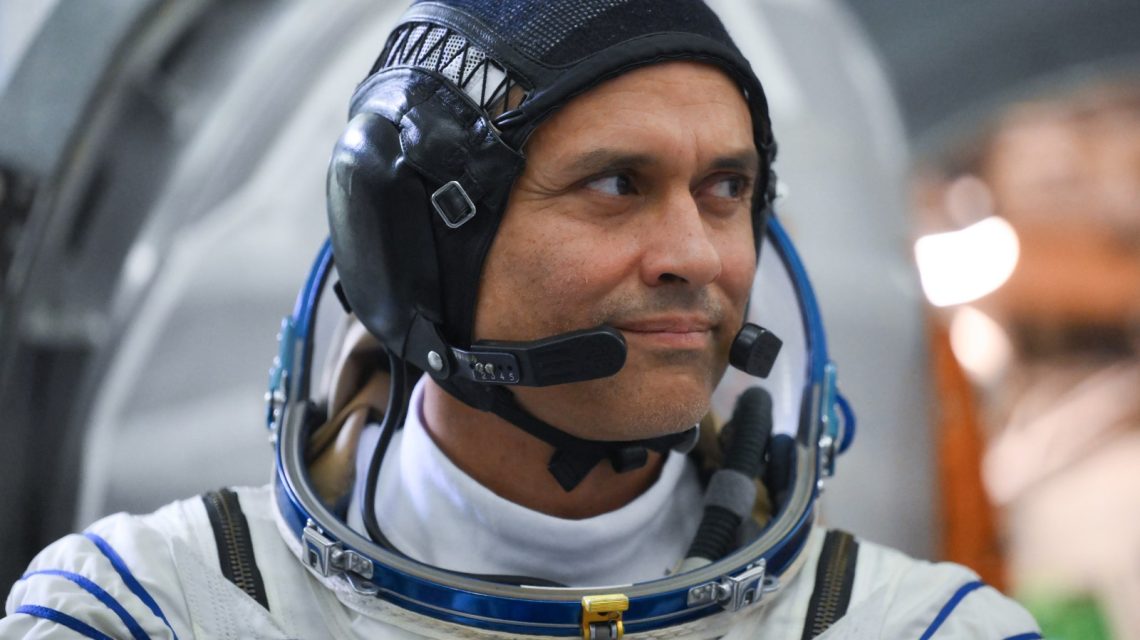
Dr. Anil Menon, a NASA astronaut, U.S. Space Force colonel, and emergency medicine physician, is set to embark on an eight-month mission to the International Space Station (ISS) with the unique goal of searching for microbiological life outside the station. Scheduled for the upcoming Soyuz MS-29 mission, Menon’s primary focus remains on understanding the impacts of extended spaceflight on human physiology. Nevertheless, his quest for extraterrestrial microorganisms forms a captivating part of his upcoming tasks.
Extraterrestrial Life Experiments
According to Menon, the experiment aims to discover bacteria that can withstand the harsh conditions of space, which include severe cosmic radiation and fluctuating temperatures. “We are revisiting this to ensure a controlled experiment,” Menon shared, emphasizing the need for precision due to past potential contamination. NASA plans to publicize these results, especially amidst the U.S. government’s release of numerous UFO sighting details.
Focus on Human Physiology
Menon is also keenly interested in studying the effects of microgravity on the human body. This line of research is vital for future missions to the moon and Mars. “The space station is instrumental in understanding these challenges,” he explained, highlighting bone mass loss as a primary concern. Current solutions involve resistance exercises available on the ISS, but Mars’s slight gravity might allow for different physical activities. Menon noted that while the human body exhibits remarkable resilience, potential hazards like toxic chemicals on Mars necessitate ongoing research and preparation.
Personal Sacrifices and Joys
Though thrilled about his space endeavor, Menon acknowledged missing his family as a significant challenge. He hopes technology will ease this through video calls, maintaining connections during his long absence.
Who Is Anil Menon?
Born to Indian and Ukrainian immigrants in Minneapolis, Menon possesses a diverse background in medicine and engineering. Holding a neurobiology degree from Harvard and both medical and engineering degrees from Stanford, he boasts an impressive career. His journey in space medicine began as a NASA flight surgeon and continued to his pioneering role as SpaceX’s initial flight surgeon. In the military, Menon advanced to colonel in the United States Space Force, providing vital aid during worldwide disaster relief efforts. Selected as a NASA astronaut in 2021, Menon is now prepared for his debut space journey aboard the Soyuz MS-29.
Mission Details: Soyuz MS-29
The Soyuz MS-29 mission, set for July 14 from Kazakhstan’s Baikonur Cosmodrome, will transport Menon and Russian cosmonauts Pyotr Dubrov and Anna Kikina to the ISS. Their mission encompasses a wide range of objectives, notably probing space travel’s health effects on humans. Particular areas of investigation include circulation, vein architecture, and the synthesis of IV fluids—all essential for forthcoming voyages to distant celestial bodies.
Mars and Beyond
While Menon and his peers explore the intrinsic effects of microgravity, broader questions loom about Mars exploration. Earth-based challenges remain, such as Elon Musk’s ambitious city-to-city rocket travel plans. Menon expressed cautious optimism about these technological leaps. “Progress requires thoughtful problem-solving,” he stated, underscoring the need for a strategic approach to energy use and other technological hurdles ahead.
U.S. Government and UFO Transparency
The mission coincides with a period of public intrigue fueled by newly declassified Unidentified Anomalous Phenomena (UAP) records. These transparent efforts by agencies like the Department of Defense aim to demystify historical records of peculiar aerial occurrences, though government entities remain cautious about confirming alien technology. Unexplained incidents highlight the need for more comprehensive data analysis.
 Climate-Resistant Rock Glaciers: Hidden Water Resources
  California Voters to Decide on $7.5 Billion State Research Fund
  Ancient Pottery Unearthed During Roadworks in Tbilisi
  U.S. Space Academy Announcement
  The Need for New Strategies in Oregon’s Wildfire Management
  Plastic Pollution in the Great Lakes: A Growing Concern