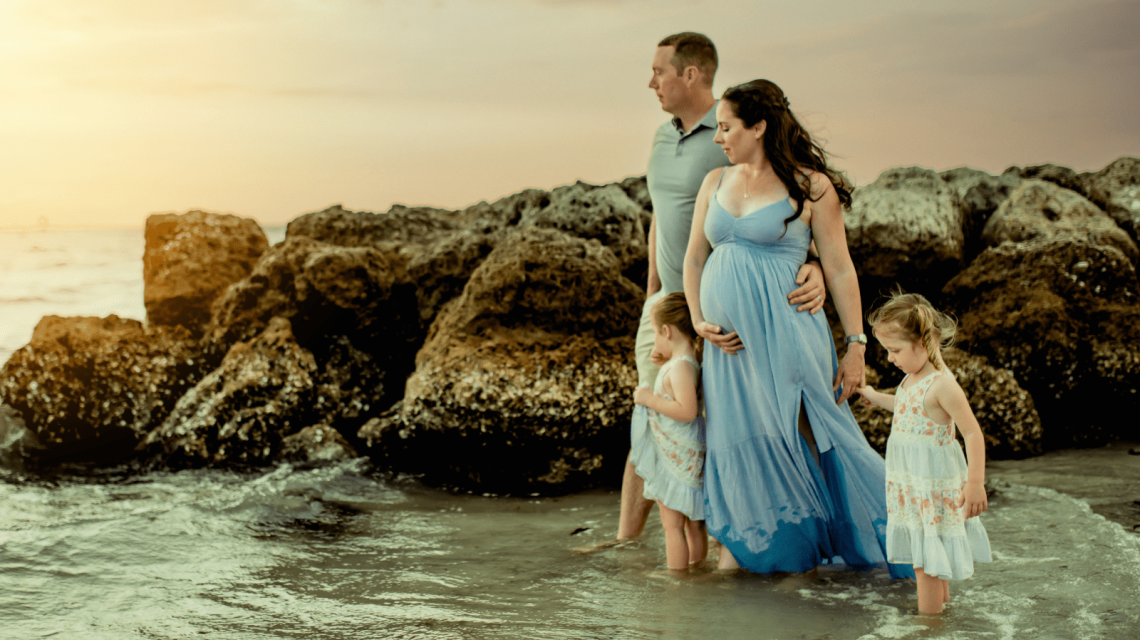
Ansley Van Epps shares a deeply personal story about her experience with Meckel-Gruber syndrome, starting when she and her husband learned they were expecting their first child in 2016. Their dreams shifted dramatically at the 20-week anatomy scan. The diagnosis was Meckel-Gruber syndrome, a rare and fatal genetic disorder severely affecting their baby boy’s organs and skull development.
Faced with no options, they made the painful decision to terminate the pregnancy for medical reasons. Later, they discovered both were carriers of the condition, affecting any future pregnancies the same way, with a one-in-four chance.
When they decided to try for another child, doctors recommended IVF with preimplantation genetic testing for monogenic disorders (PGT-M). This test screens embryos for specific inherited conditions before transfer. Though initially hesitant about the invasiveness and cost, the couple opted for IVF after a year without success conceiving naturally.
Across three IVF rounds, they created 20 embryos. More than half were affected by Meckel-Gruber syndrome or other genetic issues. Four embryos had the outcomes they hoped for: three unaffected and one carrying the disorder but not likely to develop the disease.
In 2019, transferring an unaffected embryo resulted in identical twins. Though one daughter faced challenges, including epileptic seizures and a brain tumor requiring surgery, she recovered and thrived. Several years later, in 2023, they transferred another embryo, classified as a carrier, resulting in a heartbreaking diagnosis of Meckel-Gruber syndrome for their son, Everston.
Despite placing trust in PGT-M, which tests for specific genetic conditions, they were devastated by the loss. IVF isn’t a simple ‘try again’ option. They had spent over $100,000 on their family-building journey and transferred their remaining embryos without success.
Ansley initiated conversations with her children about these challenges, and her story evolved into public sharing, connecting her with a community navigating similar experiences. Her online presence became a support network for others confronting Meckel-Gruber syndrome diagnoses.
Despite the rarity of her situation, Ansley believes her experience offers insights into genetic testing’s complexities. Though the exact cause of the testing failure may remain unknown, she emphasizes her efforts to prevent further loss of life to the syndrome.
The embryos never transferred continue to linger in her thoughts. Ansley hopes other families won’t face the same hardships and lives in Tampa, Florida, as a newborn photographer with her husband and twin daughters.
For further editorial inquiries, contact Kara Dolman and Anthony Murray at Newsweek.
 Increased Funding Needed for Psychiatric Hospitals
  Trump Administration Distributes ACA Refund Checks
  Higher Consumption of Ultra-Processed Foods Linked to Increased Health Risks
  The Quest for the Knuckleball Dream
  Navigating Grief After a Sibling’s Overdose
  Understanding Inflammation: Myths and Facts