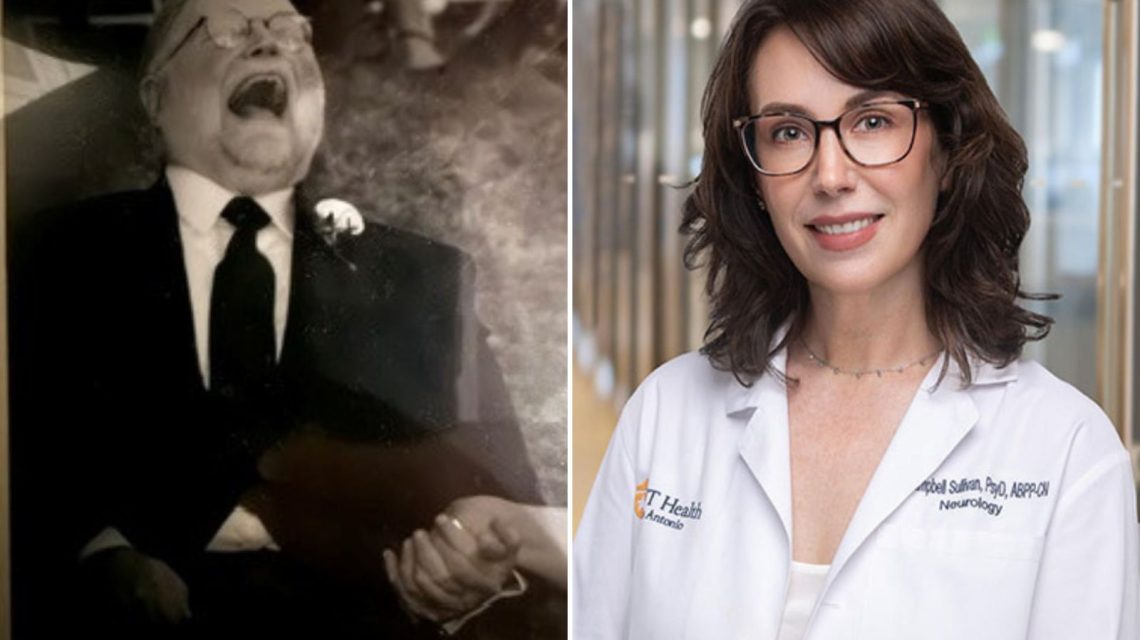
Growing up in Bellville, a small town in central Texas, surrounded by an absence of psychologists or neuropsychologists, the field was unfamiliar territory. It was during my first master’s program that I found myself working as a psychometrist, administering neuropsychological tests. This role unexpectedly offered me clarity. My externship at the University of California, San Francisco’s Memory and Aging Center marked the beginning of my engagement with frontotemporal dementias (FTD), disorders affecting the frontal and temporal lobes of the brain. These experiences revealed my natural ability to manage the vibrant personalities often seen in patients, an ability perhaps rooted in my lively family background.
Around 2003, my father’s mobility issues became evident, originally thought to be post-surgical complications. His condition advanced from using a brace to requiring a wheelchair. His behavior changed; conversations lacked depth, and his humor became juvenile. Surprising actions, like licking his plate at Christmas, were out of character. He began making poor financial decisions, seemingly unconcerned with lifestyle changes. I was unfamiliar with the symptoms that might suggest an overlap between amyotrophic lateral sclerosis (ALS) and FTD, or how motor and behavioral symptoms could connect before his death in 2011, while I was a fellow at Johns Hopkins School of Medicine.
After completing my training, I moved to San Antonio to help establish a new clinic. During the past decade, this facility has focused primarily on patients with atypical neurodegenerative conditions and supporting their families. I’ve learned that FTD and ALS are widely misunderstood, even among medical professionals. Symptoms can range from personality changes to issues with language, motivation, and movement, often diverging from standard expectations of memory loss. Families frequently endure prolonged confusion as they confront these diseases alone.
When my aunt began facing mobility challenges, her financial mishaps left her uninsured. A related experience at my clinic and the philanthropic fund for uninsured patients helped obtain her diagnosis of familial ALS-FTD caused by the TARDBP gene, although not fully covering the medical costs. Variants in the TARDBP gene are rare, accounting for only two to five percent of familial ALS cases.
The task of informing her and her daughters about her condition was difficult. Her twin daughters were only 24 years old. Her passing at age 62 left unresolved struggles with potential genetic implications for my family, focusing on the need to inform them about genetic testing.
In my practice, empathy has deepened by experiencing the delicate decision-making involved in genetic testing. Supporting research through patient and family contributions remains vital for advancing understanding of ALS and FTD. My aunt’s choice to donate her brain for research reflects her daughters’ pride in her decision. I actively emphasize the support available from non-profits, offering families reassurance. They need not face the challenges of these diseases alone.
A. Campbell Sullivan, 48, is a board-certified clinical neuropsychologist and associate professor at UT Health San Antonio’s Glenn Biggs Institute. She co-directs the South Texas Frontotemporal Dementia Program and enjoys listening to non-scientific podcasts. For inquiries, contact Newsweek editors Kara Dolman and Emma Lee-Sang.
 Increased Funding Needed for Psychiatric Hospitals
  Trump Administration Distributes ACA Refund Checks
  Higher Consumption of Ultra-Processed Foods Linked to Increased Health Risks
  Understanding Inflammation: Myths and Facts
  Calm Parenting: Strategies to Manage Stress
  Trump’s Executive Order to Combat Mosquitoes and Ticks in D.C.