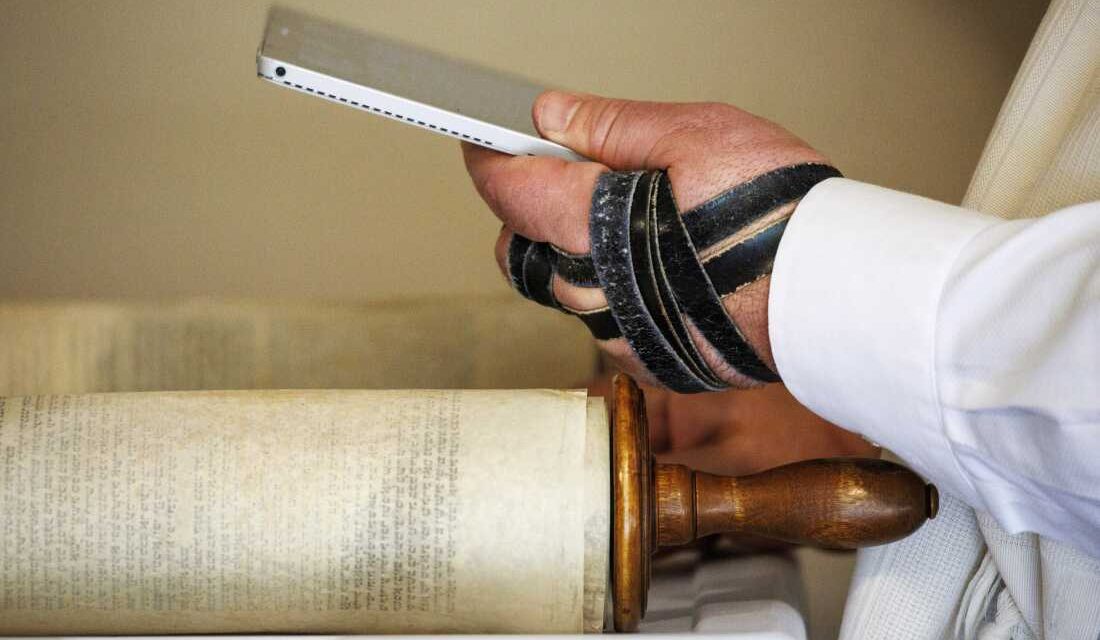
Rabbi Haim Ovadia was seen reading the Torah to attendees of a virtual minyan from his home in Maryland in 2020, highlighting the changes in religious practices amidst the COVID-19 pandemic.
There is a significant opposition from some Orthodox Jewish organizations concerning a proposal to make daylight saving time permanent. The House of Representatives recently passed the Sunshine Protection Act with a 308-117 vote, which suggests the removal of the annual clock changes. It now awaits approval from the Senate.
One major concern for Orthodox Jews relates to their prayer schedule. They hold the Shacharit service, which by tradition should not begin in the dark, making morning prayers a logistical challenge under the proposed time change.
Rabbi A.D. Motzen from Agudath Israel of America pointed out that delaying morning prayers would impact work and school schedules. The need for communal prayers makes the timing essential, as having a quorum of 10 Jewish adults, known as a minyan, is required.
“It becomes a communal issue when, for example, a synagogue that has had a morning prayer service for 100 years suddenly does not have a quorum,” Motzen noted.
The stance against the bill is supported by several Orthodox Jewish organizations, including the Orthodox Union and Coalition for Jewish Values. Although Orthodox Jews constitute only 9% of the Jewish population in the U.S., their needs are specific to their religious practices.
Other groups also oppose permanent daylight saving time. Some health professionals argue that standard time aligns better with the human body’s natural clock. Additionally, concerns for children’s safety when traveling to school in darker mornings are raised by schools and parents alike.
In most areas, making daylight saving time permanent means sunrises would occur after 8 a.m., and in certain places like South Bend, Indiana, and Detroit, Michigan, sunrises could be even later.
Notably, Hawaii, most of Arizona, and several U.S. territories continue to observe standard time year-round.
 Sen. Cotton Opposes Permanent Daylight Saving Time
  Steve Hilton’s Latino Outreach and Gubernatorial Ambitions
  The Need for Reform in Presidential Nominations
  Controversy Surrounds Performances at Gillette Stadium
  Celebrity Controversies Over Political Activism and Speech
  Trump Pushes for Permanent Daylight Saving Time, Sharing Senator’s Contact Information