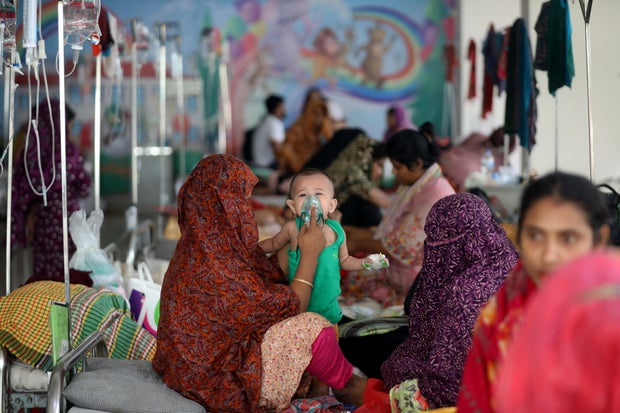
A significant measles outbreak in Bangladesh has resulted in almost 400 fatalities and poses risks to other countries, including the U.S. The outbreak has predominantly impacted children. The country’s Directorate General of Health Services (DGHS) disclosed that suspected cases have exceeded 56,000, doubling since early April. Local media reports indicate that healthcare facilities are struggling to accommodate the influx of patients.
The outbreak is attributed to disruptions in vaccine supply and delays in vaccination, leading to many children being partially or unvaccinated. UNICEF’s Miguel Mateos Muñoz stated concerns over insufficient vaccine doses, emphasizing the need for two doses for effectiveness. He noted a rise in children receiving only partial immunization over the past three years.
A CDC official warned, “An infected person can spread measles to others even before knowing they have the disease.”
Understanding Measles and Its Risks
Measles ranks as one of the most contagious viruses, spreading through human contact. The virus travels via droplets that remain airborne when an infected person coughs or sneezes. For those unvaccinated, the chance of infection is about 90% upon exposure. Vulnerable groups include children and the elderly, with potential progression to pneumonia, brain swelling, disability, or even death. The World Health Organization (WHO) highlights that although recovery often occurs within weeks, complications such as pneumonia, diarrhea, and encephalitis may arise.
The WHO estimates that, despite vaccines, nearly 100,000 people died globally in 2024. The current situation in Bangladesh has seen measles detected in 58 of the nation’s 64 districts, with concerns about further spread due to porous borders.
Implications for the U.S.
The CDC warns of potential spread to the U.S. due to interconnected global borders. The agency stresses the importance of maintaining a vaccination coverage rate above 95%. However, this threshold is not consistently met in the U.S., as evidenced by a reduction in MMR (measles, mumps, rubella) vaccination rates among kindergartners post-COVID-19 pandemic.
From the beginning of the year to early May, the CDC recorded 1,842 cases of measles in the U.S. Most instances are linked to outbreaks, particularly where vaccination rates have declined precipitately. A recent Johns Hopkins study revealed declining vaccination rates in the majority of surveyed U.S. counties.
The risk of losing measles elimination status, declared achieved in 2000, looms due to ongoing outbreaks. Previously, Canada lost its measles elimination status in 2025 after a similar surge in cases.
Preparation for the World Cup
With the upcoming World Cup co-hosted by the U.S., Mexico, and Canada, health experts like CBS News medical correspondent Dr. Céline Gounder express concern over measles, more than other diseases, due to the event’s drawing of international crowds. The potential for the U.S. itself to seed further outbreaks is a significant concern, given vaccination gaps within the country.
Efforts in Bangladesh to Counter the Crisis
UNICEF, alongside Bangladesh’s government and the WHO, has mounted an emergency vaccination initiative targeting millions of children. As of early May, the campaign had successfully vaccinated 18 million children. To avert future outbreaks and curtail global spread, experts emphasize the restoration of comprehensive immunization programs.
 Early Detection of Atherosclerosis and Heart Disease Prevention
  The Threat of Melting Glaciers: A Call to Action
  Police Discover Ancient Roman Artifacts Off Sardinian Coast
  Church Attendance Linked to Increased Sexual Satisfaction for Married Couples
  Dining with Loved Ones May Benefit Blood Sugar Levels
  Urgent Need for Action in East Africa’s Food Crisis