The necklace hanging around Santiago García’s neck may not have had religious symbols, but it held deep significance. Years ago, when García’s grandmother was in intensive care, he placed his cherished Boca Juniors necklace on her. He whispered, ‘Boca will save you,’ and believed it did. Now, the necklace remains with her. García’s dedication to his club reflects the loyalty seen across Latin America as the region looks forward to the 2026 World Cup.
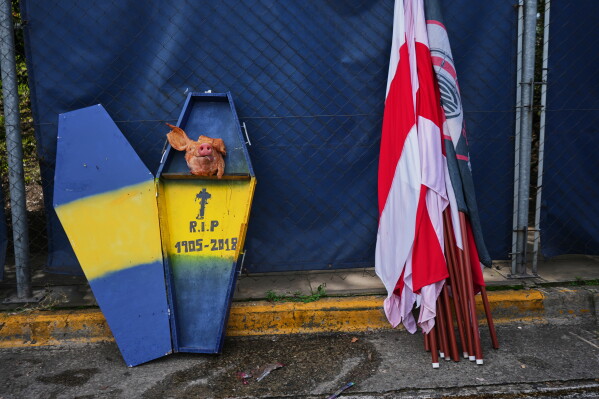
An emotional connection between soccer and life is evident from Argentina to Mexico, often manifesting in rituals linked to the sport. Before an Argentine league match, a cardboard coffin in Boca Juniors’ colors was displayed alongside River Plate flags, symbolizing rivalries and support.
Erick Fernández, a Mexican analyst, commented on the long-standing bond between fans and soccer teams. ‘It fosters identity and connections that make us part of something bigger.’ In Argentina, where soccer is ingrained in heritage, club loyalty strengthens over generations. Lionel Messi’s home country holds soccer as a familial tradition. Even Pope Francis, an Argentine and San Lorenzo fan, acknowledged soccer’s beauty and its unifying nature.
García’s devotion to Boca Juniors was passed down from his father. His mother’s initial support for another team vanished following her marriage, aligning with Boca. As García explained, ‘You usually support your mother’s or father’s club.’ He feels soccer forms the foundation of identity and belonging, carrying his team spirit everywhere. At 17, he inked his body with a phrase from Boca’s anthem, a war-cry that reinforces loyalty despite challenges.
Pope Francis has stated that soccer’s beauty lies in its team spirit—and fans share that joy through community. A stadium’s collective experience, singing anthems, and celebrating triumphs or losses fosters unity.
Anthropologist Eloísa Martín spoke about the ‘communitas’ that soccer creates, likening it to religious gatherings. This togetherness can breed both harmful and helpful behaviors. Feeling part of a sporting community can sometimes provoke violent reactions, but it can also drive acts of kindness among supporters.
In Brazil, Adilvania Santos is one such fan whose devotion to Fluminense helped her through tough times. Despite residing far from Rio, she sees attending games as essential—and sacred. Jeferson Mengali, a Catholic priest, noted, ‘Soccer becomes a space for collective joy amidst life’s struggles.’
Rituals for Success
For many fans, game outcomes seem influenced by personal rituals, known in Argentina as ‘cábalas’. These practices range from drinking from a specific cup to wearing particular clothing during matches. Fans believe failure or success dictates the continuation of these rituals.
At García’s home, his father never switches chairs during a Boca game unless they perform poorly. His mother engages in cleaning rather than watching games, frequently pausing to check scores. García maintains a cábala of wearing the same jersey and keeping an image of Diego Maradona, who he believes rose to sainthood after passing.
Martín emphasized the collective belief in Maradona—or ‘El Diego’—as communities find support and inspiration from his legacy.
Figures like Maradona and Pelé extend their influence worldwide, but some, like Chile’s Héctor Hermosilla, cherish local icons. Hermosilla honors Colo Colo’s founder, David Arellano, before each game. Despite changes over the years, Hermosilla remains devoted, making accessories to fund his travels to support Colo Colo.
Before leaving for matches, he observes rituals by Arellano’s portrait and shares in game day gatherings, shaped by years of tradition.
Such personal and communal sacraments keep the spirit of soccer alive across Latin American communities, binding people together through faith in their teams.
Sourced from AP writers Batschke in Santiago, Chile, and Hughes in Rio de Janeiro.
 British Police Arrest Man Suspected of Terror Plot
  Activists Push for Nationwide Ban on Child Marriage in the U.S.
  Investigation into Alleged Incident at Cornell University
  Rising Drone Threats Highlight Vulnerabilities in Moldova’s Airspace Defense
  Bolivia Faces Security Test Amid Unrest
  Incident on FlyDubai Flight Raises Security Concerns