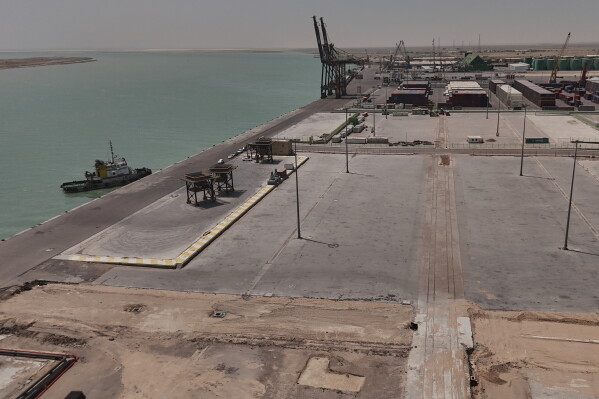
On Monday, twenty-five states took legal action against the Trump administration, contesting recent tariffs that they believe serve as a substitute for import taxes invalidated by the Supreme Court in February. Last month, the United States imposed significant tariffs on 59 countries alongside the European Union, accusing them of insufficient measures to prevent imports made through forced labor. These new tariffs were implemented as temporary tariffs, used by President Donald Trump after a Supreme Court defeat, expired.
New York Attorney General Letitia James criticized the administration’s move, stating, “After losing at the Supreme Court, the administration is once again trying to illegally raise taxes on families and businesses with a new round of tariffs.” The lawsuit includes participation from numerous states such as Arizona, California, and Washington, among others.
President Trump argues that high tariffs will bolster American manufacturing. Last year, he reversed decades of policy that favored low tariffs and liberalized trade. Invoking the International Emergency Economic Powers Act of 1977, Trump introduced hefty tariffs on imports from nearly every nation by declaring the trade deficit a national emergency. However, the Supreme Court ruled that the IEEPA did not grant authority for tariffs, prompting the government to refund importers the tariffs paid. To recoup the lost revenue, Trump instituted temporary 10% global tariffs, which expired on July 24.
Currently, the administration is employing more enduring tariffs under Section 301 of the Trade Act of 1974. This law allows the president to levy import taxes and impose sanctions on countries participating in unfair trade practices. Trump’s administration previously used Section 301 to enact significant tariffs on China, which withstood court challenges. These forced-labor tariffs, now in place, range from 10% to 12.5% and impact nations that account for the majority of American imports.
“The United States is using its lawful authority to obtain the elimination of unreasonable acts, policies, and practices that burden U.S. commerce,” said White House spokesman Kush Desai. He emphasized the necessity to address unreasonable actions like failing to prohibit imports produced with forced labor, as they burden U.S. commerce and workers.
This recent legal challenge by the states follows lawsuits from small businesses filed in July at The Court of International Trade regarding the 301 tariffs. These businesses argue that the government did not properly justify its case against specific economies or clarify the tariffs’ role in eliminating the practices cited, as mandated by Section 301.
Barry Appleton, a law professor and co-director of New York Law School’s Center for International Law, noted the repetitive nature of the administration’s attempts to impose worldwide tariffs under varied statutes. While previous statutes were less conventional, Section 301 has a history of usage. During Trump’s first term, he applied Section 301 to implement tariffs on Chinese goods, which survived legal scrutiny.
Appleton highlighted that presidents have relied on this law for years, with Congress providing clear procedures like investigation, consultation, and maintaining public records. “The government’s defense won’t be ‘I had no power to do this.’ It will be, ‘I stayed inside the lines Congress drew.’ That is a real fight, not a formality, and it is the one that will decide this case.”
 The Surveillance Threat to U.S. Federal Agents
  Trump Administration Distributes ACA Refund Checks
  Trump Administration’s Approach to Illegal Alien Deportations
  New Jersey Voter Fraud Prompts Renewed Push for SAVE Act
  Concerns Over Changes to Voter-Registration Form for Americans Abroad
  Trump’s 2024 Campaign Targets Young Men Through Cryptocurrency