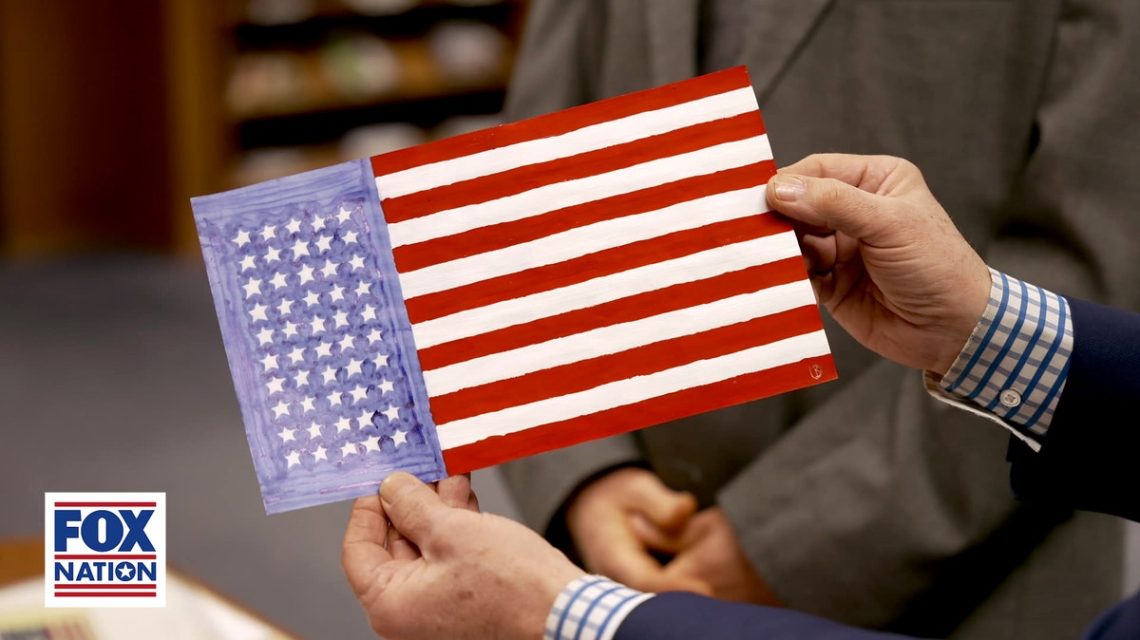
The American flag is iconic, yet its design could have been unrecognizable. In 1958, as the U.S. considered adding two states to the union, a flood of new designs for a 50-star flag emerged. The Eisenhower administration received these proposals from across the country and the world.
Dr. Jim Ginther, supervisory archivist at the Dwight D. Eisenhower Presidential Library and Museum in Abilene, Kansas, noted the surge in public interest in the flag’s design. From July 1958, designs poured into the White House and the Quartermaster Corps of the Army.
Over 1,900 designs were submitted, including pencil drawings, detailed drafts, and sewn cloth flags. Schoolchildren participated through the publication “My Weekly Reader,” while adults contributed as well. A particularly intriguing submission featured a starburst arrangement.
“Some designs are simple pencil drawings; others are detailed draftsman’s drawings,” said Ginther.
As the Eisenhower administration evaluated the designs, it also educated the public through materials on the flag’s history and usage. Responses to all submissions included informative letters from a top White House official.
Flag Tradition and Innovation
Since the Continental Congress enacted the flag on June 14, 1777, observed now as Flag Day, the design has changed minimally. Betsy Ross is traditionally credited with the first design featuring 13 stars in a circle, signifying the original colonies. Although the guidelines specified alternating red and white stripes with a blue field for stars, star layouts were open to interpretation, resulting in diverse designs.
The flag remains a vital symbol. Ginther emphasized the challenges of a radical redesign, pointing out its symbolic and emotional significance, especially for those who have fought for the country.
“Radical change in the flag’s design would be challenging, both symbolically and practically,” Ginther stated.
Ultimately, President Eisenhower chose a design that maintained historical tradition. The final layout added two stars in alternating rows on the familiar blue field, representing the nation’s ideals and freedoms.
The 50-star flag was first raised on July 4, 1960, at Fort McHenry, a symbolic site from the War of 1812. This modern flag continues to represent America on its journey.
For more insights on the flag and President Eisenhower’s selections, visit the Eisenhower Presidential Library and Museum’s website. Additional information is available on “Crazy American History,” streamed on Fox Nation.
 Readers React to Miss Manners Column
  Troy Swanson: Award-Winning Librarian Transforming Academic Libraries
  Lisdoonvarna Matchmaking Festival: A Unique Tradition
  Possible 19th-Century Shipwreck Exposed by Nor’easter in Nantucket
  Midwest Underground Railroad Network Gains National Recognition
  Art Collective Critiques Administration with Mall Installation