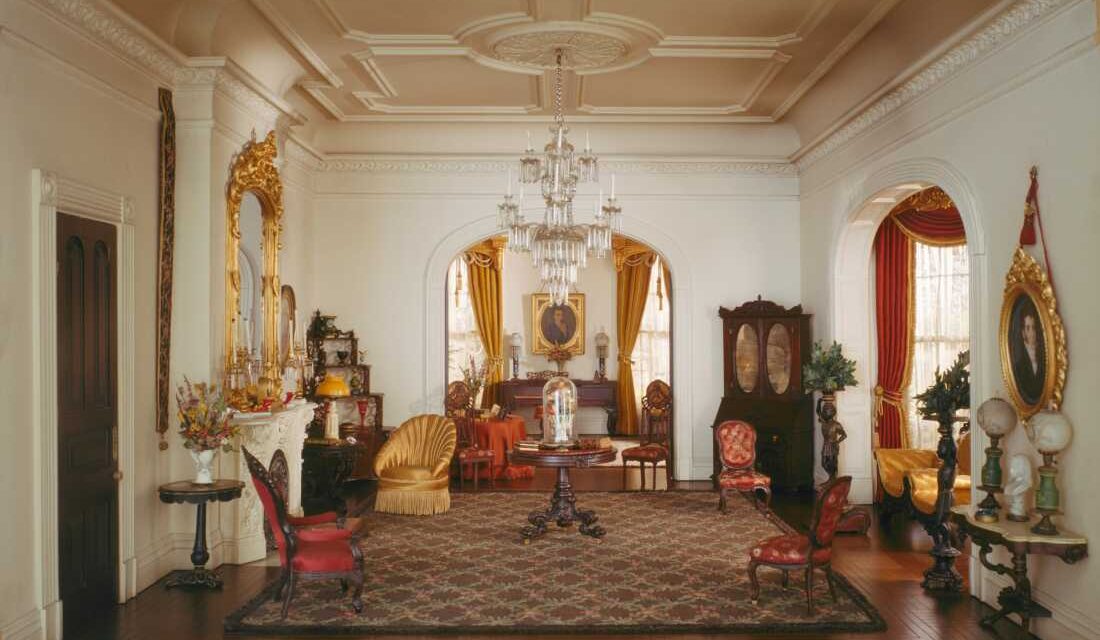
Exploring the Georgia Double Parlor Diorama
The Georgia Double Parlor is a renowned miniature diorama crafted by Mrs. James Ward Thorne. This model, on a 1:12 scale, represents an antebellum southern plantation manor. The artistry is courtesy of the Art Institute of Chicago, where this piece is part of an exhibit that captures historical interior designs through miniature rooms.
The Intricate World of Tiny Rooms
At the Art Institute of Chicago, museum experts face the intricate task of maintaining an exhibit containing 68 miniature rooms. These rooms showcase interior design trends from various times and locations. Each room is created on a 1:12 scale, making them similar in size to a shoebox. These tiny rooms have windows set into the gallery, allowing visitors to peer inside.
Kit Maxwell, the department curator, mentions, “They are one of the most popular galleries in the museum and a point of pride for many Chicagoans”. The miniature rooms offer a glimpse into the times, and many locals fondly remember experiencing them as children during their first museum visit.
The Legacy of Narcissa Niblack Thorne
Narcissa Niblack Thorne, originating from a wealthy Chicago family, was pivotal in the creation of these miniatures. During the 1930s, Thorne commissioned skilled artisans in Chicago to work on her collection. She was passionate about educating visitors on the principles of tasteful interior decoration, emphasizing they weren’t mere dollhouses.
One such room represents London in the 1930s, with a living room that features a cocktail set, Country Life magazine, and a card game. Maxwell reflects on this room, noting, “This is one of my favorite rooms. I feel like I could live in this room for sure.”
Preserving Miniature Art
Jonathan Worcester, the primary art handler, leads the charge in cleaning and preserving these miniatures. Each room requires meticulous cleaning twice yearly, taking one to three hours per room. “The primary strategy is patience,” Worcester explains.
Worcester uses a variety of precision tools, including brushes, spatulas, tweezers, and an air blower. He has specialized equipment such as a miniature chandelier holder to assist in the delicate cleaning process. His step-by-step method includes unlocking the glass front, dismantling the room, cleaning the interior, and ensuring objects return to their exact locations.
Continuing Thorne’s Vision
Narcissa Niblack Thorne envisioned rooms like the California Hallway, a modern art gallery featuring commissions from artists like Fernand Léger. As Maxwell and Worcester continue their work, they honor Thorne’s legacy by maintaining the art with the utmost care.
Worcester notes, “You have to sort of get into a very specific frame of mind, listening to an audio book, reaching a meditative state.” Maintaining these miniature rooms is a labor of love, requiring methodical and patient efforts.
 Martina Navratilova’s Enduring Influence in Tennis and Beyond
  World Porridge Making Championship: A Unique Scottish Tradition
  Readers React to Miss Manners Column
  Troy Swanson: Award-Winning Librarian Transforming Academic Libraries
  Lisdoonvarna Matchmaking Festival: A Unique Tradition
  Midwest Underground Railroad Network Gains National Recognition