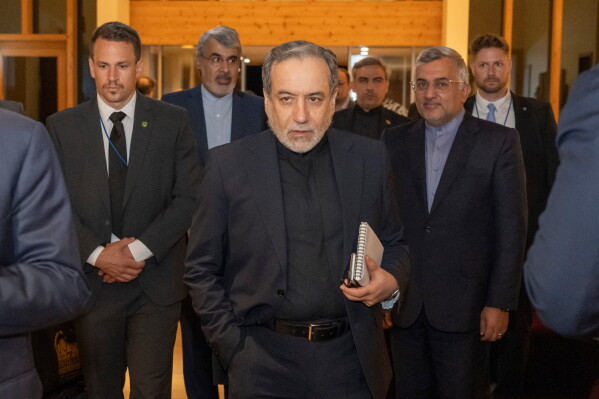
On Sunday, U.S. Vice President JD Vance arrived in Switzerland to commence negotiations with Iranian leaders. The talks focus on reducing Tehran’s nuclear program and bolstering an interim deal aimed at ending the conflict in Iran. Vance, accompanied by Second Lady Usha Vance, landed at Emmen Air Base near Lucerne early in the morning.
The framework for negotiation was signed the previous week. U.S. and Iranian negotiators now face a 60-day timeframe to resolve technical details crucial to global economic stability and security. Tensions in the region escalated because of the recent exchange of fire between Israel and Hezbollah in Lebanon. Iran’s military also announced the closure of the Strait of Hormuz, a key channel for a significant portion of the world’s oil and gas trade.
Originally, Vance was scheduled to be at Bürgenstock resort near Lucerne on Friday. However, his departure from the United States was postponed due to the conflict in Lebanon, which led Iranian officials to cancel their attendance at the initial talks.
The U.S. Central Command challenged Iran’s claim about shutting the strait. It confirmed that U.S. forces are monitoring the situation to ensure the continuous flow of traffic through the vital waterway. Vance indicated millions of barrels of oil had moved through the strait recently.
Iran’s negotiating team, comprising parliamentary speaker Mohammad Bagher Qalibaf and Foreign Minister Abbas Araghchi, along with central bank and oil officials, arrived in Switzerland around the same time Vance departed from the U.S.
Vice President Vance joins special envoy Steve Witkoff and Jared Kushner, President Donald Trump’s son-in-law. They have already been addressing nuclear talks’ technical aspects. The discussions also involve Pakistani Prime Minister Shehbaz Sharif, army chief Field Marshal Asim Munir, and Qatari mediators.
Vance planned to stay in Switzerland for “a day or two,” with Witkoff and Kushner leading the detailed negotiations. This situation amplifies scrutiny on the vice president as he considers a presidential run in 2028.
Criticism from within their own party has targeted Trump and Vance for the deal. Critics argue that the current agreement resembles a previous one made during the Obama administration. Trump and the GOP believed it did not effectively end Iran’s nuclear ambitions. The new agreement allows Tehran to sell oil freely and access billions in currently frozen assets. It requires Iran to reduce its stockpile of highly enriched uranium at sites targeted by U.S. strikes last summer.
The agreement includes a provision for commercial vessels to traverse the Strait of Hormuz for 60 days without charge. However, future fees by Iran remain possible. President Trump also threatened to impose U.S. tolls on the strait if no agreement is reached with Iran in 60 days, stating funds would support Middle East countries.
Complicating progress, neither Israel nor Hezbollah signed the U.S.-Iran deal. Israeli Prime Minister Benjamin Netanyahu committed military presence in southern Lebanon until eliminating threats to Israel. Hezbollah demands Israel’s withdrawal from Lebanon to halt its attacks.
Initial fighting between Israel and Hezbollah after signing the agreement with Iran resulted in 47 casualties in Lebanon and four Israeli soldiers.
Kim reported from Washington.
 British Police Arrest Man Suspected of Terror Plot
  Activists Push for Nationwide Ban on Child Marriage in the U.S.
  Investigation into Alleged Incident at Cornell University
  Rising Drone Threats Highlight Vulnerabilities in Moldova’s Airspace Defense
  Bolivia Faces Security Test Amid Unrest
  Incident on FlyDubai Flight Raises Security Concerns