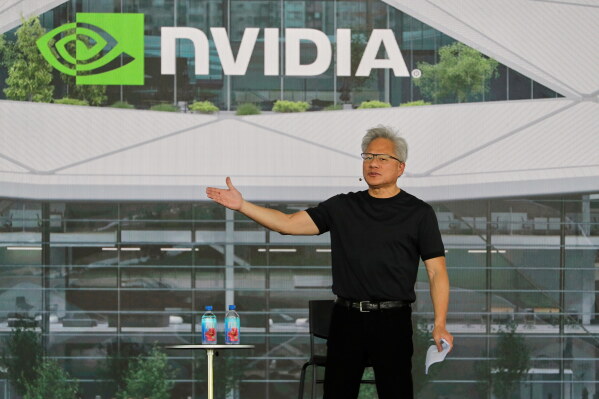
Nvidia CEO Jensen Huang emphasizes the inevitability of adapting to artificial intelligence (AI) as it transforms society. In an interview with the Associated Press, he expressed optimism about AI’s potential to drive economic growth and foster scientific advancements. While leading Nvidia in AI system development, Huang acknowledges the concerns about job losses and societal disruptions.
Huang suggests adapting to AI by establishing new social norms. He encourages everyone to engage with AI technology. The rapid adoption of AI has sparked political debates and concerns about employment security, potentially affecting public support for the technology. Some criticize Huang’s relationship with President Donald Trump, though he argues that AI can aid in fulfilling long-standing promises of factory jobs in the U.S.
AI’s capabilities, such as building websites and analyzing documents, have bridged the technological gap, allowing people to perform advanced tasks without programming skills. Huang highlights the importance of government regulation and safety standards, emphasizing national security in technology advancements, which have powered stock market growth.
Comparing AI adoption to the past transition to automobiles, Huang notes the need for societal adaptation. He recalls childhood memories of playing in the streets, a practice that changed with the introduction of cars.
AI Industry’s Economic Impact
With a market value of about $5 trillion, Nvidia stands as the world’s most valuable company. Companies like OpenAI and Anthropic could reach a $1 trillion valuation upon public stock listing. This concentration of wealth in AI firms raises concerns about economic inequality. Trump proposed potential government ownership of AI shares to distribute benefits more widely, a concept also supported by Sen. Bernie Sanders and OpenAI CEO Sam Altman.
Huang is skeptical about government ownership, believing that AI advancements naturally benefit society through stock price gains, tax revenue, and job creation. He notes that AI companies can also boost profits in energy, construction, and hardware sectors, indicating widespread stakeholder interest in American enterprises.
Focus on National Security and Energy Concerns
The Trump administration shifted from minimal AI regulation to stricter oversight, including export controls on Anthropic’s latest models due to security concerns. Huang emphasizes national security as a priority but calls for specific guidelines to prevent unintended consequences from restrictions. He highlights the need for clear risk assessments before implementing export control policies.
Previously, Nvidia opposed Biden administration export controls aimed at restricting chip sales to China, arguing that it could hinder global AI ecosystem development. Huang warned that restrictions might prompt China to develop its advanced chips, limiting the U.S.’s competitive edge.
Energy Infrastructure and AI Development
Huang underscores the importance of energy infrastructure for U.S. AI development. The power demands of data centers required for AI computations could strain the electricity grid. Some centers will generate their own power, yet the U.S. faces an energy deficit affecting AI infrastructure strengths.
He criticizes the country’s historical neglect of energy production. While endorsing Trump’s efforts to boost energy output, Huang refrains from commenting on Trump’s opposition to renewable sources like solar and wind power. He notes that public concerns about AI increasing utility bills highlight energy issues in AI development.
Huang spoke from Sherman, Texas, where an expansion of the Coherent factory aims to develop a laser for chip data transmission, potentially reducing AI system power use by up to 50%.
 The Evolution of Electronic Shelf Labels in Grocery Stores
 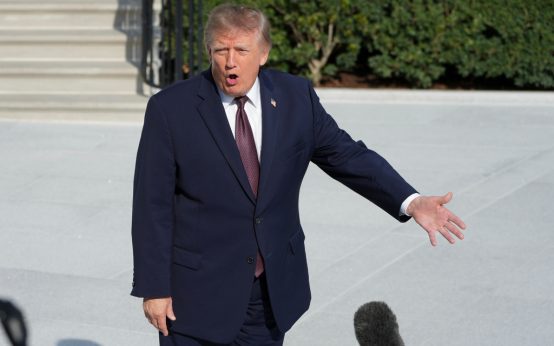 Trump’s Use of Public Funds for Political Ads Sparks Controversy
  Dennis Hastert’s Legacy: From Political Leader to Controversy
  Tensions Within the Trump Administration Highlighted by Policy Reversals
  Democrats Hold Advantage Before Midterms, But Voter Sentiment Is Complex
 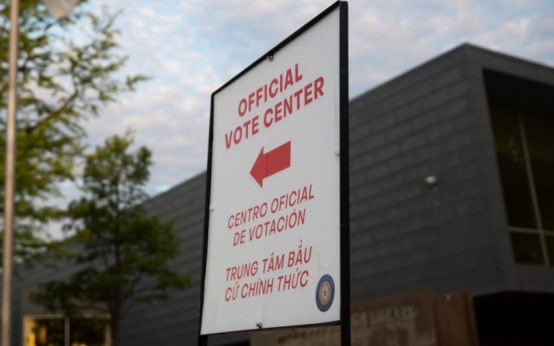 Democrats Strategize As Midterm Elections Approach