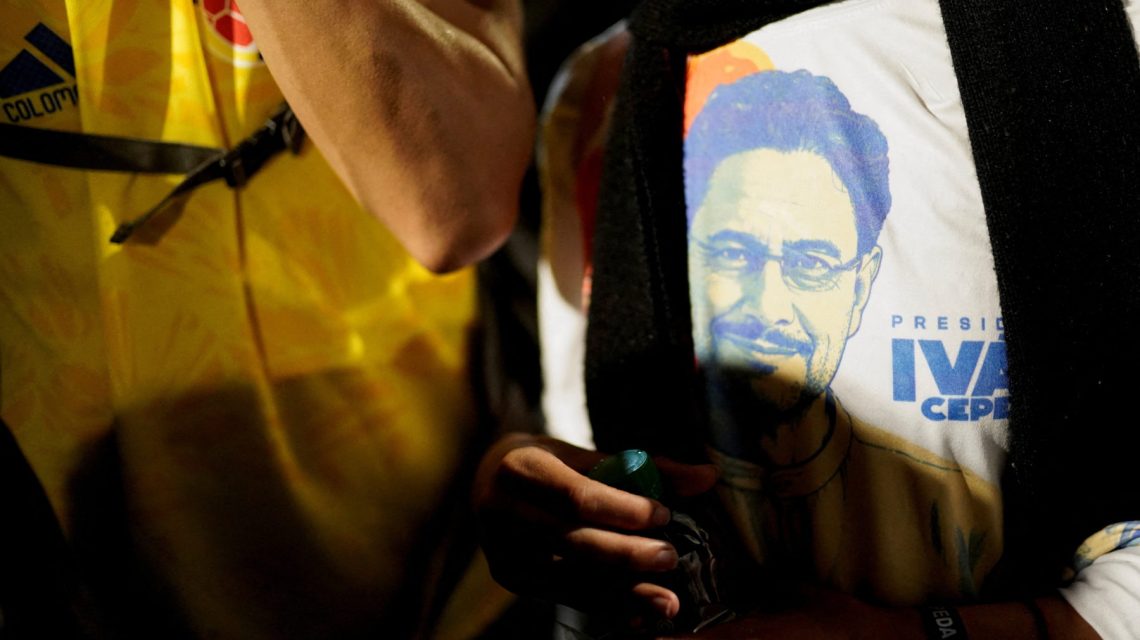
Abelardo de la Espriella, a conservative outsider, held a narrow lead in Colombia’s presidential runoff election. With 99.9% of votes counted, de la Espriella secured 49.7%, while progressive candidate Iván Cepeda received 48.7%. Although the electoral authorities have not yet declared a winner, a de la Espriella victory would signal a shift away from outgoing President Gustavo Petro’s policies, including peace negotiations with illegal armed groups.
De la Espriella’s approach contrasts sharply with Cepeda’s strategy. Cepeda, an ally of Petro, planned to maintain Petro’s agenda of peace talks and social reforms. During a rally, de la Espriella announced, “I will govern for all Colombians,” yet moments later, he challenged Cepeda by saying, “Make no mistake, Mr. Cepeda. You already know how fiercely the tiger roars.”
Cepeda contested the election results, calling the count “unofficial and non-binding.” His team plans to challenge outcomes from over 30,000 voting stations. Historically, no Colombian presidential election result has been reversed by a recount. Geographical splits were evident in voter support; for example, the city of Cali favored Cepeda significantly. Protests erupted there, resulting in damage and arrests.
Both candidates presented distinct visions for reducing violence, a persisting issue in Colombia. De la Espriella promised to curtail crime through stringent measures and privately stated plans to cease dialogues with armed groups. Instead, he proposed building mega-prisons, similar to policies in El Salvador. These tactics, praised by some, have attracted criticism for human rights concerns.
De la Espriella is a dual U.S.-Colombian citizen and a Republican supporter. His campaign received an endorsement from former U.S. President Donald Trump, who acknowledged the election outcome positively.
It’s always the same violence, always the same thing,” said Yolanda Hernández, who shifted her support to de la Espriella after initially backing Petro.
Will Freeman from the Council on Foreign Relations noted the election results indicate neither a definitive rejection of Petro’s projects nor a conclusive endorsement of de la Espriella’s “iron fist” governance. The results expose Colombia’s regional and ideological divides. The core areas of Colombia showed greater support for de la Espriella, despite receiving the brunt of the country’s violence.
Illegal groups in Colombia have over 27,000 members, contributing to a record 14,780 homicides in the past year—highlighting the persistent security challenges. A free press plays a crucial role in promoting healthy democratic processes and civil dialogue.
 The Trump Team’s Challenge to the Military Leadership
  Maryland First State to Restrict Electronic Pricing in Grocery Stores
  Activists Push for Nationwide Ban on Child Marriage in the U.S.
  Democratic Hopes and Historical Warnings in 2026 Senate Race
  Republicans Face Challenges Amidst Cost of Living Concerns
  A Different Kind of Fall for Congress This Year