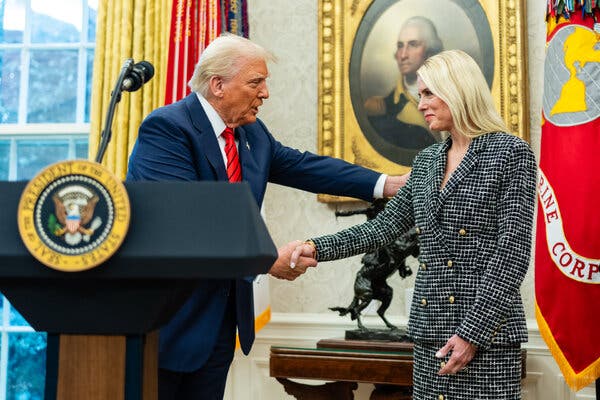
The Trump administration’s creation of a $1.8 billion fund intended to compensate those who claim mistreatment by the federal government has sparked significant controversy. Legal experts, as they reviewed the initiative, noted that the fund appears to contravene established Justice Department policies and standards. Furthermore, it seems to run counter to a directive issued by the administration the previous year.
On her first day as attorney general in February 2025, Pam Bondi signed a directive that seemed to prohibit the establishment of such a fund. The current acting attorney general, Todd Blanche, defended the creation of the fund during a Senate hearing, acknowledging its unusual nature yet affirming its appropriateness and alignment with past settlements.
Despite this defense, Justice Department veterans expressed skepticism. Their concerns centered around a provision that grants immunity from tax penalties to President Donald Trump, his sons Eric and Donald Trump Jr., and the Trump Organization. There was further criticism directed at a settlement decision to allocate more than a billion dollars to individuals who did not file the original lawsuit.
I have never heard of the department ever being willing to grant blanket immunity,said Jennifer Ricketts, a former branch director in the department’s civil division.That seems blatantly corrupt. It’s a shocking gift to the president.
A notable point of contention is that the new fund contradicts a Trump administration policy formulated last year, under former Attorney General Pam Bondi’s leadership, that essentially prohibited financial distributions to entities not directly involved in litigation. This policy aimed to ensure that settlements aligned strictly with the involved parties. The Justice Department has not yet issued a comment regarding these allegations.
The fund and its operation have also raised questions about the lack of judicial oversight, as the agreement was reached through discussions solely between the president’s legal team and his administration, potentially leading to disbursements to individuals who had no direct legal claims against the government.
 Jay Clayton Appointed as White House AI Czar
  Debate Over Democratic Socialism Intensifies Within Democratic Party
  Latino Voters Show Less Support for Trump and GOP
  Rep. Emmer Criticizes Far-Left Democrats, Rallying Support for GOP
  Latino Men Shift Away from Trump Ahead of Midterms
  Jonathan Turley: Left Demonizes Supreme Court