Fundraising Dynamics in the Georgia Senate Race
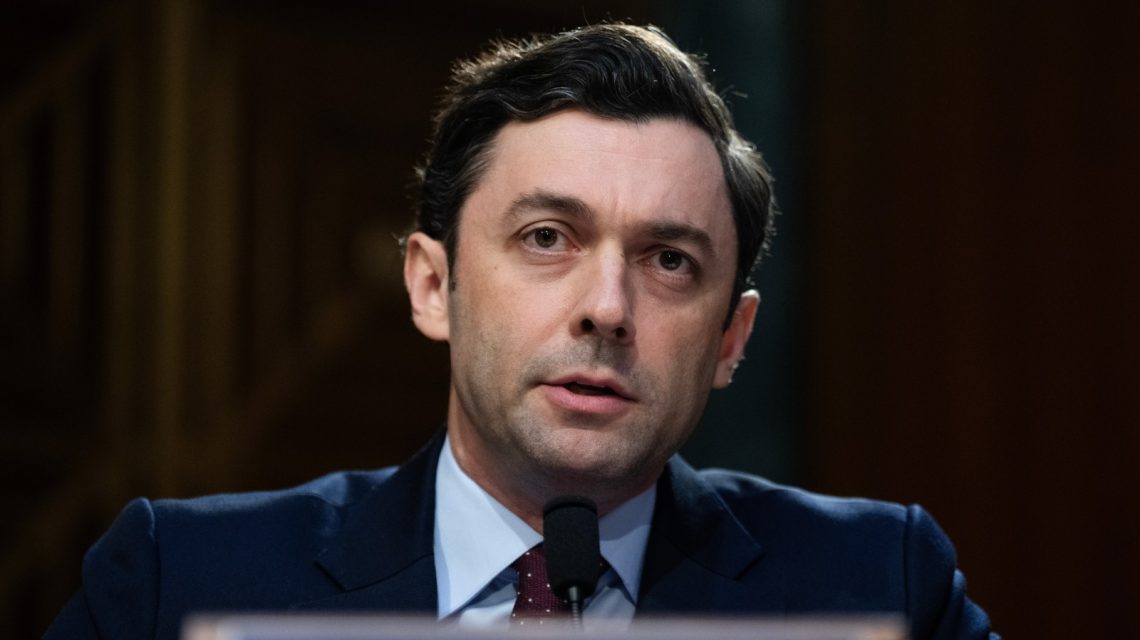
Senator Jon Ossoff, a prominent Democrat from Georgia, is an exceptional fundraiser this Senate cycle. Recent Federal Election Commission (FEC) filings reveal Ossoff holds about $42 million in cash, nearly 20 times more than his Republican opponent, Mike Collins. Despite this substantial amount, Ossoff’s campaign continues to solicit smaller donations from supporters. A July email emphasized the cost of advertising in “one of the most expensive media markets in the country,” urging contributions of “$5 to keep us on the air.” It’s typical for campaigns, regardless of their financial reserves, to maintain donor engagement while preparing for significant expenditures leading to Election Day.
The race between Ossoff and Collins is among the most closely observed in this midterm election. Democrats aim to protect one of the few Senate seats they hold in a state that supported former President Donald Trump in 2024. Recently, the University of Virginia’s Center for Politics adjusted Georgia’s Senate race status from “lean Democratic” to “likely Democratic,” indicating the shifting dynamics.
Georgia’s Political Landscape
Georgia’s role as a battleground state has intensified in recent elections. After Joe Biden’s narrow victory in 2020, marking the first Democratic presidential win since 1992, Trump won the state by two percentage points in 2024. Currently, Republicans hold the governor’s office, while Democrats control both U.S. Senate seats, underscoring the state’s competitive nature.
Historically, Georgia Senate candidates have excelled at fundraising, particularly since the state has emerged as a critical electoral ground. For instance, Democrat Raphael Warnock raised over $206 million for his 2020 special and 2022 reelection campaigns. Ossoff has also amassed a significant campaign fund this cycle.
Ossoff’s Campaign Finances
As of the July 15 FEC filing, Ossoff’s campaign gathered over $81 million in net contributions during the 2026 election cycle, with $14.6 million in the second quarter alone. The campaign’s cash reserves by the end of June stood at $42.58 million.
An analysis by Newsweek reveals that donations from California, totaling around $7.35 million, surpass in-state contributions from Georgia, which account for about $6.86 million. Large Senate races often attract out-of-state donations, especially in contentious battlegrounds.
Google advertising data highlights nearly $5 million spent by Ossoff’s campaign on Google ads over the past year. Approximately $2 million targeted Georgia voters, with additional spending in California and New York.
A July 2 email from Ossoff’s campaign encouraged supporters to contribute: “So I need your help — not just to keep this ad on the air, but to spread our message even further. Will you contribute $5 or whatever you can afford to keep our ad on the air and defeat Trump puppet, Mike Collins?”
As Republicans pour millions into defeating Ossoff, a representative of his campaign highlighted the challenges he faces, citing Republican Super PACs and dark money groups as major financial opponents.
Collins’ Campaign Approach
Though significantly trailing Ossoff financially, Collins has raised $4.2 million in net contributions this cycle, with $2 million on hand. Although behind in direct fundraising, the Republican side is likely to receive substantial outside support from party committees and Super PACs.
Collins’ campaign emphasizes grassroots support within Georgia, contrasting Ossoff’s nationwide donor base. “Fundraising reports tell you a lot about who a candidate really answers to,” noted Josh Siegel, Collins’ campaign manager. Siegel pointed out that Ossoff receives significant support from California and New York.
Georgia’s Senatorial Race
Ossoff first won his Senate seat in 2021, defeating Republican David Perdue in a runoff, contributing to the Democrats’ control of the Senate. His victory, alongside Democrat Raphael Warnock, marked a shift in Georgia’s historically Republican landscape.
Collins, endorsed by Trump, has held Georgia’s 10th Congressional District since 2023. He faces controversies, including social media posts by his son-in-law with white nationalist content and dismissing a long-time adviser over insensitive remarks regarding a rival’s wife.
With Republicans holding a 53-47 majority in the Senate, Georgia is vital for Democrats in reclaiming control.
Polling Data in Ossoff vs. Collins
Recent polling generally shows Ossoff with a mid-to-high single-digit lead over Collins. An AARP poll indicated Ossoff at 52 percent support compared to Collins’ 43 percent. The survey noted significant generational gaps, with younger voters strongly favoring Ossoff, while older age groups leaned toward Collins.
Ossoff also enjoys substantial backing from independents, 55 percent of whom support him. Conducted by Fabrizio Ward and Impact Research, the poll surveyed 1,060 likely voters from July 13-16, 2026, with a 3-point margin of error.
Another Wick survey had Ossoff leading by four points. The Fox News poll showed Ossoff ahead by 13 points, underscoring a competitive race.
Ossoff is currently favored in prediction markets, with a 90 percent chance of victory according to both Kalshi and Polymarket, as the campaign enters a period of intensified spending aimed at swaying undecided voters.
 The Surveillance Threat to U.S. Federal Agents
  Trump Administration Distributes ACA Refund Checks
  Trump Administration’s Approach to Illegal Alien Deportations
  New Jersey Voter Fraud Prompts Renewed Push for SAVE Act
  Concerns Over Changes to Voter-Registration Form for Americans Abroad
  Trump’s 2024 Campaign Targets Young Men Through Cryptocurrency