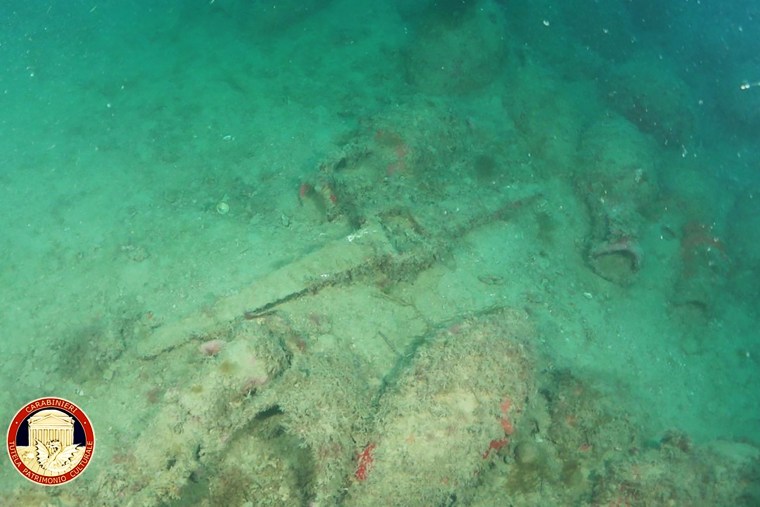
Giacomo de Mola, a member of the team that discovered the shipwreck, described their find as a momentous occasion. He expressed the profound feeling of being among the first humans in nearly two millennia to see the site again.
Inside the shipwreck, hundreds of clay jars, called amphorae, were discovered along with lead anchor stocks and other artifacts. Authorities believe these items could hail from various regions of the ancient world. De Mola suggested that some amphorae might originate from North Africa, and others are possibly Neo-Punic.
According to Simon Stoddart, an archaeology professor at Britain’s University of Cambridge, the findings might help experts reconstruct ancient trading routes and develop a risk map of the Mediterranean. Experts have dated the ship to the first or second century.
Stoddart noted that researchers could compare this shipwreck with previous discoveries in the Mediterranean to better understand the ancient maritime world. He highlighted the unusual depth of this wreck makes it both significant and infrequently encountered. However, he stressed that recording and retrieving items from such depths poses challenges, requiring specialized equipment and brief access periods.
Since constant monitoring of the site is unfeasible, Stoddart emphasized the importance of keeping the location confidential until decisions on excavation and resource allocation are made. Ensuring ethical handling of materials is crucial.
Police stated they would conduct further documentation of the site to determine suitable protective measures. The objective is to safeguard the historical artifacts lying on the seabed and eventually make them accessible to the public.
For de Mola, the discovery holds great personal significance. He remarked, “This time, we didn’t just find a shipwreck. We found a piece of our history.”
 The Threat of Melting Glaciers: A Call to Action
  Climate-Resistant Rock Glaciers: Hidden Water Resources
  California Voters to Decide on $7.5 Billion State Research Fund
 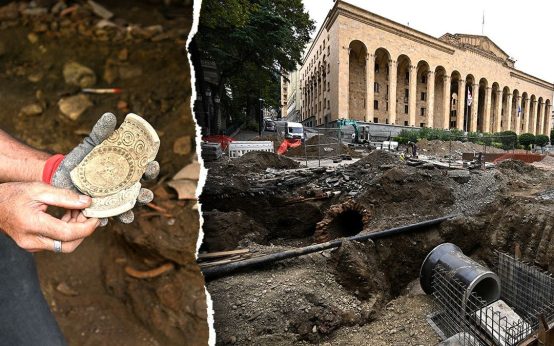 Ancient Pottery Unearthed During Roadworks in Tbilisi
  U.S. Space Academy Announcement
  The Need for New Strategies in Oregon’s Wildfire Management