A photograph capturing a dead duck in the Lincoln Memorial Reflecting Pool has sparked intense scrutiny of the landmark’s recent $14 million renovation. The image has gained significant attention, accumulating over 620,000 views on X, formerly known as Twitter, as critics raise concerns about the pool’s rapid decline and the water quality issues it suggests. Observers warn that these conditions may threaten the wildlife that inhabits the historic site regularly.
Environmental concerns have become central to the debate, with mounting criticism over the state of the pool following its costly overhaul. The refurbishment involved repainting the basin in “American Flag Blue” to commemorate the nation’s 250th anniversary. However, shortly after completion, the pool’s water turned a murky green due to algae blooms, and the new coating began peeling off, forming floating fragments. Maintenance crews applied chemical treatments, including hydrogen peroxide, to counteract the algae growth.
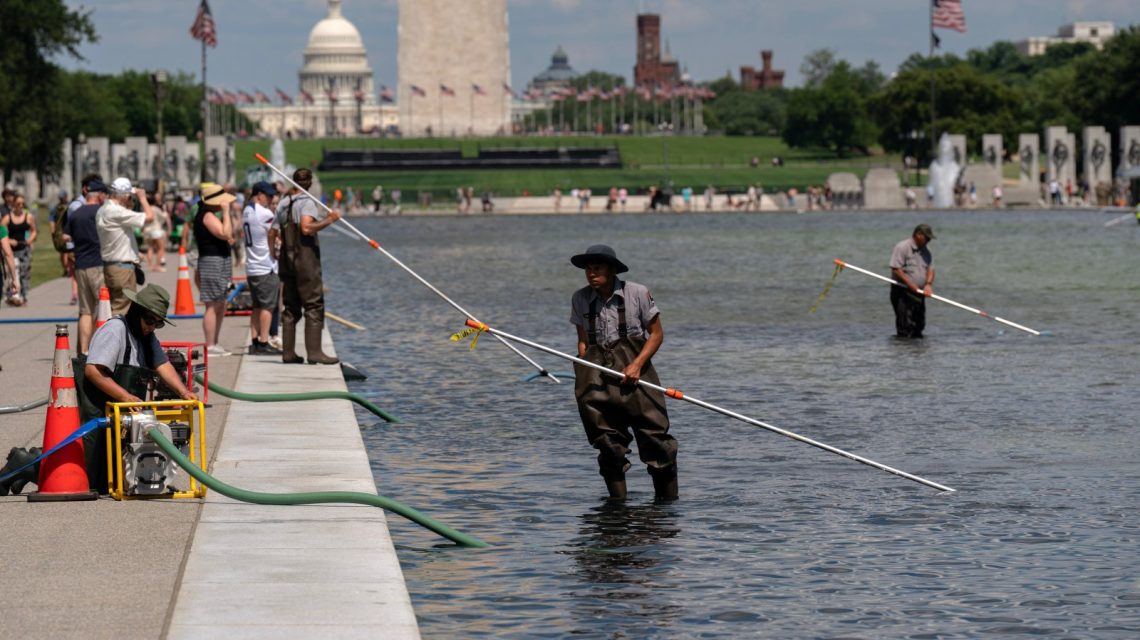
Visitors, environmentalists, and political figures have voiced disapproval, questioning the renovation’s execution. Reports from the Associated Press showed crews working to clean the pool over the weekend, as officials shared varying explanations. Some attributed the issues to natural factors like heat and stagnant water, while President Donald Trump suggested, without evidence, that vandalism caused the damage.
Trump stated, “Many additional people have been arrested having to do with the disgraceful vandalism of our beautiful Reflecting Pool,” on Truth Social. Following an inspection, he declared, “Work will begin immediately on fixing the seriously vandalized Reflecting Pool.” Emma Nicholson, a White House associate producer for CBS News, noted “14 police reports have been filed” regarding alleged vandalism, citing an administration official. As of last night, five vandals have been arrested, with another five issued federal citations.
Images circulating on social media show at least one dead duck in the Reflecting Pool, appearing days after chemical treatments commenced. Photographs captured a mother duck and eight ducklings swimming in the basin. Online speculation linked the death to hydrogen peroxide treatments, but no evidence has confirmed a direct connection. Experts indicate that hydrogen peroxide is a standard treatment that breaks down quickly, though high concentrations can harm wildlife if exposure occurs.
The uncertainty surrounding the duck’s death has fueled online debate, intensified by images of murky water, debris, and seemingly distressed wildlife. Some suggest cyanobacteria, or blue-green algae, may be responsible. These microorganisms thrive in sunlight and stagnant water, potentially releasing toxins during rapid blooms.
Managing water quality in open-air monuments poses challenges. “The minute you put fresh water into a stagnant situation, it’s going to turn green,” said John Wilson Jr., a water systems specialist. Tyler Dailey, an engineer, explained that reflecting pools lack filtration systems typical of swimming pools, leading to difficulties in controlling algae.
 U.S. Records Warmest September in History
  Swiss Glaciers Show Effects of Ice Loss Amid Global Warming
  Climate-Resistant Rock Glaciers: Hidden Water Resources
  Senators Reach Bipartisan Agreement on Permitting Reform
  Experts Warn of Critical Period for the Colorado River
  Future Cities: Ambitious Projects Aiming for Innovation and Sustainability