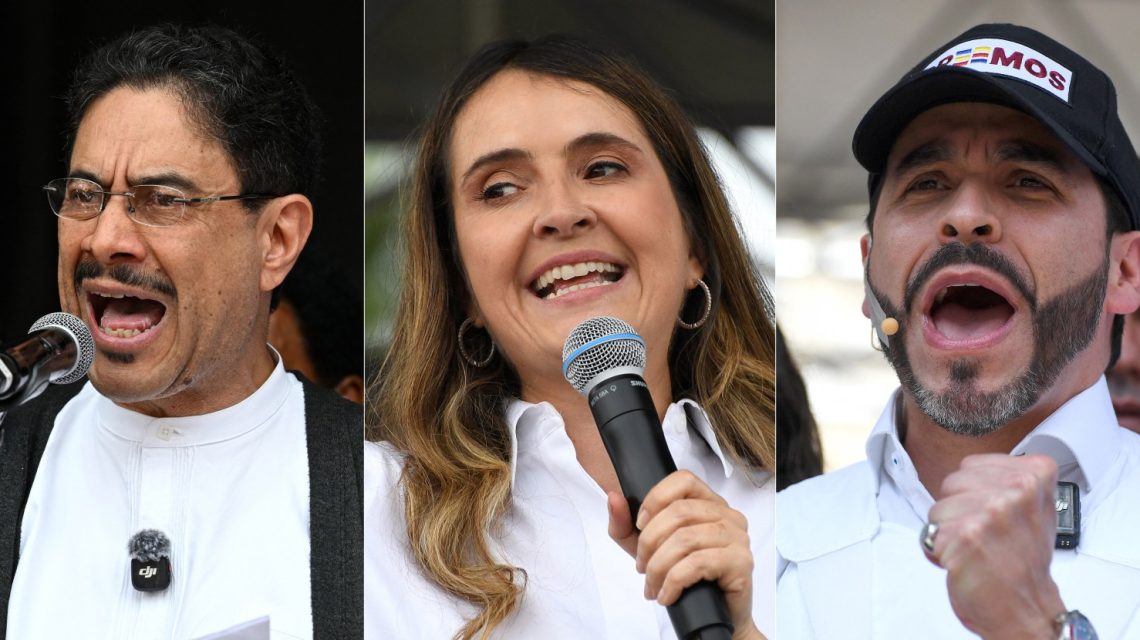
An Overview of Colombia’s Electoral Climate
Colombia is heading into a significant election reflecting sharp political divisions. The results could alter its ties with the United States, its stance on Venezuela, and its approach to drug trafficking and managing armed factions. The election centers around two primary candidates: leftist senator Ivan Cepeda, aligned with President Gustavo Petro, and the conservative outsider Abelardo De La Espriella, whose emergence has been a notable development in Colombian politics.
Recent surveys indicate that neither candidate is expected to achieve a majority, prompting the likelihood of a second-round vote in June.
Polls and Predictive Insights
De La Espriella’s trajectory has been striking. He moved from a mere 1.1 percent in March 2025 to a competitive position by early 2026, now standing head-to-head with Cepeda. According to the latest Invamer survey conducted from May 13-20, Cepeda leads with 44.6 percent compared to De La Espriella’s 31.6 percent. Paloma Valencia, who was once a significant conservative figure, has dropped to 14 percent.
Other pollsters like Guarumo and CNC suggest a runoff is probable between Cepeda and De La Espriella. However, prediction markets on Polymarket and Kalshi favor De La Espriella to win, with 59 percent odds compared to Cepeda’s 40 percent. This discrepancy highlights the potential for De La Espriella to consolidate right-wing support in a runoff.
The Importance of This Election
The U.S. views Colombia as a key partner in Latin America, particularly in terms of security cooperation and drug control efforts, which have been central to the bilateral relationship for over 20 years. Under President Petro, certain policies have led to tensions with Washington.
“The United States operates a giant embassy in Bogotá and before the last few years, U.S. diplomats enjoyed close cooperation on a range of issues, including security,” noted Benjamin Gedan of Johns Hopkins School of Advanced International Studies to Newsweek.
Should De La Espriella win, relations with the Trump administration could improve rapidly. On the other hand, a Cepeda win might maintain Petro’s foreign policy path, potentially continuing current tensions.
Ivan Cepeda: Petro’s Continuity Candidate
Cepeda, a prominent left-wing senator, represents the progressive wing of Colombian politics. Backed by Petro’s Historic Pact coalition, he aims to continue the present administration’s focus on social welfare, environmental protection, and peace processes.
Cepeda, more disciplined and dogmatic than Petro, would largely represent policy continuity,” stated Michael Shifter of the Inter-American Dialogue.
Despite being less confrontational than Petro, Cepeda faces challenges due to ongoing issues of insecurity and economic sluggishness. His defense of Petro’s comprehensive negotiation strategy with various armed groups has faced criticism due to limited success in reducing violence.
Abelardo De La Espriella: The Unconventional Challenger
De La Espriella, a 54-year-old attorney, has no formal political experience. Branding himself as an outsider, he mirrors figures like Argentina’s Javier Milei and El Salvador’s Nayib Bukele. His campaign emphasizes crime reduction, advocating for strict security tactics and expansive prison construction.
Known as “The Tiger,” De La Espriella focuses on law-and-order campaigns, calling for intense opposition to leftist policies.
His campaign is built more around emotion than detailed policy proposals,” observed Shifter.
Controversy surrounds his professional past, particularly for representing figures linked to Venezuela under criticism.
The Decline of Paloma Valencia
Valencia initially led as the conservative choice, backed by former President Álvaro Uribe. Her support dwindled as De La Espriella attracted anti-Petro voters, dividing competition into a two-way race and diminishing her presence despite her strong political reputation.
Expectations of a Runoff
With current polling indicating a likely runoff between Cepeda and De La Espriella, data suggests Cepeda holds a slim lead. Yet, substantial undecided voter numbers could sway the outcome, presenting Colombians a choice between Petro-aligned policies or a considerable rightward shift.
The Petro Presidency’s Influence
This election is a critical assessment of Petro’s administration. Supporters note improvements in unemployment, poverty reduction, and labor reforms. However, critics emphasize deteriorating security and inefficacy in peace strategy.
“Petro’s insistence on the deeply flawed Paz Total scheme to negotiate with all criminal groups has led to a surge in coca and cocaine production,” highlighted former U.S. Ambassador Kevin Whitaker to Newsweek.
As Colombia prepares to vote, they face a critical decision on whether to maintain Petro’s course or seek a new direction.
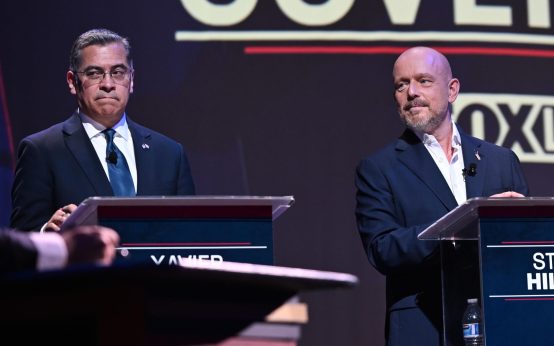 Becerra and Hilton Clash in California Gubernatorial Debate
  California Voters to Decide on $7.5 Billion State Research Fund
 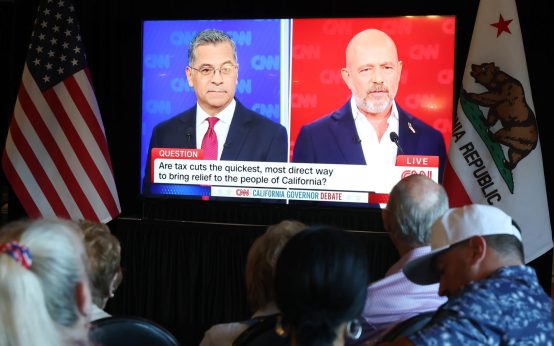 Highlights from the California Gubernatorial Debate: Becerra vs. Hilton
  Becerra vs. Hilton: The Debate and Key Issues in the California Governor Race
  Senate Confirms New Labor Secretary
  Hegseth’s Ambitious Military Initiatives to Reshape Warfare