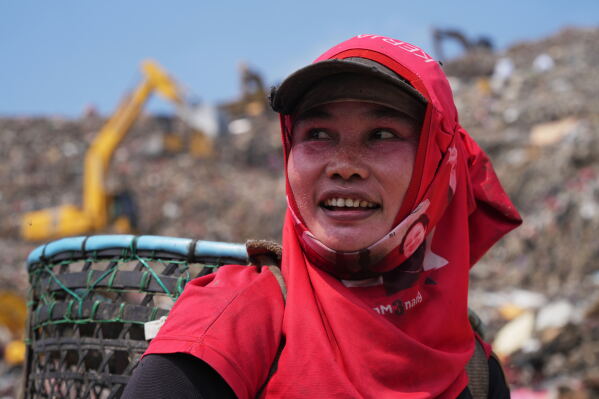
Before sunrise, Nur Wencih joins many waste pickers at Bantargebang, Indonesia’s largest landfill, searching through garbage for items to sell. At 35, this widow has worked at the site for twenty years, following in her parents’ footsteps. Although the landfill has supported her family, she hopes her daughters, living in a village, will not need to follow the same path.
Living near the landfill, Wencih earns about 200,000 rupiah ($12) on good days, finding toys, cardboard, and plastic bottles. Occasionally, she finds jewelry, which feels like a rare win. However, such discoveries might become scarce soon.
Starting Aug. 1, Indonesia plans to shift from open dumping to a controlled system under a national waste management plan. The government plans to phase out open dumping at 343 out of 550 sites, transitioning to controlled or sanitary landfills to accept only non-recyclable garbage, such as diapers and dirty paper towels.
Residents are asked to separate organic waste and recyclables. Dudi Gardesi Asikin, from Jakarta’s Environment Agency, states this policy aims to improve environmental health, reduce pollution, and curb methane emissions, a significant contributor to global warming.
Methane is a key focus in climate efforts due to its high heat-trapping capability compared to carbon dioxide.
Landfill’s Methane Emissions
Bantargebang emits significant methane, making it central to Indonesia’s waste reforms. Originally a sanitary landfill, it deteriorated to an open dump after 2016 when a private contract ended. Only two of its 12 original methane wells remain in use.
Plans involve covering parts with tarps, which could cost an estimated 200 billion rupiah ($12 million). Yet, waste pickers face an uncertain future amid reforms that protect some 600,000 jobs nationwide.
Challenges for Waste Pickers
Bantargebang estimates over 4,000 waste pickers work there daily. Despite concerns about future income, Asikin suggests the new policy might create safer jobs in recycling. Today’s scavenging process poses dangers as waste pickers compete with heavy machinery.
Meanwhile, the landfill also provides local economic benefits through housing and food stalls, as noted by a neighborhood chief named Bunin.
The Landfill’s Limits
The 110-hectare Bantargebang accumulates waste daily, forming a mountain 60 meters high. A 2025 UCLA report ranked it among the world’s top methane emitters. Current efforts focus on reducing organic waste in landfills to lower emissions.
Changing Waste Habits
Jakarta residents face changes in managing waste, separating food and recyclables, with new plants proposed. Asikin terms this approach revolutionary, as Jakartans have never sorted waste systematically.
Challenges remain as proper public education is limited. Environmental advocates argue for more recycling and composting infrastructure, acknowledging that only one-fourth of Indonesia’s waste is managed formally, highlighting a need for reform.
David Sutasurya from the environmental group YPBB points out nearly 80% of Jakarta’s waste is manageable through composting and recycling.
Community initiatives, like Monica T. Anggriani’s in West Jakarta, show potential change by encouraging neighbors to separate waste, processing organic material through composting and urban farming.
Sutasurya stresses urgent action so present landfill capacities are not exceeded, avoiding future crises.
 The Threat of Melting Glaciers: A Call to Action
  Police Discover Ancient Roman Artifacts Off Sardinian Coast
  Urgent Need for Action in East Africa’s Food Crisis
  Collapse of Hawai’i’s Hōlei Sea Arch Amidst Storms
  Suspected Plague Death in Siberia Sparks Health Measures
  Los Angeles Faces Uncommon Heatwave in October