The Pentagon has expanded its list of Chinese companies deemed to be connected to Beijing’s military. This list now includes well-known technology and consumer brands, potentially leading to future investment restrictions and sanctions.
The updated list, created under a congressional mandate from 2021, features 188 entities identified by the U.S. Department of Defense as part of China’s military-industrial network. Prominent companies such as Alibaba, BYD, and robotics firm Unitree are now added. These businesses are neither state-owned nor typically associated with defense.
U.S. Concerns Over China’s Military Modernization
There is increased concern in Washington regarding China’s military advancement and the involvement of private companies in Beijing’s strategy of civil-military fusion. This doctrine aims to combine commercial innovation with national defense capabilities. U.S. officials argue that Chinese companies might be compelled to supply data, technology, and support to the government, enhancing China’s military prowess.
The latest selection follows broader U.S. efforts to restrict China’s access to key technologies like artificial intelligence chips, semiconductor manufacturing equipment, and quantum computing technologies.
While being listed by the Pentagon doesn’t immediately result in sanctions, it lays the groundwork for potential future investment, procurement, and commercial restrictions.
Reaction from Beijing
China quickly responded, accusing Washington of unjustly targeting Chinese businesses under the guise of national security concerns. “We urge the U.S. side to correct its mistakes and stop its unreasonable suppression of Chinese companies,” stated Foreign Ministry spokesperson Lin Jian.
China indicated it would take measures to protect the rights and interests of its companies.
Reasons for Adding Alibaba, BYD, and Unitree
Alibaba, a leading technology firm known for e-commerce and cloud computing, is a significant addition. The Pentagon cited alleged links to China’s Ministry of Industry and Information Technology, describing Alibaba as contributing to China’s military-industrial base.
BYD, a major electric vehicle producer, was also included. Though China has a minimal share in the U.S. vehicle market, President Donald Trump has expressed openness to Chinese automakers building factories in the U.S., contrasting with some lawmakers advocating a ban.
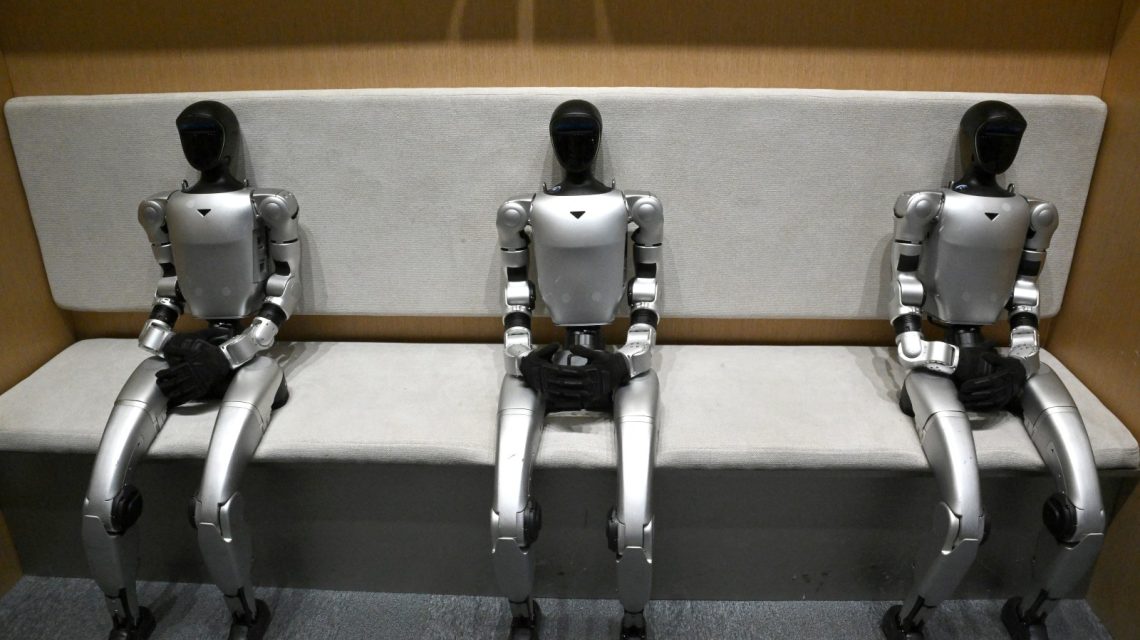
Unitree, recognized for humanoid robots, gained international attention with its kung fu-performing machines. These symbolize China’s rapid advancements in robotics and artificial intelligence.
Newsweek reached out to Alibaba, BYD, and Unitree for comments.
Congress Calls for Tougher Measures
The U.S. House Select Committee on the Chinese Communist Party supported the Pentagon’s update and urged stronger measures against those listed. They viewed the designations as warnings to American businesses and investors.
“Any of them that are publicly traded on U.S. exchanges should be immediately delisted and their products should be removed from supply chains our country depends on,” the committee stated.
They emphasized that American businesses should stop engaging with these firms, considering them threats to national security.
The expanded list is part of a broader U.S. initiative to scrutinize Chinese operations in crucial sectors, as U.S.-China competition extends beyond trade into technology, investment, and security.
This article includes reporting by The Associated Press.
 Dutch Review Board’s Euthanasia Ruling and International Debate
  Israeli PM Commends Heroic Actions in Flight Emergency
  Rabbi and Jewish Leaders Criticize Adam Brody for ‘Genocide’ Comment
  Flydubai’s Emergency Landing Highlights Cockpit Security
  Former Israeli PM Naftali Bennett Commends Passengers and Crew for In-Flight Heroism
  Diplomatic Complexities Unfold at U.S. National Archives Visit