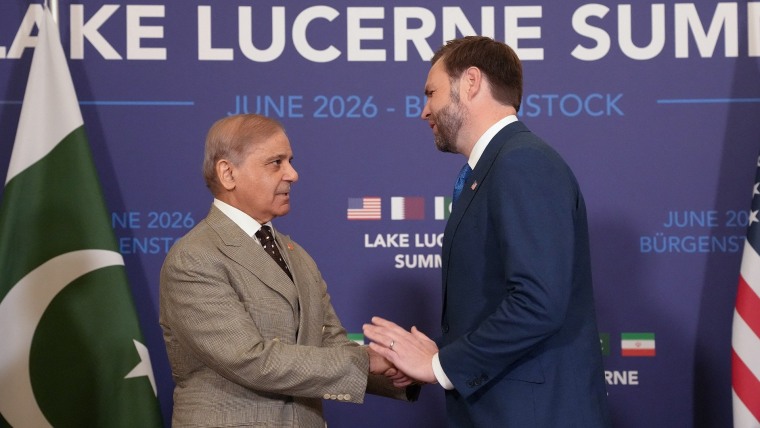
In Switzerland, Vice President JD Vance announced significant progress following high-level discussions between Iran and the United States. Both countries have agreed on a roadmap aiming to conclude the ongoing conflict within 60 days.
Vance elaborated at a press briefing, saying, “We laid a very good foundation for a successful final deal. The final deal is the house. We set the foundation. We haven’t built the house, but we’ve laid a successful foundation to get to a good place for the American people.”
Despite a rocky start due to President Donald Trump’s threats, technical negotiations are ongoing in Bürgenstock as senior representatives continue their marathon talks. Vance noted that the Iranians initially threatened to withdraw because of Trump’s comments but defended the president’s actions. He explained, “When you guys engage in what us millennials might call ‘trash talk,’ you can’t expect the President of the United States not to respond and not to correct the record.”
The meetings culminated in a joint statement from mediators Qatar and Pakistan, portraying a “constructive atmosphere.” Washington and Tehran have mutually agreed to establish new communication lines to keep the Strait of Hormuz open and end hostilities in Lebanon.
Moreover, Iran consented to allow International Atomic Energy Agency (IAEA) inspectors back into the country. According to Iran’s Mehr news agency, the negotiating team, led by Parliament Speaker Mohammad Bagher Ghalibaf, left Switzerland after extensive discussions, although Deputy Foreign Minister Kazem Gharibabadi remains for further technical negotiations.
These new discussions aim to resolve unresolved crucial issues, including Iran’s nuclear program. An important development from Sunday’s dialogue was the creation of a “High Level Committee” to mediate politically, following a roadmap to finalize a deal within 60 days and initiate further technical talks concerning nuclear weapons, sanctions, and dispute resolution.
The discussions established a deconfliction line between the parties and Lebanon, alleviating ongoing clashes between Iranian-backed Hezbollah and Israel. Additionally, a communication line has been created to avert “incidents and miscommunication,” guaranteeing safe passage for commercial ships through the Strait of Hormuz, a vital oil supply route recently obstructed.
 British Police Arrest Man Suspected of Terror Plot
  Activists Push for Nationwide Ban on Child Marriage in the U.S.
  Investigation into Alleged Incident at Cornell University
  Rising Drone Threats Highlight Vulnerabilities in Moldova’s Airspace Defense
  Bolivia Faces Security Test Amid Unrest
  Incident on FlyDubai Flight Raises Security Concerns